Shoppers looking to reduce fat
If a protein bar is your mid-morning snack, compare both total fat and saturates rather than taking a protein or sugar claim as an answer to your fat-related question.


For a lower-fat protein bar at elevenses, compare total fat and saturates per 100g before looking at protein per bar: ‘high protein’ and ‘low sugar’ do not establish that a bar is reduced-fat. Among four bars compared using Tesco Groceries nutrition panels, Myprotein Layered Triple Chocolate Fudge had the lowest total fat at 10g per 100g, but its 5.8g saturates per 100g exceeds the NHS guide for high saturated fat. Check the portion, ingredients and exact flavour before choosing.
If a protein bar is your mid-morning snack, compare both total fat and saturates rather than taking a protein or sugar claim as an answer to your fat-related question.
Protein per bar matters if you want to know what one snack provides. Read it alongside the bar’s portion size, fat and energy values rather than using protein alone to choose.
If allergens, dietary suitability or sweeteners affect your choice, read the ingredients and warnings for the exact flavour. These can differ between bars from the same brand.
Start with the per-100g nutrition panel to compare different-sized bars, then check what the individual bar provides and whether its ingredients suit you.
| Priority | What to check | Your needs |
|---|---|---|
| Total fat and saturates | Compare both figures per 100g, then check fat per bar. For solid foods, the NHS describes 3g fat or less per 100g as low fat and more than 5g saturates per 100g as high saturated fat. | I want to reduce fat without mistaking a lower-fat choice within a small group for a low-fat bar. Tesco Groceries lists 10g fat and 5.8g saturates per 100g for Myprotein Layered Triple Chocolate Fudge. |
| Protein and portion | Read protein per bar and the bar’s weight; compare energy per bar if portion size matters. Tesco Groceries lists 20g–22g protein per bar across the four examples considered here. | For elevenses, I want to know what the bar I’ll actually eat provides, not just its values per 100g. |
| Ingredients and warnings | Read the exact flavour’s ingredient list, allergen statement and any sweetener or polyol warning. Recheck the physical pack when changing flavour or buying again. | Milk, soya, peanuts, nuts or gluten may affect my choice; I also want to check any warning about excessive consumption. |
Protein and sugar claims describe different characteristics from fat content. UK rules published by legislation.gov.uk require a reduced-nutrient claim to show at least a 30% reduction against a similar product; the claim cannot be inferred from protein or sugar wording.
Compare fat per 100g. If a reduced-fat claim is decisive, check the stated comparison with a similar product.
The four bars compared using Tesco Groceries panels list 5.2g–6g saturates per 100g. Each exceeds the NHS guide of more than 5g per 100g for high saturated fat, including the bar with the lowest total fat in that group.
Read the ‘fat’ and ‘of which saturates’ lines together before deciding which bar fits your priorities.
Ingredient and allergen information applies to the particular bar and flavour. Sweetener warnings can also matter if you expect to eat more than one bar.
Check the exact pack’s allergens, precautionary statements and consumption warnings, particularly when switching flavours.
These examples provide label comparisons for particular bars, not a verdict on every flavour a brand sells.
Layered Protein Bar, Triple Chocolate Fudge, 60g.
Carb Killa, Dark Chocolate Mint, 60g.
Fat and protein values differ between the Peanut Butter and vegan Fudge Brownie bars.
Smart Protein Bar, Chocolate Brownie, 64g.
Tesco Groceries publishes nutrition panels for the specific bars compared above.
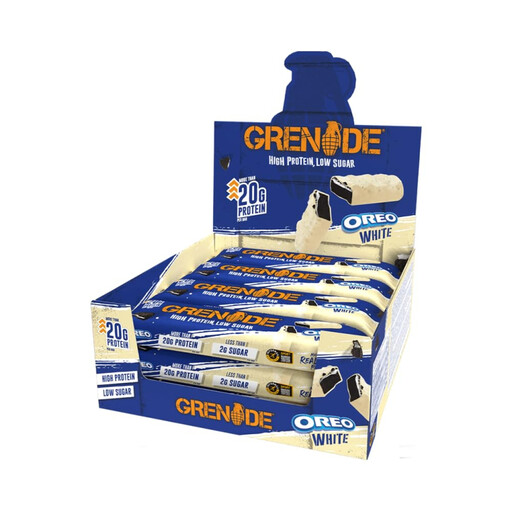
These Grenade bars offer Oreo and Soft Core flavours for a portable elevenses snack. Their protein-bar format does not establish a reduced-fat claim: compare the exact pack’s fat and saturates before choosing one for that purpose.
 No image available
A four-bar pack for mid-morning snacks. Compare fat and saturates per 100g on the Oreo flavour’s label, and check its allergen and sweetener warnings.
 No image available
A multipack of 60g bars for planned elevenses. Check this flavour’s fat and saturates rather than assuming its nutrition matches the Oreo variant; read the allergen and sweetener information too.
 No image available
Each bar is 50g, so check both per-bar protein and per-100g fat when comparing it with larger elevenses bars. Read the exact pack for allergens and consumption warnings.
 No image available
A 50g Peanut Butter bar for a mid-morning snack. Compare its fat and saturates per 100g, and check the peanut and other allergen declarations before buying.
 No image available
This 60g bar is an elevenses option if its ingredients suit you. Do not use the protein wording as a shortcut for fat content: compare the per-100g panel and check the peanut and other allergen declarations.
No. Sugar and fat are different figures on the nutrition label. UK rules published by legislation.gov.uk require a reduced-nutrient claim to reflect at least a 30% reduction against a similar product; check the comparison rather than inferring it from a sugar claim.
Compare total fat and saturates per 100g first, then read protein and energy per bar so the portion you will eat is clear. The NHS guide for solid foods describes 3g fat or less per 100g as low fat and more than 5g saturates per 100g as high saturated fat.
No; check the ingredient and precautionary allergen statements for the exact flavour and pack. The protein bars discussed here include variants with milk, soya or peanuts and statements about possible contact with other allergens.
Read the specific pack’s sweetener and consumption warnings before deciding on a quantity. Some of the bars discussed here warn that excessive consumption may have a laxative effect; the warning should not be assumed to apply identically to every flavour.