Festival-goers comparing fat content
If reducing fat matters to you, compare total and saturated fat for the entire bar. Protein and sugar claims answer different questions.


For a festival, compare total fat and saturated fat per whole bar rather than assuming that a high-protein or low-sugar bar is reduced fat. A bar with less fat may also provide less protein, so check the current wrapper for nutrition values, allergens, sweetener warnings and storage instructions before packing it.
If reducing fat matters to you, compare total and saturated fat for the entire bar. Protein and sugar claims answer different questions.
If you want a protein snack to carry with you, compare protein alongside fat on the same per-bar basis. For example, PhD lists 22 g protein and 8.5 g fat for its 64 g Smart Protein Bar in Strawberries and Cream, while Tesco lists 16 g protein and 9.1 g fat for a 55 g Barebells Caramel Choco Soft Protein Bar.
If allergens or sweeteners affect your choice, read the wrapper for the exact flavour you plan to take. Ingredient and precautionary statements can differ between products.
Start with the nutrition values for one complete bar, then check whether its ingredients and storage directions suit your trip.
| Priority | What to check | Your needs and respondents |
|---|---|---|
| Fat per bar | Read total fat and saturated fat for the whole bar. Check the bar size before comparing figures, and do not infer fat content from a protein or sugar claim. | I want a bar that fits my fat-content preference, not just an appealing front-of-pack claim. In the Food Standards Agency and Ipsos Northern Ireland survey of 611 interviews conducted from September to November 2024, 49% of respondents actively used traffic-light labels when shopping for food; that figure is not a protein-bar preference rate. |
| Protein and portion | Compare protein per complete bar alongside its fat values. Note whether the stated serving is a 40 g, 55 g or 64 g bar rather than comparing unlike portions. | If I am carrying one bar as a snack, I want to know how much protein that particular bar provides as well as how much fat it contains. |
| Storage | Follow the storage directions for the exact product. Keep wrappers intact and consider whether heat or crushing could affect a coated or soft bar during the trip. | My bars may spend time in a bag or tent, so I need storage instructions that work for how I will carry them. |
| Allergens | Read the current ingredient list and both contains and may-contain statements on the individual wrapper. Check the exact flavour rather than relying on a brand-wide description. | I need to know whether this bar’s ingredients and precautionary statements fit my dietary requirements before it goes in my festival bag. |
| Sweeteners | Check for polyols, other sweeteners and any excessive-consumption warning. Consider that warning when deciding how many bars to pack. | If I plan to take several bars, I want to understand the warnings on the ones I will eat. |
Protein, sugar and fat are separate nutrition measures. Action on Salt & Sugar reported that 55% of the 458 snack bars in its November 2025 analysis of products from 10 major retailers were high in saturated fat.
Read total and saturated fat on the current pack. Treat ‘reduced fat’ as a claim to check on that product, not a conclusion drawn from its protein content.
Whole-bar sizes differ: the Bio&Me, Barebells and PhD examples listed by Tesco and PhD are 40 g, 55 g and 64 g respectively. A per-100-g comparison alone does not tell you what one bar provides.
Compare the values for the complete bar you would eat, then use per-100-g values if you also want a comparison on the same weight basis.
PhD’s Smart Protein Bar listing and Tesco’s Barebells Caramel Choco listing carry excessive-consumption warnings about laxative effects. Grenade’s Chocolate Chip Salted Caramel listing also gives a polyol warning.
Read the warning on each chosen flavour and consider other snacks if you would otherwise rely on repeated servings of the same bar.
For example, Tesco lists milk and soya in Barebells Caramel Choco and notes possible traces of other allergens; it specifies room-temperature storage for that product. Those details should not be assumed for another bar.
Check each current wrapper’s allergens, precautionary statements and storage directions before leaving for the festival.
These brand and retailer references illustrate why the exact flavour and serving size matter; they do not establish that an entire range is reduced fat.
Grenade’s Chocolate Chip Salted Caramel is a coated protein-bar example with product-specific ingredient information.
The Smart Protein Bar in Strawberries and Cream provides a whole-bar nutrition example from PhD.
Tesco lists the Caramel Choco Soft Protein Bar with nutrition and storage information for a 55 g bar.
Quest’s S’Mores Protein Bar provides a labelled example from its US product range, not a confirmed UK formulation.
Tesco lists protein bars from multiple brands, making its individual product labels useful for comparing stated serving sizes and nutrition values.
These Joybuy options are Grenade and PhD multipacks. Use the current label for each flavour to compare fat and protein per bar and to check storage, allergens and sweetener warnings before choosing what to pack.
 No image available
For a festival snack, compare the current label’s total and saturated fat for one 50 g bar with your other options. Check its allergen statement, sweetener warnings and storage directions before packing several.
 No image available
If protein per snack is your priority, read it alongside total and saturated fat for one 64 g bar. Check the current wrapper for allergens, sweetener warnings and storage instructions; figures for PhD’s other flavours may not apply.
 No image available
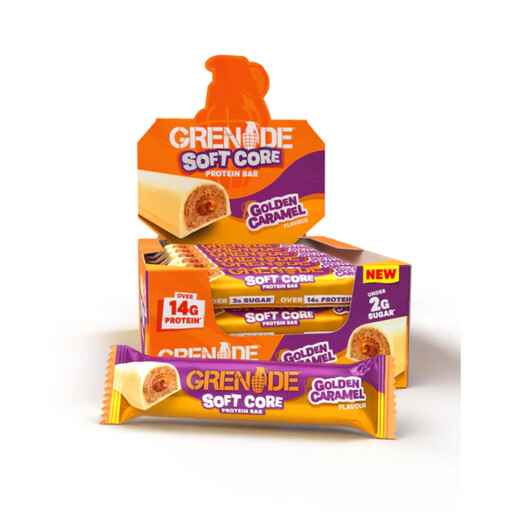
Use the whole-bar values on this flavour’s label when comparing it with other festival snacks. Read its own allergen and polyol information rather than applying details from another Grenade bar.
 No image available
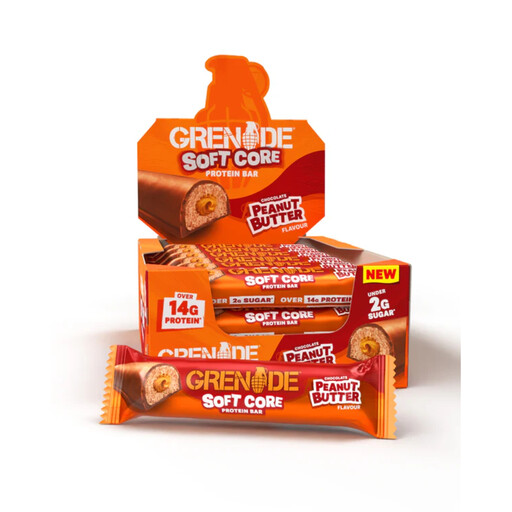
If ingredients affect what you can take to a festival, check this Peanut Butter flavour’s exact contains and may-contain statements. Compare fat and protein for one 50 g bar and follow its storage directions.
 No image available
The name highlights protein and sugar, not a reduced-fat claim. Check total and saturated fat for one 60 g bar before choosing it for a lower-fat festival snack, along with the current ingredient, warning and storage information.
No. Protein, sugar and fat describe different parts of a bar’s nutrition information. To choose with fat in mind, compare total and saturated fat per whole bar and read any reduced-fat wording on the current pack rather than inferring it from another claim.
Start with total fat and saturated fat for the complete bar, then compare protein and the other nutrition values on that same serving basis. Tesco lists 4.4 g fat and 9.2 g protein for a 40 g Bio&Me Cocoa bar; PhD lists 8.5 g fat and 22 g protein for its 64 g Smart Protein Bar in Strawberries and Cream. The lower-fat example also provides less protein per bar.
Follow each product’s storage directions rather than assuming all bars can be stored alike. Tesco specifies room-temperature storage for Barebells Caramel Choco. Keep bars sealed and consider how heat and pressure in your bag could affect their condition.
Read the current individual wrapper for the exact flavour, including its precautionary statements. Tesco lists milk and soya for Barebells Caramel Choco and possible traces of gluten, egg, peanuts, nuts and sesame; Grenade’s Chocolate Chip Salted Caramel information also lists milk and soya and possible gluten, peanut and nut traces.
Some named products warn that excessive consumption may have a laxative effect. PhD includes that warning for its Smart Protein Bar, Tesco does so for Barebells Caramel Choco, and Grenade gives a polyol warning for Chocolate Chip Salted Caramel. Check the warning on the particular bars you plan to take and consider it when deciding how many to pack.