Who is this choice for?
A protein bar can be convenient during a short desk break, but the useful comparison depends on whether fat content, ingredients or snack format matters most to you.
Desk workers tracking fat intake
If you want a snack that needs no preparation, compare fat per 100g across bars of different sizes, then check how much fat is in the bar you would actually eat. Neither a high-protein nor a low-sugar description answers that question.
Plant-based snack buyers
Check that the exact flavour is vegan, then read its protein, fibre and fat figures alongside its allergen statement. A plant-based bar is not necessarily lower in fat.
People replacing a chocolate-style snack
Flavour and protein may matter more to you than a reduced-fat claim. Check the nutrition and ingredients of the particular bar, and consider what else you need for lunch rather than treating a sweet-style bar as a complete meal.
What should you check?
Start with fat per 100g to compare different bar sizes. Then use the per-bar figures and exact-flavour label to decide whether the portion fits your desk break and the rest of your lunch.
| Priority |
What to check |
Your needs |
| Fat content |
Compare fat per 100g, then fat per bar. In Great Britain, Business Companion states that a solid food must have no more than 3g fat per 100g to carry a low-fat claim; a reduced-fat claim needs a substantiated comparison with a similar product. |
I want to compare bars fairly even when their serving sizes differ. High protein or low sugar on the front of a pack does not settle whether it is lower in fat. |
| Lunch portion |
Read the bar weight and per-bar energy, protein and fibre figures. Consider the bar as part of the food you plan to eat at lunch, not as proof that lunch is complete. |
For a short desk break, I want something I can eat without preparation, while still deciding what else to have for lunch. |
| Flavour and format |
Compare the exact flavour and bar size with its nutrition panel. Check sugar separately from fat rather than treating one figure as a substitute for the other. |
If I am replacing a chocolate-style snack, taste matters, but I still want to know what is in the portion I choose. |
| Ingredients and allergens |
Read the exact flavour’s ingredient list, allergen declaration and precautionary statements. Check for sweeteners and any excessive-consumption warning, particularly before buying a multipack. |
I need the individual bar’s label to fit my ingredient and allergen requirements; a claim made about the wider range is not enough. |
Brand and retailer references
These references help distinguish product lines and labels; a brand’s presence here does not establish that every bar it makes is lower in fat.
PhD
PhD offers Smart Protein Bar products in several flavours.
- PhD lists 9.2g fat and 21g protein per 64g Choc Brownie bar. Those figures apply to that flavour, not automatically to other Smart Protein Bars.
- Its Choc Brownie bar exceeds the Great Britain low-fat claim threshold stated by Business Companion. PhD’s product information also carries an excessive-consumption laxative warning.
Myprotein
Myprotein has a UK category for low-fat protein bars.
- Use an individual product’s current nutrition panel, rather than the category name, to assess its fat content.
Grenade
Grenade presents its protein-bar collection around protein and low sugar.
- Low sugar does not establish that a particular Grenade flavour is low or reduced in fat; compare its own nutrition panel.
Barebells
Barebells offers original, soft and vegan protein-bar lines.
- Barebells lists 15g protein and 9g fat per 55g Vegan Fudge Brownie bar.
- That bar contains wheat and soya and has precautionary statements for milk, peanuts, tree nuts and sesame. Its label also carries an excessive-consumption laxative warning.
Tesco
Tesco lists protein bars from multiple brands, including individual bars and multipacks.
- Its TREK High Protein Choc Caramel listing gives per-bar figures, including 7.2g fat, 12g protein and 12g fibre per 44g bar.
- Check the current listing and product label for the exact bar and flavour you intend to buy.
Quest
Quest presents protein bars through a US storefront.
- For this UK desk-lunch decision, compare a UK-labelled product’s nutrition and ingredients rather than applying figures from a US listing to a bar offered locally.
Joybuy protein bars for desk snacks
These are protein-bar options for a quick desk snack, including chocolate, biscuit and caramel flavours. The selected flavours are not the same as the Choc Brownie, TREK and Barebells products discussed above; compare each option’s own label before making a lower-fat choice.
 No image available
PhD Smart Protein Bar Chocolate Peanut Butter, 12 x 64g
A multipack to consider if you want a chocolate-and-peanut-butter-flavoured desk snack. Compare this flavour’s own fat and protein figures rather than using the Choc Brownie figures elsewhere in this article; check its milk, soya and precautionary allergen statements and any sweetener warning.
View on Joybuy
 No image available
Grenade Protein Bar Oreo Flavour, 4 x 60g
A four-bar pack for someone considering a biscuit-flavoured snack at their desk. Its low-sugar description is separate from fat content, so compare the exact flavour’s fat per 100g and per bar; check the label for milk, gluten and soya.
View on Joybuy
 No image available
Grenade Soft Core Double Chocolate, 12 x 50g
The 50g Double Chocolate bars offer a smaller named portion than the 60g Grenade Oreo bars above. Compare their fat per 100g as well as per bar before drawing a lower-fat conclusion, and check the Double Chocolate label for milk and soya.
View on Joybuy
 No image available
Grenade Soft Core Golden Caramel, 12 x 50g
A 50g caramel-flavoured bar for a desk snack if that flavour appeals to you. Check this variant’s fat and protein figures separately from other Soft Core flavours, and read its milk and soya allergen information.
View on Joybuy
 No image available
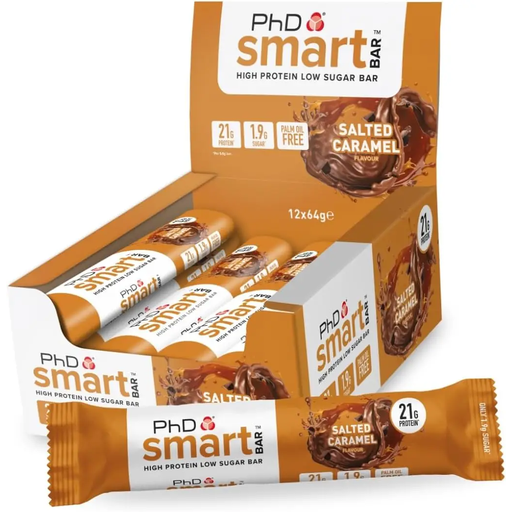
PhD Smart Protein Bar Salted Caramel, 12 x 64g
A salted-caramel option if you want a 64g bar for a desk break. Do not apply the Choc Brownie nutrition figures to this flavour: check its own fat per 100g and per bar, along with its allergen and excessive-consumption warning text.
View on Joybuy
Frequently asked questions
Does high protein or low sugar mean a bar is reduced in fat?
No. Protein, sugar and fat are separate properties. Business Companion states that, in Great Britain, a solid food needs no more than 3g fat per 100g for a low-fat claim; reduced-fat wording requires an established comparison with a similar product. Check the bar’s own fat figure and the basis of any comparison.
Which of the compared bars has less fat per 100g?
PhD Smart Protein Bar Choc Brownie has the lowest fat per 100g among the three specific examples considered here, at 14g per 100g. The comparison uses PhD, Tesco’s TREK High Protein Choc Caramel listing and Barebells’ Vegan Fudge Brownie information; it does not apply to other flavours or establish a market-wide ranking. None of the three meets the Great Britain low-fat claim threshold stated by Business Companion.
Can one protein bar be my desk lunch?
Do not assume that protein content alone makes one bar a complete lunch. Read its per-bar nutrition and portion size, then consider what other food you plan to eat at lunch. A bar can be a convenient part of that meal or a separate desk snack.
What if I need to avoid particular allergens or gluten?
Check the exact bar’s ingredient and allergen label, including precautionary statements. Barebells lists wheat and soya for its Vegan Fudge Brownie bar, with precautionary statements for milk, peanuts, tree nuts and sesame; Tesco’s TREK High Protein Choc Caramel listing identifies peanuts and soya and carries further precautionary statements. Do not apply one flavour’s label to an entire range.
Why do some bars carry a laxative warning?
Some product information carries an excessive-consumption warning associated with sweeteners. PhD Smart Bar and Barebells Vegan Fudge Brownie have such warnings in their product information. Read the wording on the bar you choose, particularly if you are considering eating more than one.


