People comparing evening portions
If you want protein in a small late-night snack, check both fat per 100g and fat per bar. The first helps compare recipes across different bar sizes; the second describes the portion you would eat.


For a lower-fat late-night protein bar, compare fat per 100g as well as fat in the bar you plan to eat, then check its energy and protein per serving. Myprotein UK lists 8.6g fat per 100g and 3.4g per 40g Lean Layered bar; PhD lists 14g per 100g and 9.2g per 64g Choc Brownie Smart Bar. A low-sugar claim does not answer the fat question.
If you want protein in a small late-night snack, check both fat per 100g and fat per bar. The first helps compare recipes across different bar sizes; the second describes the portion you would eat.
A dessert-style bar may suit you if protein and flavour matter more than reducing fat. Check the serving’s fat and energy separately from its sugar and protein figures.
Read the ingredients and allergen information for the exact flavour and pack. The NHS notes that some polyols can have a laxative effect when consumed in large amounts.
Start with the fat figure for a like-for-like comparison, then check what the whole bar contributes and whether its ingredients suit you.
| Priority | What to check | Your needs |
|---|---|---|
| Fat and portion | Compare total fat per 100g, then fat and energy per bar. Check the bar weight when serving sizes differ. | I want a smaller evening snack without mistaking a smaller bar for a lower-fat recipe. |
| Label wording | Read total and saturated fat separately from sugar. For foods, the NHS describes 3g fat or less per 100g as low fat; a comparison with another bar is not the same classification. | If fat is my main concern, a low-sugar or reduced-fat message alone will not settle the choice. |
| Protein per bar | Use the amount per serving, not just a front-of-pack protein message. Consider it alongside the bar’s fat, energy and size. | I want to know how much protein the portion provides without overlooking the rest of its nutrition panel. |
| Ingredients | Check the exact flavour for polyols, manufacturer warnings and emphasised allergens in the ingredients list. | Sweeteners or an allergen could determine which bar I can choose, regardless of its fat figure. |
PhD’s Choc Brownie Smart Bar nutrition table lists 9.2g fat per 64g bar. Its sugar positioning does not establish that it is a lower-fat choice.
Compare total fat, saturated fat and energy for the portion; consider sugar separately.
The NHS low-fat guide for foods is 3g fat or less per 100g. Myprotein UK lists 8.6g per 100g for its Lean Layered bar, even though the brand positions it against its original Layered Bar.
Use the per-100g figure to assess the recipe and the per-bar figure for the portion you would eat.
According to the NHS, some polyols can have a laxative effect when consumed in large amounts.
Check the ingredients and any excessive-consumption warning before eating more than the stated serving.
Protein-bar recipes and allergen warnings can differ between flavours, so a familiar brand name is not enough for an ingredient check.
Read the information for the exact flavour and pack, particularly if you need to avoid an allergen.
Its Lean Layered bar is a useful reference when comparing fat in a smaller bar with fat per 100g.
The Choc Brownie Smart Bar provides a larger-bar comparison for readers considering a sweet-style protein snack.
Grenade presents Caramel Chaos as a high-protein, low-sugar bar.
Barebells offers several protein-bar formats, including its White Salty Peanut bar.
Tesco is a grocery retailer with a protein-bar category, rather than a single bar manufacturer.
These Grenade bars offer several flavours and pack sizes for a protein-bar snack. If lower fat is your priority, compare the exact flavour’s fat per 100g and per bar before choosing; the product names do not settle that question.
 No image available
For a 50g evening portion, check the Double Chocolate panel for fat and energy per bar as well as fat per 100g. Check its ingredients and allergen statement if either affects your choice.
 No image available
This pack contains 50g Golden Caramel bars. Compare the exact flavour’s nutrition panel with other 50g bars, and check the ingredients rather than assuming flavours share a recipe.
 No image available
If you prefer Peanut Butter flavour in a 50g bar, compare its fat per 100g and per serving with the other flavours. Read the exact pack’s allergen information before purchase.
 No image available
These are 60g bars, so check the whole-bar figures when comparing them with a 50g evening portion. The product name’s low-sugar wording is not a substitute for checking fat, energy and ingredients.
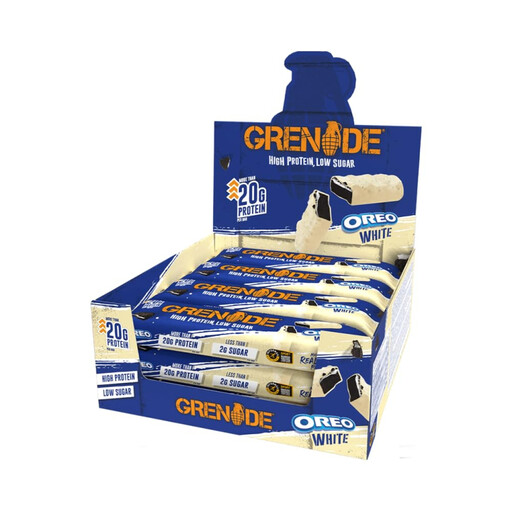 No image available
The White Oreo pack contains 60g bars. For a lower-fat decision, compare its own per-100g and per-bar fat figures; check its ingredients and allergens independently of the other Oreo flavour.
No. PhD lists 9.2g fat per 64g Choc Brownie Smart Bar despite its low-sugar positioning. Check fat, saturated fat and energy separately from sugar, using figures for the bar you would eat.
Check total fat per 100g: the NHS describes 3g or less per 100g as low fat for foods. Also check fat per bar to understand the portion; a bar described as reduced in fat compared with another product is not automatically low fat.
Use the portion you intend to eat as the starting point. Compare its fat, energy and protein per bar, then check the ingredients; do not assume a low-sugar or high-protein label answers whether it suits a lower-fat snack.
For UK pre-packed foods, GOV.UK says required allergens must be emphasised in the ingredients list. Read the label for the exact flavour and pack rather than relying on another bar from the same brand.
The NHS says some polyols can have a laxative effect when consumed in large amounts. Check the ingredients and any consumption warning on a low-sugar bar, particularly before eating more than one serving.