Home workers choosing a lower-fat snack
An individually portioned bar can fit between meetings. Compare fat per 100g as well as per bar: a high-protein label alone does not tell you how much fat the portion contains.


For a lower-fat snack among the named UK variants, Myprotein lists 8.1g fat per 100g for its Lean Layered Chocolate & Cookie Dough bar, alongside 3.2g fat and 15g protein per 40g bar. The named PhD and Barebells bars provide more protein per bar but list more fat per 100g; whichever bar you choose, consider it a snack or lunch component rather than assuming it replaces a varied lunch.
An individually portioned bar can fit between meetings. Compare fat per 100g as well as per bar: a high-protein label alone does not tell you how much fat the portion contains.
If a bar is only one part of lunch, consider what else you want to eat with it, such as fruit, vegetables or a carbohydrate food. A bar on its own offers less variety than a lunch assembled from several foods.
Read the exact flavour’s ingredients and allergen declaration, particularly if milk, peanuts, soy, gluten, nuts or polyols affect your choice. Recipes and warnings can differ between bars.
Start with fat per 100g to compare bars on the same basis, then check the nutrition and ingredients for the portion you would eat.
| Priority | What to check | Your needs |
|---|---|---|
| Total fat | Compare the exact flavours per 100g, then per bar. Myprotein lists 8.1g per 100g and 3.2g per 40g Lean Layered Chocolate & Cookie Dough bar; PhD lists 13g per 100g for Smart Bar Strawberries & Cream, and Barebells lists 15g per 100g for Salty Peanut. | If keeping fat lower is my main reason for choosing a bar, I want the flavour and portion I buy to reflect that comparison. |
| Protein and portion | Check protein alongside bar weight: the named Myprotein bar lists 15g per 40g, PhD Strawberries & Cream 22g per 64g, and Barebells Salty Peanut 20g per 55g. These manufacturer figures describe different-sized servings. | A smaller bar might cover a short gap between meetings; for a larger snack, I would compare the whole portion rather than protein alone. |
| Lunch fit | Decide whether the bar is a snack or one part of lunch. For a lunch with more variety, consider other foods such as fruit, vegetables, beans or wholegrain toast alongside it. | When lunch needs to be more than a quick bar, I want foods I can put together without disrupting the workday. |
| Full label | Read serving size, sugars, saturated fat, ingredients, allergens and any excessive-consumption warning. Do not treat a protein or no-added-sugar message as a summary of the whole label. | If sweeteners or particular ingredients matter to me, I need to check the precise recipe before choosing a flavour or multipack. |
The named Myprotein, PhD and Barebells variants list different fat amounts per 100g, despite all being protein bars.
Compare total fat per 100g first, then the amount in the bar you would actually eat. Check the exact flavour rather than applying one variant’s figures to a whole range.
A bar is convenient during meetings, but it does not by itself offer the variety available from combining different lunch foods.
If you want a fuller lunch, consider adding a suitable food such as fruit, vegetables, soup, beans or wholegrain toast.
The reviewed bars carry differing allergen declarations, and several carry warnings that excessive consumption may cause laxative effects.
Read the exact pack’s ingredients, allergen information and serving guidance, especially before buying a multipack of an unfamiliar flavour.
Protein and sugar claims describe particular features, not every part of a bar’s nutrition or ingredients.
Check the full nutrition panel, including total and saturated fat, sugars, salt and serving size, against what matters for your lunch.
These brand examples describe named ranges and variants; they do not establish the nutrition or availability of every bar a brand sells.
Its Lean Layered range includes the Chocolate & Cookie Dough bar used for the lower-fat comparison here.
Smart Bar offers a larger bar format than the named Myprotein Lean Layered variant.
Its protein-bar range includes the White Chocolate Salted Peanut flavour and the Grenade options shown below.
Its UK range includes Original, Soft and Vegan protein bars; the figures here concern Original Salty Peanut.
Quest publishes nutrition information for its protein bars on a US storefront.
Tesco is a retailer listing bars from multiple manufacturers, rather than a single protein-bar range.
These Grenade bars are snack options for a working-from-home lunch. If lower fat is your priority, compare each exact pack’s fat per 100g and per bar rather than treating the selection as a list of reduced-fat bars.
 No image available
A 50g bar can serve as a portioned snack between meetings. Check the Double Chocolate pack’s nutrition and ingredients if fat or sweeteners affect your choice.
 No image available
This multipack contains four 60g bars for snack portions. Compare the Oreo Flavour label’s fat per bar and per 100g before choosing it for a lower-fat lunch snack.
 No image available
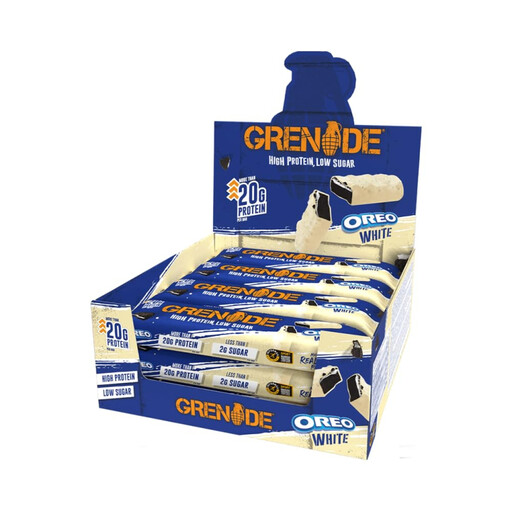
These 60g bars come in a 12-pack. If you plan to keep them for workday snacks, check the White Oreo recipe and its per-bar nutrition rather than borrowing figures from another Grenade flavour.
 No image available
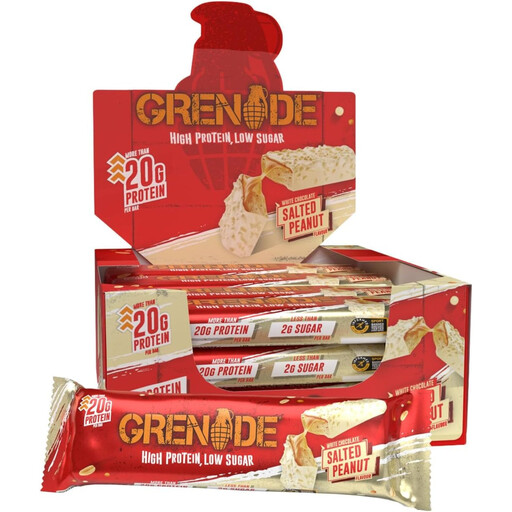
Grenade lists 20g protein and 2g sugar for the White Chocolate Salted Peanut bar. This 12-pack contains 60g bars; check total fat on the exact pack for a lower-fat comparison. The named flavour contains milk, soy and peanuts.
 No image available
This pack contains twelve 50g bars that can be portioned out as workday snacks. Read the Golden Caramel label for fat per 100g, ingredients and any sweetener guidance before deciding whether it fits your lunch routine.
A bar can be a snack or part of lunch, but it need not be the whole meal. For a lunch with more variety, consider adding foods such as fruit, vegetables, beans or wholegrain toast.
Among these named UK variants, Myprotein lists 8.1g fat per 100g for Lean Layered Chocolate & Cookie Dough, compared with PhD’s 13g for Smart Bar Strawberries & Cream and Barebells’ 15g for Salty Peanut. Check the exact flavour and the fat in the portion you would eat.
No single front-of-pack claim describes the whole bar. Read the full nutrition panel and ingredients, including serving size, total and saturated fat, sugars and allergens, before deciding how it fits your lunch.
The reviewed Myprotein, PhD, Barebells and Grenade product information includes warnings that excessive consumption may cause laxative effects. Check the ingredients and serving guidance for the particular flavour, especially if sweeteners affect your choice.
Check the declaration on the exact pack. For example, Barebells Salty Peanut lists milk, peanuts and soy and may contain gluten and nuts; Grenade White Chocolate Salted Peanut lists milk, soy and peanuts. Do not assume another flavour has the same ingredients.