Hosts comparing fat per serving
Individually portioned bars can sit alongside other buffet snacks. If fat is your deciding factor, check both the per-100g declaration and the amount in the bar guests will actually take.


When lower fat is the priority, compare bars by fat per 100g and then by fat per bar; a high-protein or low-sugar description does not answer that question. Myprotein lists 8.6g fat per 100g for Lean Layered White Chocolate and Raspberry, while PhD lists 8.5–9.2g fat per 64g bar for two Smart Bar flavours that provide 21–22g protein. Check the exact flavour’s label and allergens before putting it on a shared buffet.
Individually portioned bars can sit alongside other buffet snacks. If fat is your deciding factor, check both the per-100g declaration and the amount in the bar guests will actually take.
Protein and sugar figures may matter more to these guests than choosing the bar with the lower fat figure. Compare all three values for the same flavour and serving size.
A mixed selection needs flavour-by-flavour ingredient and allergen checks. Keep the wrappers available so guests can read the information for the bar they choose.
Start with fat on a like-for-like basis, then consider the whole bar and the information guests will need at the buffet.
| Priority | What to check | Your needs |
|---|---|---|
| Fat content | Compare the exact flavours’ fat per 100g, then fat per bar. Myprotein lists 8.6g per 100g for Lean Layered White Chocolate and Raspberry; PhD lists 8.5–9.2g per 64g bar for its cited Smart Bar flavours. | I want to keep fat lower across the buffet, so I need to compare the bars on the same basis rather than rely on a protein or sugar claim. |
| Protein and portion | Read protein per bar alongside the bar’s weight and fat per serving. Myprotein’s displayed Lean Layered panel gives 15g protein per 40g bar; PhD lists 21–22g per 64g bar for the cited flavours. | A smaller bar may suit the spread, but I also want to know how much protein that actual portion contains. |
| Sugar claims | Check sugars and fat separately for the chosen flavour. PhD’s cited low-sugar Smart Bars list 8.5–9.2g fat per 64g bar; a sugar claim alone does not establish lower fat. | If I pick a bar for its sugar figure, I still need to check whether its fat figure fits my original reason for shopping. |
| Allergens | Read each flavour’s ingredients, allergen declaration and precautionary statements. Barebells says its Vegan Caramel Peanut bar contains wheat protein containing gluten, illustrating why a range name is not enough. | Guests need to be able to identify the ingredients in their own bar, particularly when several flavours share the buffet table. |
Those figures describe different parts of the nutrition declaration. PhD’s cited 64g Smart Bars provide 21–22g protein but also contain 8.5–9.2g fat per bar, according to PhD.
Compare fat per 100g first, then check the fat and protein in the portion you plan to serve.
Myprotein’s comparison of Lean Layered with a typical protein bar dates from October 2022. It does not tell you the fat content of every bar currently on your shortlist.
Use the nutrition declarations for the exact flavours you are considering.
Ingredients can differ between bars in the same range. Barebells identifies lactose considerations across its products and gluten in its Vegan Caramel Peanut bar.
Check every flavour’s pack before serving, and leave wrappers or the relevant ingredient information where guests can consult them.
A selected multipack may not be available for the delivery date or postcode needed for the buffet.
Confirm the listing’s current availability, delivery details, pack quantity and best-before date before relying on it.
Its Lean Layered range provides named-flavour fat figures for comparing protein bars.
Its Smart Bar range includes full-size bars with flavour-specific nutrition declarations.
Grenade presents its Carb Killa range as high-protein, low-sugar sweet snacks.
Barebells offers several protein-bar lines and flavours for shoppers considering a mixed selection.
Tesco’s protein-bar category offers a supermarket route to individual bars and multipacks.
These PhD Smart and Grenade listings offer different flavours and pack sizes for a buffet. If lower fat is the deciding factor, compare the exact flavours’ nutrition declarations before choosing.
 No image available
This 12-bar pack provides 64g portions for guests choosing a protein snack. Check the Chocolate Peanut Butter flavour’s own fat, protein and allergen declarations before serving.
 No image available
This pack supplies 50g bars for a buffet selection. Compare the Double Chocolate flavour’s fat per 100g and per bar with your other options, and check its allergen declaration.
 No image available
The four-bar pack is an option when you want fewer portions of this flavour on the buffet. Check fat separately from the protein and sugar figures, and read the pack’s allergen information.
 No image available
This multipack contains 12 bars of 60g each. For a shared buffet, check the exact flavour’s fat declaration and ingredient list, particularly where a guest needs to avoid peanuts.
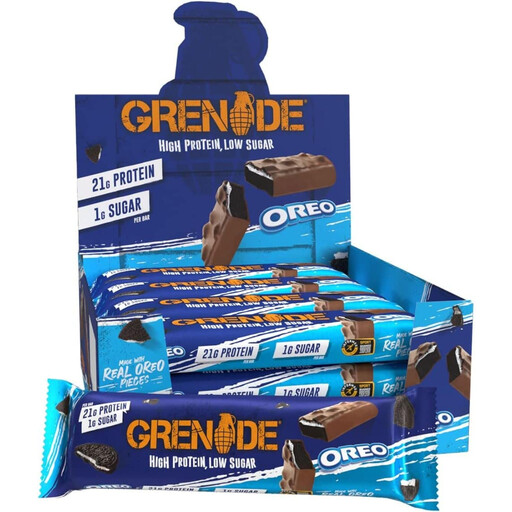 No image available
This is the 12-bar, 60g-per-bar Oreo flavour pack. Compare its exact-flavour fat figures with the other bars you are considering, and retain the wrapper for guests to check allergens.
No: sugar and fat have separate entries on the nutrition declaration. For example, PhD lists 8.5–9.2g fat per 64g bar for its cited Smart Bar flavours, so check the fat figure for the flavour you plan to serve.
Use fat per 100g to compare the formulations, then check fat, protein and serving weight per bar to understand the portion a guest will take. Compare the exact flavour labels rather than applying one flavour’s figures across a range.
Check each exact flavour’s ingredients, allergen declaration and precautionary statements, and keep its wrapper available. Barebells, for example, says its Vegan Caramel Peanut bar contains wheat protein containing gluten; the word ‘vegan’ does not answer a guest’s gluten question.
No. Check the pack count, current availability, delivery eligibility and best-before date before deciding how many packs to use for Boxing Day.