Shoppers comparing fat content
If you want a plain or lightly salted rice cake, use fat per 100g to compare packs on the same basis. A flavour description or the calories shown per cake does not make that comparison for you.


For car boot sale refreshments, compare rice cakes by fat per 100g before choosing a flavour or pack size: the plain and lightly salted products listed by M&S, Sainsbury's, Kallo and Tesco range from 2.5g to 2.9g per 100g. Check the current pack for ingredients and allergen warnings, particularly if other people will eat them. If you plan to supply or sell refreshments, keep the packaging available and check the event organiser's rules and any relevant local-authority requirements.
The useful checks differ depending on whether you are comparing nutrition panels, bringing your own snack or offering food to other people.
If you want a plain or lightly salted rice cake, use fat per 100g to compare packs on the same basis. A flavour description or the calories shown per cake does not make that comparison for you.
Unopened packs keep their storage directions and ingredient information together. Check the label for how to store rice cakes before the event and what to do with a pack once it has been opened.
Gluten-free or vegan wording can help narrow a choice, but it does not replace the exact pack's ingredient and allergen statements. The warnings differ between the products discussed here.
Start with a like-for-like nutrition comparison, then check whether the pack's labelling and storage directions work for the people and setting involved.
| Priority | What to check | Your needs |
|---|---|---|
| Fat content | Compare fat per 100g on the current nutrition panels. Check the per-cake figure separately if you need to plan portions; cake and pack sizes can differ. | I want to compare lower-fat options without mistaking a small per-cake number for a like-for-like comparison. |
| Ingredients and allergens | Read the ingredient list, dietary statements and any may-contain warning on the exact pack. Do not use vegan wording as a substitute for a milk-allergy check. | If I am sharing snacks, I need recipients to be able to check the ingredients and allergen information for themselves. |
| Storage and packaging | Follow the pack's cool, dry storage directions where stated. Check its instructions for airtight storage after opening, and keep the wrapper with the food. | For an outdoor event, I want packs that are straightforward to carry and whose labels remain available if a sleeve is opened. |
| Supplying food to others | Ask the organiser about event rules. If you will sell or supply food, check with the relevant local authority whether your activity involves food-business requirements. | Handing refreshments to visitors is different from bringing a snack for my own use; I need to establish what applies before the event. |
M&S, Sainsbury's, Kallo and Tesco list figures from 2.5g to 2.9g fat per 100g for the plain or lightly salted products discussed here. Calories per cake do not show that difference on a common weight basis.
Compare the current labels per 100g first. Use per-cake information afterwards if the number of cakes matters for serving.
Sainsbury's describes its lightly salted wholegrain rice cakes as prepared to a vegan recipe but says they are not suitable for customers with a milk allergy because of manufacturing methods. Kallo's organic lightly salted pack carries may-contain warnings for milk, sesame and soya.
Read the allergen statement on each current pack before offering it to someone with an allergy.
The wrapper carries the food name, ingredients and storage directions that someone receiving a rice cake may need to see. Tesco and M&S advise airtight storage after opening.
Bring unopened packs where practical. If you open one, keep its wrapper with the food and follow its storage instructions.
Food Standards Agency guidance for community and charity events in England, Northern Ireland and Wales says people who sell or supply food may be considered food businesses and may need to register with their local authority. The circumstances of a particular car boot sale still need checking.
Confirm the organiser's rules and ask the relevant local authority about your planned activity before supplying refreshments to others.
These examples show why the exact variety matters: compare its fat figure and dietary wording rather than treating either as a claim about every product from the brand.
Kallo's lightly salted rice cakes include an organic 130g variety that Sainsbury's labels low fat and lists at 2.7g fat per 100g.
Tesco lists 2.9g fat per 100g for its 130g Lightly Salted Rice Cakes.
Sainsbury's lists 2.7g fat per 100g for its 135g Lightly Salted Wholegrain Rice Cakes.
M&S lists 2.5g fat per 100g for its 112g Lightly Salted Rice Cakes, the lowest disclosed figure among these four plain or lightly salted examples.
These listings cover an organic lightly salted rice cake and a Marmite-flavoured alternative for car boot sale refreshments. If you want a plain base, the flavour difference matters as much as the pack label.
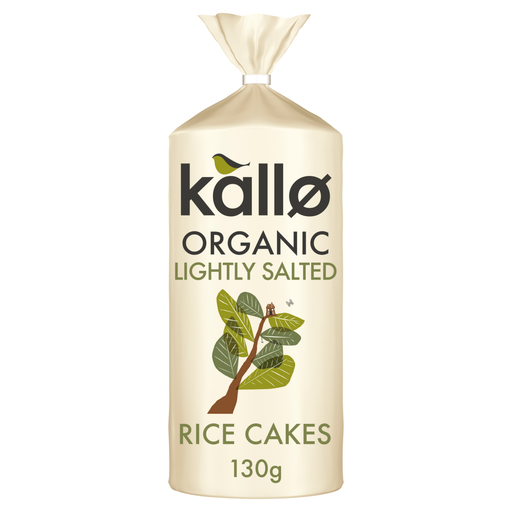 No image available
This lightly salted pack suits a comparison of plain rice cakes for event refreshments. Sainsbury's lists 2.7g fat per 100g for the same Kallo organic variety and says it may contain milk, sesame and soya; check the current pack before sharing.
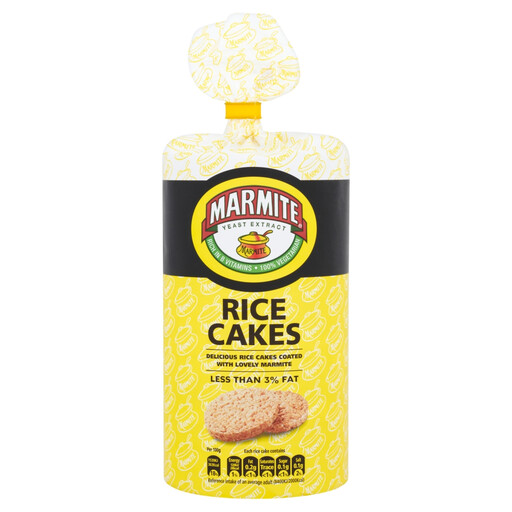 No image available
The Marmite flavour makes this a different choice from a plain or lightly salted rice cake. If you are buying for others, check this pack's nutrition panel, ingredients and allergen statement rather than applying figures or dietary labels from another variety.
Compare fat per 100g on the current nutrition panels. A per-cake figure is useful for counting servings, but cakes of different sizes should not be compared on that figure alone.
Not necessarily. Sainsbury's says its lightly salted wholegrain pack is prepared to a vegan recipe but is not suitable for customers with a milk allergy because of manufacturing methods. Kallo's organic lightly salted pack carries a may-contain-milk warning. Check the exact current label.
Follow the current pack's instructions; Tesco and M&S specify cool, dry storage and advise an airtight container after opening. Keep the wrapper available so its ingredients and allergen information stay with the food.
Yes, check the rules for your event and activity. Food Standards Agency guidance for community and charity events in England, Northern Ireland and Wales says that selling or supplying food may mean you are considered a food business and may need to register with your local authority; very limited and infrequent activity may be assessed differently. Ask the relevant local authority what applies to your plans, and keep prepacked labels available to recipients.