For a sharing spread where fat content matters, start with plain, unsalted or lightly salted rice cakes and compare the figures per 100g as well as per cake. Kallo, Sainsbury's and Tesco list 2.4g to 2.9g fat per 100g for the plain examples discussed here, while Kallo lists 24.0g to 25.0g per 100g for its chocolate-coated examples. Choose the salt level to suit the spread, and check each current pack's allergen wording before serving guests.
Who is this for?
Hosts assembling a shared snack spread
Plain rice cakes provide a base for optional toppings, so guests need not all choose the same flavour. If fat content is the reason for choosing them, compare the finished snacks too: Kallo's chocolate-coated cakes have different nutrition figures from its plain varieties.
Shoppers comparing salt levels
No-added-salt and lightly salted are different choices. Sainsbury's lists less than 0.01g salt per cake for its no-added-salt product; Tesco lists 0.02g per cake for its lightly salted product.
Hosts checking guests' allergens
Read the statement for the exact product rather than relying on its rice-cake name or vegan-recipe wording. Kallo says its lightly salted cakes may contain milk, sesame and soya; Sainsbury's says its no-added-salt cakes are not suitable for customers with a milk allergy because of manufacturing methods.
What should you compare?
Choose whether the cakes will be a plain base or a flavoured snack, then compare nutrition on the same basis and check the pack for anyone with an allergy.
| Priority | What to check | Your needs |
|---|
| Fat content |
Compare fat per 100g across products, then check the per-cake figure and any toppings separately. Kallo lists 2.8g per 100g for its plain lightly salted cakes, against 24.0g and 25.0g for its dark- and milk-chocolate cakes respectively. |
I'm choosing a base for toppings, so I want to compare the plain cake before adding anything to it. |
| Salt and flavour |
Check whether salt is added and read the declared amount per cake. Sainsbury's lists less than 0.01g for its no-added-salt cakes; Tesco lists 0.02g for its lightly salted cakes. |
A neutral base would let guests choose their own toppings; alternatively, I might prefer a lightly salted cake served as it is. |
| Allergens |
Read the exact pack's ingredients and allergen statement, including may-contain wording. Check gluten-free and vegan statements separately from milk, sesame and soya warnings. |
Before putting out a shared plate, I need to know whether the particular cakes suit the guests who will eat them. |
What is easy to overlook?
-
Assuming every rice cake has similar fat content
Kallo lists 2.8g fat per 100g for its plain lightly salted cakes, compared with 24.0g for its dark-chocolate cakes and 25.0g for its milk-chocolate cakes. The coating changes the comparison.
Compare the nutrition panels per 100g. If you want chocolate-coated cakes as well, treat them as a separate snack choice rather than the plain base.
-
Treating a vegan recipe as an allergen assurance
Kallo's lightly salted cakes may contain milk, sesame and soya. Sainsbury's says its no-added-salt cakes are prepared to a vegan recipe but are not suitable for customers with a milk allergy because of manufacturing methods.
Ask guests about allergies and check the current pack's full allergen statement before serving.
-
Judging the whole snack by the plain cake
The rice cake's per-cake figure does not include dips, spreads or other toppings, which may also introduce allergens.
Compare the base product first, then check each food added to the shared spread separately.
-
Using an older listing instead of the pack
Tesco advises shoppers to read the product label because food formulations can change. A saved listing may therefore differ from the pack being served.
Check the pack's ingredients, nutrition panel, allergen statement, best-before date and storage instructions when you buy it.
Relevant brand references
These product-line examples help distinguish plain and flavoured choices; brand inclusion does not mean every product in a range has the same nutrition or allergen details.
Kallo
Kallo lists both lightly salted and unsalted plain rice cakes, alongside chocolate-coated varieties with different nutrition figures.
- Kallo lists 2.8g fat per 100g and 0.2g per cake for its plain lightly salted product; its organic unsalted product lists 2.7g fat per 100g and trace salt.
- Both plain product pages warn that milk, sesame and soya may be present. Check the exact variety and pack for guests with allergies.
Tesco
Tesco Lightly Salted Rice Cakes are a plain option for a savoury base.
- Tesco Groceries lists 2.9g fat per 100g, 0.2g fat per cake and 0.02g salt per cake.
- Lightly salted does not mean no added salt. Tesco advises reading the pack label because formulations can change.
Sainsbury's
Sainsbury's No Added Salt Rice Cakes offer a plain base when added salt matters to the choice.
- Sainsbury's lists 2.4g fat per 100g, less than 0.5g fat per cake and less than 0.01g salt per cake.
- Despite the vegan-recipe wording, Sainsbury's says this product is not suitable for customers with a milk allergy because of manufacturing methods.
Snack a Jacks
Snack a Jacks is another rice-cake range to assess by individual product and flavour.
- A flavoured cake offers a different choice from a plain base for toppings.
- Check the particular pack's fat per 100g, ingredients and allergen statement before comparing it with plain cakes.
Rice cakes on Joybuy
These Joybuy options include a lightly salted cake that can serve as a base and three distinctly flavoured cakes. Compare their individual labels rather than assuming that every flavour suits the same toppings or guests.
 No image available
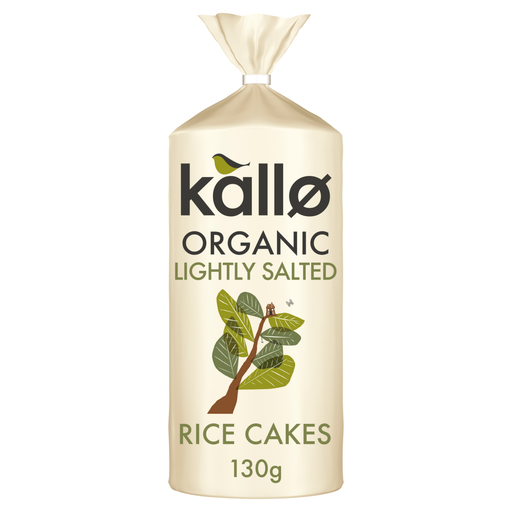
Kallo Organic Lightly Salted Rice Cakes 130g
A lightly salted choice when you want a relatively plain cake for optional toppings. Tesco Groceries lists 2.7g fat per 100g and 0.2g per cake for Kallo Organic Lightly Salted Wholegrain Rice Cakes 130g; its listing also says the product may contain milk, sesame and soya. Check the current pack before serving guests with allergies.
View on Joybuy
 No image available
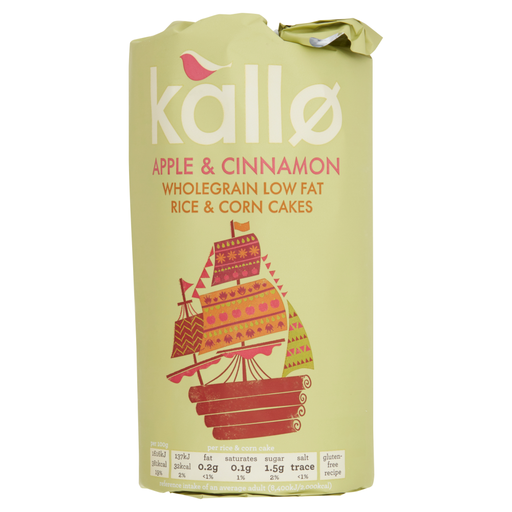
Kallo Jumbo Apple & Cinnamon Rice Cakes 127g
Apple and cinnamon flavour makes this a sweet choice to serve on its own rather than a neutral base for savoury toppings. Check the pack's nutrition and allergen details when comparing it with plain cakes.
View on Joybuy
 No image available
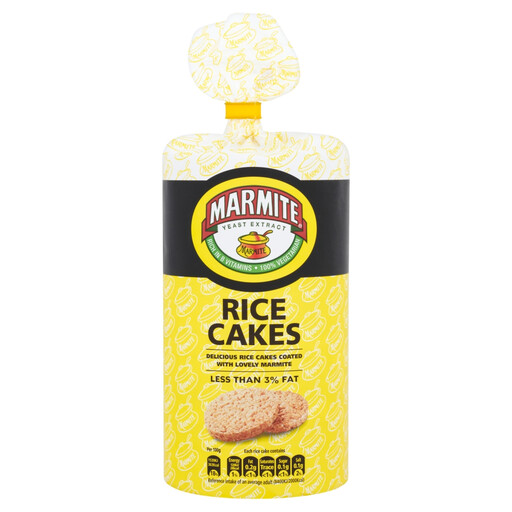
Marmite Rice Cakes 110g
A Marmite-flavoured option for guests who want that taste rather than a plain cake for varied toppings. Read the current ingredients, nutrition and allergen information before adding it to a shared plate.
View on Joybuy
 No image available
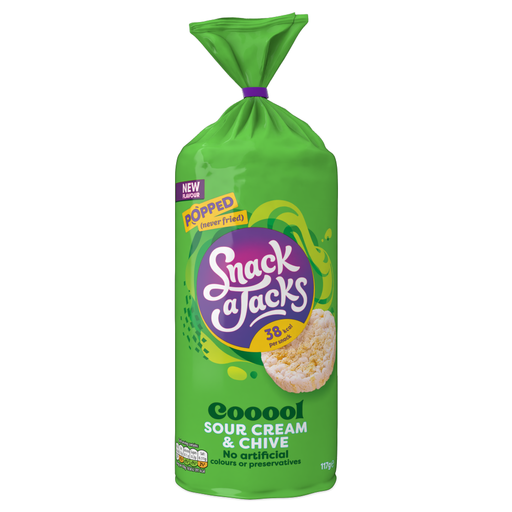
Snack a Jacks Jumbos Sour Cream & Chive Rice Cakes 117g
Sour cream and chive flavour makes these an alternative to a plain topping base. Check fat per 100g and the pack's ingredient and allergen statements before serving them to the group.
View on Joybuy
Questions about choosing and serving
What should I compare first for a lower-fat rice-cake spread?
Compare fat per 100g on the same basis, then look at the per-cake figure and anything served on top. Kallo, Sainsbury's and Tesco list 2.4g to 2.9g fat per 100g for the plain examples here, whereas Kallo lists 24.0g to 25.0g per 100g for its chocolate-coated examples.
Should I choose no-added-salt or lightly salted cakes?
Choose based on whether you want a neutral base or some salt in the cake itself. Sainsbury's lists less than 0.01g salt per cake for its no-added-salt variety, while Tesco lists 0.02g per cake for its lightly salted variety; check toppings separately.
Does gluten-free or vegan wording settle the allergy question?
No: check the exact product's full allergen statement. Kallo labels its lightly salted cakes gluten-free but warns that they may contain milk, sesame and soya. Sainsbury's says its no-added-salt cakes are prepared to a vegan recipe but are not suitable for customers with a milk allergy because of manufacturing methods.
How should I keep rice cakes after opening the pack?
Follow the storage directions on the pack you buy. Kallo specifies consuming its lightly salted cakes within 14 days of opening, and Tesco instructs shoppers to put its lightly salted cakes in an airtight container after opening.


