Office snack buyers comparing fat content
If you stock a communal biscuit tin, the fat figure per 100 g helps you compare rice cakes of different sizes. An airy texture or a small per-cake serving does not tell you that figure.


For a shared office tin, start with plain or lightly salted rice cakes and compare their fat figures per 100 g. The Kallo, M&S, Sainsbury's, Tesco and Asda products listed by their retailers range from 2.5 to 2.9 g fat per 100 g; a flavoured cake may suit a different preference, but its nutrition and allergen information needs its own check.
If you stock a communal biscuit tin, the fat figure per 100 g helps you compare rice cakes of different sizes. An airy texture or a small per-cake serving does not tell you that figure.
Shared snacks call for a check of each packet's ingredients and precautionary allergen statements. The Kallo, Sainsbury's and Asda products described by their retailers carry different milk, sesame or soya cautions.
Plain or lightly salted own-label cakes offer a different flavour choice from sweet or strongly savoury varieties. Compare the individual nutrition panels rather than assuming the flavour tells you the fat content.
Compare fat on the same per-100-g basis, then check whether the flavour, allergen information and storage instructions work for a shared tin.
| Priority | What to check | Your needs |
|---|---|---|
| Fat content | Read fat per 100 g, not just per cake. Check any low-fat wording on the packet; if comparing a reduced-fat claim, identify the similar product used for comparison. | I'm choosing cakes for their lower fat figure, so I want to compare products on the same basis before filling the tin. |
| Allergens | Read the current ingredients and any 'may contain' or manufacturing warning. Keep that information available with snacks moved out of their packets. | Colleagues need to be able to check the exact cake before taking one; vegan or gluten-free wording alone does not answer every allergy question. |
| Portion information | Compare per-cake energy alongside fat per 100 g. Tesco Groceries lists 27 kcal per cake for its lightly salted rice cakes, while Sainsbury's lists 29 kcal per cake for its wholegrain version. | If I'm setting out individual cakes, a per-cake figure is useful, but I won't use it as a substitute for comparing fat per 100 g. |
| Flavour and storage | Decide whether plain, lightly salted, sweet or strongly savoury cakes suit the group. Follow each packet's instructions for storage after opening. | A shared tin may stay open over several days, so I want cakes that suit colleagues' tastes and can be kept as the packet directs. |
A small per-cake figure can obscure a different per-100-g result. Joybuy lists 5.8 g fat per 100 g for the Snack A Jacks Salt & Vinegar product described in its listing.
Compare fat per 100 g first when lower fat is your priority; use the per-cake figure to understand the serving.
A reduction describes a comparison, whereas a low-fat label describes the product itself. The two phrases do not answer the same buying question.
Check the nutrition panel and, for a reduced-fat comparison, which similar product provides the reference point.
A vegan description can appear alongside a precautionary allergen warning. ASDA Groceries lists potential milk, sesame and soya presence for Kallo Organic Lightly Salted Wholegrain Rice Cakes.
Check the exact pack before putting cakes in a communal tin, particularly when buying for someone with an allergy.
An open packet makes it harder to maintain the crisp texture expected of a rice cake.
Follow the packet's after-opening instructions. If you transfer cakes to a container, retain their allergen and best-before information.
These examples illustrate nutrition and allergen details worth comparing for an office tin; each statement applies to the named product, not every cake from its brand.
ASDA Groceries describes Kallo Organic Lightly Salted Wholegrain Rice Cakes as low fat and lists 2.7 g fat per 100 g.
Sainsbury's lists 2.7 g fat and 0.24 g salt per 100 g for its 135 g Lightly Salted Wholegrain Rice Cakes.
Tesco Groceries lists 2.9 g fat per 100 g for Tesco Lightly Salted Rice Cakes 130 g.
ASDA Groceries lists 2.9 g fat per 100 g for ASDA Slightly Salted Rice Cakes 130 g.
M&S Food lists 2.5 g fat, 3.4 g fibre and 0.33 g salt per 100 g for its Lightly Salted Rice Cakes.
The Salt & Vinegar product described by Joybuy illustrates why flavoured rice-and-corn cakes need a separate nutrition check.
These Joybuy options include a lightly salted cake and two distinctly flavoured cakes. Compare their current packets if you need a particular fat figure or are stocking snacks for colleagues with allergies.
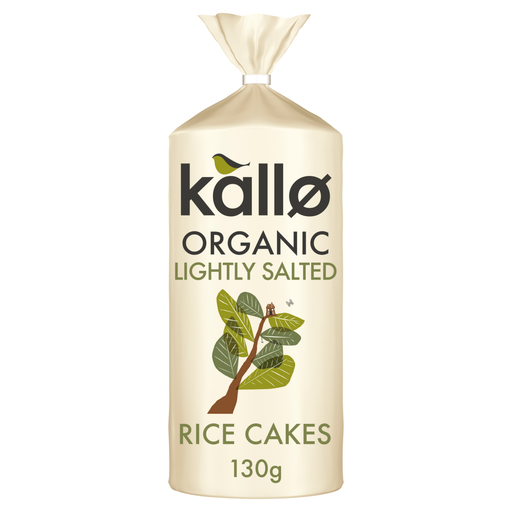 No image available
A lightly salted option to consider when choosing a less strongly flavoured cake for a shared tin. Check this pack's fat figure per 100 g and allergen statements before stocking it for colleagues.
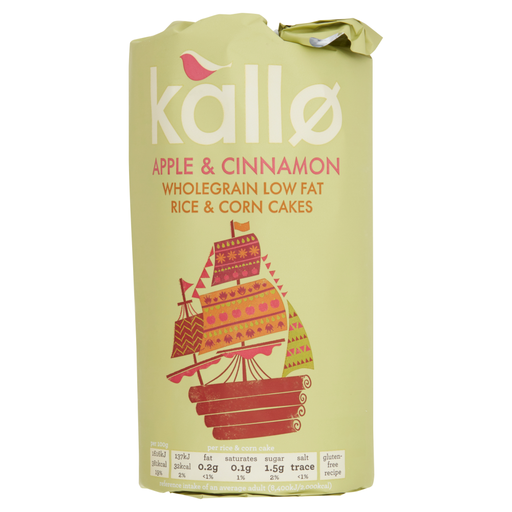 No image available
An apple-and-cinnamon option for a tin where a sweet flavour is wanted. Compare its sugar and fat figures on the current pack with those of any plain cakes you are considering.
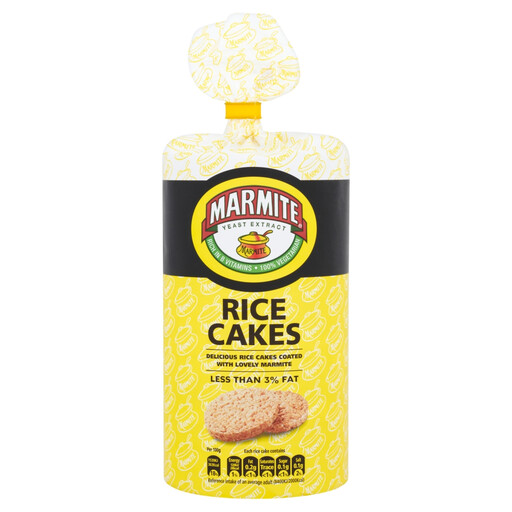 No image available
A Marmite-flavoured option if colleagues want a distinctly savoury cake rather than a lightly salted one. Check the packet's fat, salt and allergen information before adding it to a shared tin.
No. 'Reduced fat' describes a comparison with a similar food, while 'low fat' describes the product's fat content. For an office tin, read fat per 100 g and check what comparison supports any reduced-fat wording.
Not automatically. ASDA Groceries lists a milk, sesame and soya precaution for the Kallo product described here, Sainsbury's gives a milk-allergy manufacturing caution for its lightly salted cakes, and Asda lists a soya precaution for its slightly salted cakes. Check the exact current pack for the person who will eat them.
Use fat per 100 g to compare cakes of different sizes for this lower-fat decision; use calories per cake to understand an individual serving. Tesco Groceries, for example, lists 2.9 g fat per 100 g and 27 kcal per cake for its lightly salted product.
Follow the packet's storage and after-opening instructions, using an airtight container where directed. Keep the original allergen and best-before information available if the cakes are moved out of their packet.