Families choosing everyday cupboard snacks
Compare the nutrition panels of cakes and individual snack packs on the same per-100g basis, then look at what will actually be served.


For a lower-fat rice cake, compare total fat per 100g rather than relying on a light texture or a small pack: the NHS describes 3g of fat or less per 100g as low. Plain or lightly salted products can meet that benchmark, but check salt, toppings and the exact pack’s allergen information before deciding what suits your household.
For school-holiday snacks, the useful comparison depends on whether fat, salt, flavour or an individual child’s allergen requirements matter most.
Compare the nutrition panels of cakes and individual snack packs on the same per-100g basis, then look at what will actually be served.
Check total fat per 100g, especially when comparing plain cakes with flavoured rice snacks. The NHS low-fat guide for foods is 3g of fat or less per 100g.
Read the current label of each product. A gluten-free statement does not rule out separate warnings for milk, sesame or soya.
Start with fat per 100g to compare different cake and pack sizes. Then check salt, the portion you plan to serve and any ingredients or allergen warnings that affect the choice.
| Priority | What to check | Your needs |
|---|---|---|
| Total fat | Compare total fat per 100g; the NHS describes 3g or less per 100g as low. Use per-cake or per-pack figures to assess the portion served, not to replace the per-100g comparison. | I’m comparing cakes of different sizes and want to know whether each one meets the same low-fat benchmark. |
| Salt | Read salt per 100g alongside fat. NHS food-label guidance describes 0.3g or less per 100g as low and more than 1.5g per 100g as high; check salt per pack for a portioned snack too. | A flavoured pack might be convenient, but I also want to see how much salt is in the pack being served. |
| Allergens | Check the current ingredients, allergen statement and any may-contain warning on the exact pack. A gluten-free label does not cover other allergens. | Someone in my household needs a product-specific allergen check, even if we have bought the brand before. |
| Toppings and portions | Compare the plain cake first, then check the nutrition and ingredients of any topping. For ready-flavoured cakes, compare both per-100g and per-serving information. | I want to assess the whole snack we’ll serve, rather than judging it by the rice cake alone. |
| Flavour and format | Decide whether a plain base for toppings or a ready-flavoured pack is more practical, then compare their labels on the same basis. | A snack that is easy to serve matters to us, but a small flavoured bag should not be assumed to be low in fat. |
Snack a Jacks lists 1.7g of fat per 23g Salt & Vinegar pack. That works out at about 7.4g per 100g, above the NHS low-fat guide of 3g or less per 100g.
Use fat per 100g when comparing it with plain rice cakes; use the pack figure to understand the portion.
Snack a Jacks lists 0.63g of salt per 23g Salt & Vinegar pack, equivalent to about 2.7g per 100g. The NHS describes more than 1.5g of salt per 100g as high.
Compare salt and fat together, particularly when moving from plain cakes to flavoured packs.
Kallo Organic Lightly Salted Wholegrain Rice Cakes are identified as gluten-free, but the product information also says they may contain milk, sesame and soya.
Check the current pack against the individual child’s allergen requirements before serving.
A topping adds its own ingredients and nutrition values, so the figures for a plain rice cake do not describe the finished snack.
Check the topping separately and consider the amount you plan to use.
These figures describe the named products, not every rice cake sold by each brand. Compare the current pack if a particular fat, salt or allergen value matters to you.
Kallo Organic Lightly Salted Wholegrain Rice Cakes are a plain option for comparing fat and salt.
Asda Slightly Salted Rice Cakes offer another plain product to compare on a per-100g basis.
M&S Lightly Salted Rice Cakes are a wholegrain brown rice option.
Tesco Lightly Salted Rice Cakes show why a lightly salted name does not settle the fat comparison.
The Salt & Vinegar rice-and-corn multipack is a portioned, flavoured snack rather than a plain rice cake.
Sainsbury’s describes its 135g rice cakes as made with wholegrain brown and white rice.
These Joybuy options include a lightly salted rice cake and two flavoured choices for school-holiday snacks. Compare the current labels before treating a flavoured option as equivalent to a plain one.
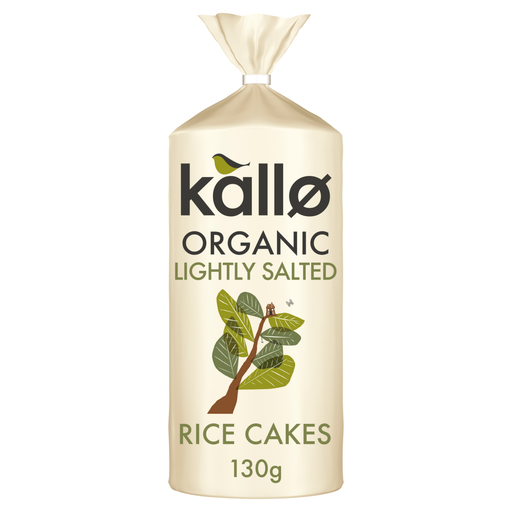 No image available
A lightly salted choice if you want a plain base for a school-holiday snack. Asda Groceries lists 2.7g fat and 0.3g salt per 100g for the corresponding Kallo product; its allergen advice says it may contain milk, sesame and soya. Check the current pack before serving.
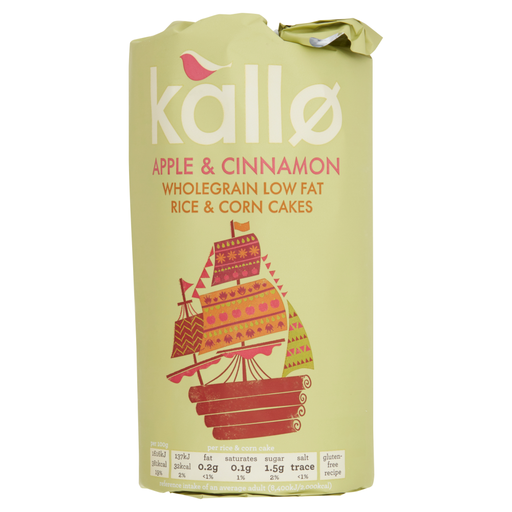 No image available
A ready-flavoured option when you would rather serve a rice cake without adding a topping. Check the current pack’s fat, sugars and salt per 100g, as well as its allergen advice, before comparing it with a lightly salted cake.
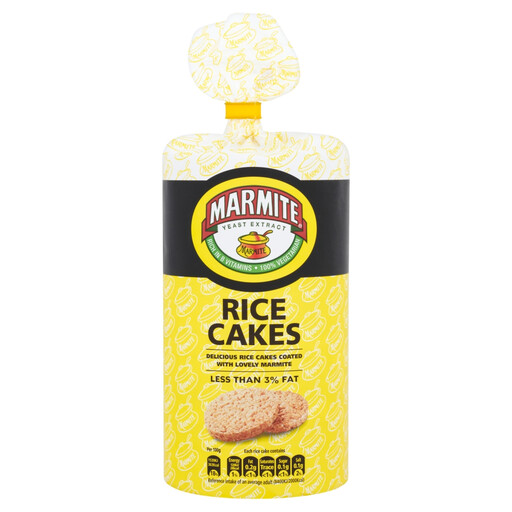 No image available
A savoury, flavoured rice cake for households that prefer that flavour to a plain base. Check the current pack for fat and salt per 100g and review its ingredient and allergen information, particularly if gluten-containing cereals or celery matter to your household.
No. The NHS describes foods with 3g of fat or less per 100g as low in fat, so compare the nutrition panel whether or not those words appear on the front of the pack.
Not necessarily. Snack a Jacks lists 1.7g fat per 23g Salt & Vinegar pack, equivalent to about 7.4g per 100g. Check each flavoured product’s own fat and salt figures rather than judging it by its texture or pack size.
Use fat per 100g to compare products of different sizes. Per-cake or per-serving information then helps you assess the amount actually served; toppings need their own check.
No. Asda Groceries’ information for Kallo Organic Lightly Salted Wholegrain Rice Cakes includes a may-contain warning for milk, sesame and soya. Check the exact current pack against the allergens relevant to the child.
Yes. A plain cake’s nutrition values cover the cake, not a topping added at home. Check the topping’s ingredients and nutrition information, and consider the amount used when comparing finished snacks.