Movie-night snackers comparing fat content
If you expect to have more than one cake, compare products per 100g first, then use the per-cake figures to plan your portion. The NHS defines low fat for food as no more than 3g total fat per 100g.


For a lower-fat movie-night option, start with plain or lightly salted rice cakes and compare total fat per 100g: the NHS low-fat benchmark for food is 3g or less. If salt matters too, compare that separately rather than relying on a “lightly salted” name; flavoured cakes need their own nutrition and allergen checks. Use the per-cake figures to work out what your planned portion, including toppings or dips, adds up to.
If you expect to have more than one cake, compare products per 100g first, then use the per-cake figures to plan your portion. The NHS defines low fat for food as no more than 3g total fat per 100g.
A low-fat rice cake is not automatically the lowest-salt choice. Check the exact pack’s salt figure, particularly when deciding between unsalted, lightly salted and flavoured cakes.
Gluten-free labelling or a vegan recipe does not replace a check of the exact pack’s allergen information. Some cited products carry milk, sesame or soya precautions.
Compare the nutrition panel per 100g to choose a product, then use the per-cake values and your planned toppings to assess the snack you will actually serve.
| Priority | What to check | Your needs |
|---|---|---|
| Fat content | Compare total fat per 100g on the exact flavour. The NHS low-fat benchmark for food is 3g or less per 100g; a per-cake calorie figure answers a different question. | I want to compare lower-fat options without assuming that “reduced fat” means low fat. |
| Salt | Read salt per 100g and per cake. The NHS low-salt benchmark is 0.3g or less per 100g; Kallo Organic Unsalted lists trace salt, while cited lightly salted products have differing values. | If I plan to graze through a film, salt matters alongside fat, even for a cake described as lightly salted. |
| Allergens | Check the exact pack’s ingredients and precautionary statements. Kallo’s cited organic cakes may contain milk, sesame and soya; Sainsbury’s cited vegan-recipe cakes are stated to be unsuitable for customers with a milk allergy. | I need to check whether everyone sharing the snack can have this particular product, not just whether its front label says gluten free or vegan. |
| Portion | Check calories and other nutrition per cake, then account for the number of cakes and any toppings or dips. Compare products per 100g when cake sizes differ. | One cake’s label figure will not describe my whole movie-night portion. |
| Flavour | Compare each flavoured cake’s own panel rather than applying plain-cake figures to it. Snack a Jacks lists 38 kcal for a Sour Cream & Chive jumbo cake and 62 kcal for a Chocolate Chip jumbo cake. | I might prefer a flavoured cake, but I still want to know what changes with the flavour and serving size. |
Those words do not tell you whether a rice cake meets the NHS low-fat benchmark for food.
Check total fat on the exact product’s nutrition panel: the NHS benchmark is 3g or less per 100g.
Plain, lightly salted and flavoured rice cakes can have different salt values, so a fat comparison alone does not settle a salt-conscious choice.
Compare salt per 100g and per cake. If you want an unsalted option, check its label rather than assuming “lightly salted” means the same thing.
Per-cake nutrition does not include the other cakes, toppings or dips eaten during a film.
Work from the number of cakes you expect to serve and include any additions in your comparison.
Precautionary statements and manufacturing-method warnings can still matter to someone with an allergy.
Read the ingredients and allergen information on the exact pack each time you buy.
Kallo’s cited wholegrain range includes lightly salted and unsalted rice cakes.
Tesco’s cited lightly salted rice cakes are an own-label option for a plain sharing snack.
The cited own-label examples include plain and lightly salted wholegrain rice cakes.
Asda’s cited Slightly Salted Rice Cakes offer another own-label flavour level to compare.
Snack a Jacks’ cited jumbo cakes provide flavoured alternatives to plain rice cakes.
The cited M&S Lightly Salted Rice Cakes are made with wholegrain brown rice and salt.
These Joybuy options include a lightly salted wholegrain cake and two flavoured cakes. Check each exact pack against the fat, salt and allergen details that matter to you.
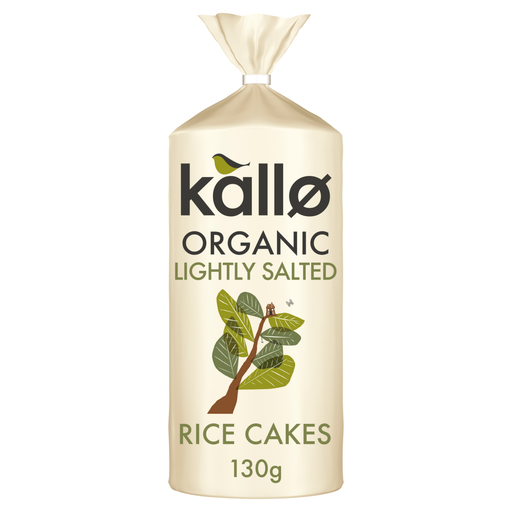 No image available
A lightly salted wholegrain option for comparing fat and salt together: Asda’s listing for this Kallo variant gives 2.7g fat and 0.3g salt per 100g. It carries may-contain warnings for milk, sesame and soya, so check the pack before sharing with anyone affected.
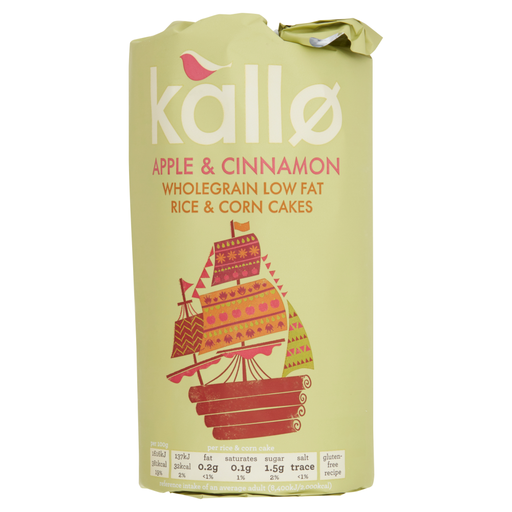 No image available
An apple-and-cinnamon flavoured option if you would rather serve a sweet-tasting cake than a plain one. Compare the exact pack’s fat, sugar and salt figures with your other choices, and check its milk, sesame and soya allergen precautions.
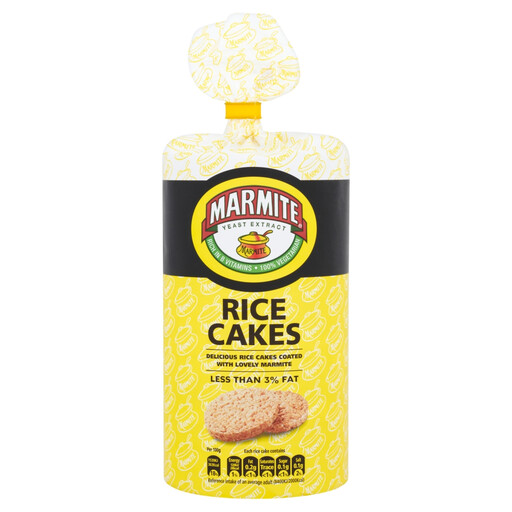 No image available
A savoury flavoured option for movie night. Check the pack’s fat and salt per 100g before comparing it with plain cakes, and read its cereal and celery allergen information if those ingredients affect anyone sharing.
No. To check whether it meets the NHS low-fat benchmark for food, look for no more than 3g total fat per 100g on the exact product’s nutrition panel. “Reduced fat” describes a different claim, so the wording alone does not answer that question.
Compare fat, saturates, sugars and salt per 100g on each exact flavour, then look at the per-cake figures and how many you expect to eat. A larger cake or a topping changes the nutrition of the portion you serve.
No. The NHS low-salt benchmark for food is 0.3g salt or less per 100g. Tesco’s cited lightly salted rice cakes list 0.23g per 100g, while the cited M&S lightly salted cakes list 0.33g per 100g; check the figure on the pack you choose.
No. Check the exact pack’s ingredients and precautionary statements for the relevant allergy. Kallo Organic Unsalted is labelled gluten free but may contain milk, sesame and soya; Sainsbury’s cited vegan-recipe rice cakes are stated to be unsuitable for customers with a milk allergy due to manufacturing methods.