Parents and carers comparing fat content
If you want a packaged bar after school, a per-100g comparison helps distinguish a lower-fat choice within a group of bars from a product that can carry a low-fat claim.


For an after-school bar, compare total fat per 100g rather than treating protein, fibre or no-added-sugar wording as a low-fat claim. None of the five named bars compared below meets the UK threshold of no more than 3g fat per 100g for a solid food labelled low fat, according to GOV.UK guidance. If you still want a bar, check sugars, portion size and allergens too; NHS Healthier Families favours fruit and vegetables as children’s snacks.
If you want a packaged bar after school, a per-100g comparison helps distinguish a lower-fat choice within a group of bars from a product that can carry a low-fat claim.
Nut, oat and fruit-based bars can have different ingredients and precautionary allergen statements. The current pack matters more than a favourable fat figure when a child needs to avoid an ingredient.
A portable bar may suit the journey home or the time before an evening meal. Compare the nutrition per 100g and the amount in one bar so that differences in pack size do not obscure the choice.
Start with a like-for-like fat comparison, then look at the portion, the rest of the nutrition panel and the ingredients of the specific bar.
| Priority | What to check | Your needs |
|---|---|---|
| Total fat | Compare fat per 100g on each pack. GOV.UK guidance sets the UK low-fat-claim threshold for solid foods at no more than 3g per 100g; a bar with a lower figure than another bar does not necessarily meet it. | I want to compare bars fairly without mistaking the lowest figure in a small group for a low-fat product. |
| Sugars and saturates | Read total sugars and saturates per 100g as well as fat. A no-added-sugar, protein or fibre claim does not answer those separate questions. | A front-of-pack claim might catch my eye, but I also want to know what the full nutrition panel says. |
| Bar size | Check the weight of one bar and its per-bar nutrition after comparing products per 100g. Different portion sizes can change how the per-bar figures look. | How much is in the bar the child would actually have after school? |
| Allergens | Read the current ingredients and any ‘may contain’ statement on the exact pack, particularly for nuts, peanuts, milk and soya. | If an ingredient must be avoided, I need to check the specific bar before considering its nutrition figures. |
| Snack choice | Consider whether a packaged bar is needed on this occasion. NHS Healthier Families favours fruit and vegetables as children’s snacks and advises checking labels when choosing packaged snacks. | Sometimes a bar is convenient; at other times, fruit or vegetables may fit the after-school routine. |
Nakd lists 14g fat per 100g for Cocoa Delight despite its no-added-sugar description. Nature Valley lists 29.5g per 100g for Protein Salted Caramel Nut. Those are figures for two specific products, not their whole ranges.
Compare total fat, saturates and sugars per 100g before deciding what a front-of-pack claim means for your choice.
A smaller bar may show less fat per bar even when it has more fat per 100g than a larger one.
Use per-100g figures for the product comparison, then check the weight and nutrition of the portion in the pack.
The compared products include bars with nuts or peanuts, while other packs carry precautionary allergen statements. A lower fat figure cannot resolve an ingredient-avoidance requirement.
Read the ingredients and ‘may contain’ wording on the current pack before giving a bar to a child who needs to avoid an allergen.
Focusing on which bar has less fat can overlook whether a bar is needed for that snack. NHS Healthier Families favours fruit and vegetables for children’s snacks.
Consider the snack occasion first; if you choose a bar, use its nutrition label and ingredients to compare suitable options.
These figures describe the named products, not every bar made by each brand. Check the current pack when comparing a different flavour or format.
Cocoa Delight is a fruit-and-nut example to compare when total fat per 100g is the starting point.
Original Oat is an oat flapjack to consider when its bar format and protein figure matter more than choosing a low-fat product.
Honey Oat Boosts provide an oat-bar reference for comparing fat, saturates and fibre on the same per-100g basis.
Protein Salted Caramel Nut is a nut-bar example for shoppers comparing protein and fat as separate figures.
Dark Chocolate & Peanut Protein Bar illustrates why a nut-based bar needs its own nutrition and allergen check.
Check the exact Alpen bar name rather than relying on an older Alpen Light listing.
These fruit, oat and cereal-bar formats offer different pack sizes for an after-school snack. Compare the nutrition and allergens of each exact product rather than applying figures from similarly named bars above.
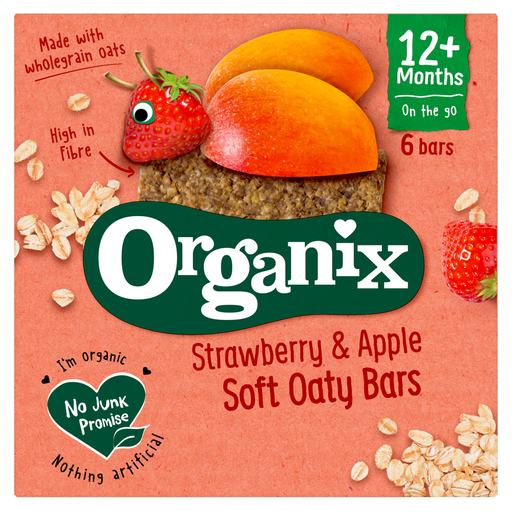 No image available
These 23g soft oat bars are labelled for ages 12 months and over. For an older child’s after-school snack, consider the portion size and check the current pack’s fat, sugars and allergen information.
 No image available
This fruit-and-nut option contains four 35g bars. Check its own per-100g fat and total sugars figures, and read the nut-allergen information on the current pack; Cocoa Delight figures do not describe this flavour.
No image available
These apple crispy fruit slices come in a pack of four 44g portions. If you are considering them instead of a nut bar, compare both fat and sugars per 100g and check the ingredients on the pack.
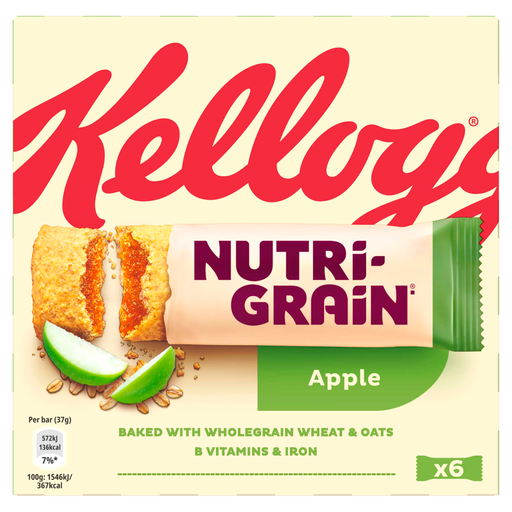 No image available
This apple-flavoured cereal-bar pack contains six bars and weighs 222g in total. A breakfast-bar name does not establish its suitability as an after-school snack: compare the current nutrition panel and allergen statement.
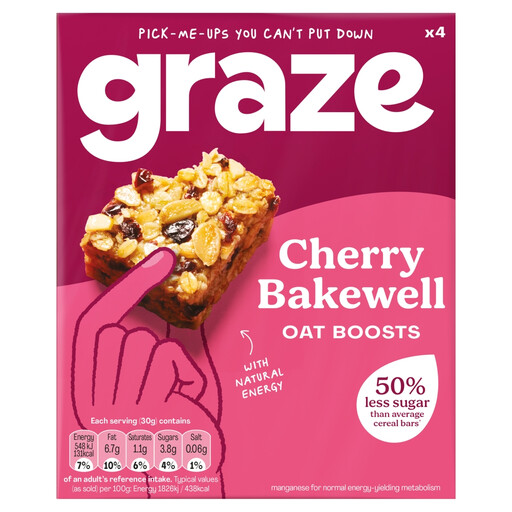 No image available
These Cherry Bakewell oat bars come in four 30g portions. Compare this flavour’s own fat, saturates and sugars per 100g, and check its allergens; the Honey Oat Boosts figures above are for a different product.
No. GOV.UK guidance says a solid food labelled ‘low fat’ must contain no more than 3g fat per 100g. The five named products compared here list between 14g and 36.3g per 100g, according to their manufacturers or the named UK retailer.
No. The claims describe different things: Nakd lists Cocoa Delight as having 14g fat and 43g total sugars per 100g. Read both rows of the nutrition panel for the particular flavour you are buying.
Consider a different snack category rather than assuming one of the five compared bars qualifies as low fat. NHS Healthier Families favours fruit and vegetables as snacks for children; if you choose a packaged food, compare its label with the other options you are considering.
Not necessarily. TREK lists 10g protein per 50g Original Oat bar and 19g fat per 100g, while Nature Valley UK lists around 10g protein per 40g Protein Salted Caramel Nut bar and 29.5g fat per 100g. Compare protein and fat separately for the exact product.
Read the ingredients and precautionary allergen wording on the current pack before choosing a bar. Products discussed here include nut-based bars, and an acceptable fat figure does not make an unsuitable ingredient or allergen warning irrelevant.