For a ride lasting more than 90 minutes, choose a bar by the carbohydrate it contributes to your fuelling plan, not by fat content alone: British Cycling suggests 30–60 g of carbohydrate per hour for rides of that length. If you also want less fat, compare the same serving and per-100 g figures across bars, then consider when you will eat one, whether you tolerate it and whether its ingredients meet your needs. Fewer grams of fat do not, by themselves, establish a UK 'reduced fat' claim.
Who is this for?
The useful comparison changes depending on whether the bar is ride fuel, an everyday snack or a product that must meet a dietary restriction.
Cyclists planning longer rides
If you want to take a packaged bar on a ride lasting more than 90 minutes, check its carbohydrate per bar against your wider food and drink plan. British Cycling suggests 30–60 g of carbohydrate per hour for rides of that length; one bar need not supply the whole amount.
Riders choosing an everyday snack
For a commute, a shorter ride or a snack between meals, compare the labelled portion, total fat, carbohydrate and ingredients. A lower fat figure is a comparison, not automatically a 'reduced fat' claim.
Riders with ingredient restrictions
Check the current ingredient and allergen statement for the exact flavour and pack. Nut and protein bars in the brand examples include ingredients such as peanuts, tree nuts, soya and milk; a claim made for one product range does not establish what is in every variant.
What should you compare?
Decide when you intend to eat the bar, then compare its labelled serving with the amount you expect to need. Fat content matters to a lower-fat preference, but it does not replace the carbohydrate and ingredient checks.
| Priority | What to check | Your needs |
|---|
| Ride fuel |
Read carbohydrate per bar and the serving size. For rides over 90 minutes, compare the bar's contribution with British Cycling's suggested 30–60 g of carbohydrate per hour. |
On a longer ride, I want to know how this bar fits alongside any other food or drink I plan to take. |
| Fat content |
Compare total fat and saturated fat per bar and per 100 g, using the same basis for each product. Check the pack's exact wording before relying on a nutrition claim. |
I'm looking for a bar with less fat, but I do not want to mistake a difference between two labels for a 'reduced fat' claim. |
| Timing and texture |
Consider portion size and whether the bar is practical to eat at the intended point in the ride. Try the exact bar and timing on a routine ride; British Cycling cautions that eating too much close to riding can cause bloating or nausea. |
If I'll eat shortly before riding or while cycling, I want a portion I know I can manage rather than an unfamiliar bar on event day. |
| Ingredients |
Read the ingredient and allergen statement for the exact flavour. Check any gluten-free, wheat-free, dairy-free or vegan wording on that product rather than applying a range-wide claim. |
I need the bar I actually buy to fit my ingredient restrictions, including when I choose a variety pack or repurchase a familiar flavour. |
What can catch you out?
-
Calling the bar 'reduced fat' from a label comparison
Two bars can have different amounts of fat without either pack making that nutrition claim. GOV.UK explains that nutrition claims are subject to rules.
Compare total and saturated fat on a consistent per-bar and per-100 g basis, and use the current pack's wording for any claim.
-
Taking one protein or nut bar as all your long-ride fuel
Protein content does not tell you how much carbohydrate a bar provides. British Cycling suggests planning 30–60 g of carbohydrate per hour for rides over 90 minutes, so assess the bar within the whole ride plan.
Read carbohydrate per serving and work out what other food or drink you intend to take. Trial that combination on a routine ride.
-
Trying a new bar just before an event
British Cycling cautions that eating too much close to riding can leave you feeling bloated or nauseous. The portion and timing that work for one rider may not work for another.
Try the exact bar, portion and timing during an ordinary ride before relying on it at an event.
-
Assuming every flavour has the same ingredients
Allergen statements differ between products: the Nature Valley and Eat Natural protein bars described below list different ingredients and precautionary information.
Read the current label for each flavour and pack, including when buying a multipack or replacing a product you have bought before.
Brand references
These brand examples show why the exact bar and serving matter more than a brand name when comparing fat and carbohydrate.
Graze
Graze describes Oat Boost as a flapjack range.
- Graze says it has reduced saturated fat in Oat Boost flapjacks since their launch.
- That brand statement does not establish the total fat content or a 'reduced fat' claim for an individual current bar. Check its pack.
Nature Valley
Nature Valley sells oat-based Crunchy bars and nut-based protein bars.
- Nature Valley UK lists 10.5 g carbohydrate and 10.4 g protein per 40 g Protein Salted Caramel Nut bar.
- The same bar lists 11.8 g fat and contains peanut, soya, almond and milk ingredients. Its panel must not be applied to Nature Valley Crunchy bars.
nākd.
nākd. describes a fruit-and-nut bar range with no added sugar and states that the range is vegan, gluten-free, wheat-free and dairy-free.
- The fruit-and-nut format gives riders another ingredient style to consider alongside oat and protein bars.
- Neither 'fruit and nut' nor 'no added sugar' tells you the fat or carbohydrate per bar. Check the exact flavour's label and allergens.
Eat Natural
Eat Natural's range includes nut- and chocolate-based protein bars.
- Eat Natural UK lists 13.4 g carbohydrate and 7.8 g protein per 40 g Dark Chocolate & Peanut Protein Bar.
- That same bar lists 14.5 g fat, contains peanuts and soya, and may contain milk and several tree nuts. These figures describe that bar, not the whole range.
Trek
Trek makes oat-based protein flapjacks that riders may consider as portable snacks.
- A Nutracheck listing for a Trek Protein Flapjack gives 22.5 g carbohydrate per 50 g serving.
- The listing also gives 10.5 g fat per serving. Check the current panel of the particular Trek flavour you choose rather than applying those figures across variants.
Joybuy snack-bar options
These fruit-and-nut and oat-bar options are relevant to planning a portable snack for cycling. Compare the current nutrition panel for each exact flavour before deciding whether its fat and carbohydrate amounts fit your ride.
 No image available
nākd. Blueberry Muffin Fruit & Nut Bars, 4 × 35 g
The 35 g fruit-and-nut bars offer individually sized portions to compare with your planned ride snacks. Check the exact flavour's carbohydrate and fat panel, as well as its nut allergen statement.
View on Joybuy
 No image available
Trek Salted Caramel Protein Flapjacks, 3 × 50 g
This oat-flapjack format offers a 50 g portion if you prefer a bar-style snack. Compare its own carbohydrate and fat figures with the fruit-and-nut and Crunchy bars; check the exact pack for soya and other allergens.
View on Joybuy
 No image available
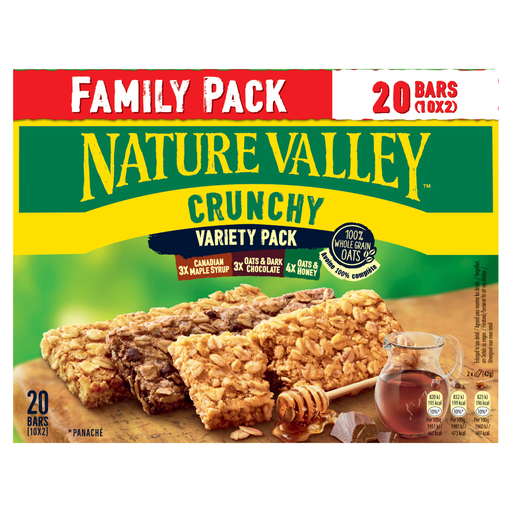
Nature Valley Crunchy Family Variety Pack, 10 × 42 g
The variety pack provides oat-based Crunchy bars in 42 g servings. Check the nutrition and allergen panel for the flavour you intend to take: a figure for one variety-pack flavour should not be assumed to describe them all.
View on Joybuy
 No image available
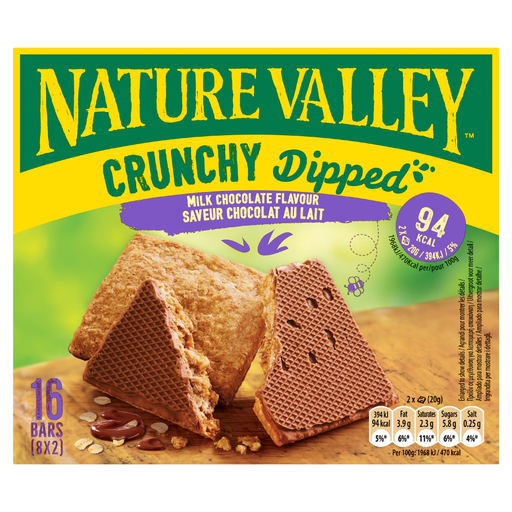
Nature Valley Crunchy Dipped Milk Chocolate, 160 g
This is a milk-chocolate-dipped Crunchy bar pack. For a lower-fat comparison, use its own serving and per-100 g fat figures rather than assuming it matches an undipped or variety-pack flavour; check the milk and other allergen statements.
View on Joybuy
 No image available
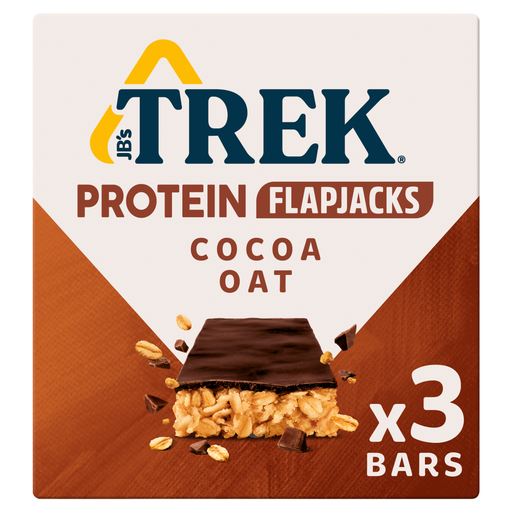
Trek Cocoa Oat Protein Flap Jacks, 3 × 50 g
These cocoa oat flapjacks come in 50 g portions. Compare the current cocoa variant's carbohydrate and fat panel with the Salted Caramel variant rather than treating all Trek flapjacks as nutritionally identical; check its soya allergen statement.
View on Joybuy
Common questions
Do I need a snack bar for every bike ride?
No. British Cycling says most indoor cycling sessions under an hour do not need additional fuel. For rides over 90 minutes, it suggests 30–60 g of carbohydrate per hour; choose a bar only if it fits the food and drink you plan to take and you can eat it comfortably.
Does less fat on the label mean a bar is 'reduced fat'?
No. A smaller fat figure supports a comparison only when you use a consistent serving or per-100 g basis. GOV.UK explains that nutrition claims are subject to rules, so check the exact current pack wording rather than assigning the claim yourself.
When should I try a bar before cycling?
Try the bar and your intended timing on a routine ride, not for the first time at an event. British Cycling advises allowing 2–3 hours after a full meal and suggests that a light snack 1–2 hours before a ride can be considered when needed; eating too much close to riding can cause bloating or nausea.
Is a protein bar enough fuel for a long ride?
Do not judge it by protein alone. British Cycling's guidance for rides over 90 minutes focuses on planning carbohydrate intake. For example, Nature Valley UK lists 10.5 g carbohydrate, 10.4 g protein and 11.8 g fat per 40 g Protein Salted Caramel Nut bar; compare its carbohydrate with your whole ride plan.
What should I check if I have a food allergy?
Read the current ingredient and allergen statement for the exact flavour and pack before buying. Nature Valley UK lists peanut, soya, almond and milk ingredients for its Protein Salted Caramel Nut bar; Eat Natural UK lists peanuts and soya for its Dark Chocolate & Peanut Protein Bar and warns that it may contain milk and several tree nuts. Those statements do not describe every bar from either brand.


