What matters when choosing?
Filter bars against the eater’s allergens first; use the nutrition panel to compare the remaining options.
| Priority | What to check | Your needs |
|---|
| Specific allergens |
Read the current pack’s ingredients, emphasised allergens and relevant ‘may contain’ statements. The Food Standards Agency says precautionary allergen labelling indicates that an allergen could be unintentionally present. |
I need to rule out the allergen that matters to me before comparing bars on fat content. |
| Total fat |
Compare total fat per 100g on packs that pass your allergen check, then look at fat per bar for your portion. Weetabix Cereals lists Alpen Light Chocolate & Fudge at 6.5g per 100g; Tesco lists Nakd Cocoa Delight at 14g per 100g. |
Among bars I can eat, I want to compare fat on the same basis rather than judge by bar size or a ‘light’ name. |
| Free-from descriptions |
Check which characteristic a claim addresses, then read the full ingredients and precautionary statement. Tesco lists cashews in Nakd Cocoa Delight despite its gluten-free and dairy-free positioning; Tesco lists soya ingredients in the gluten-free, vegan TREK Cocoa Oat flapjack. |
A gluten-free or dairy-free claim may matter to me, but it does not answer whether another allergen I avoid is present. |
Brand and product-line references
Allergen information and fat figures apply to the named bars, not every product made by the brand.
Graze
The Honey Oat Boost flapjack is an oat-bar example for comparing nutrition panels.
- Tesco lists 22g fat per 100g for Graze Honey Oat Boost.
- Its listed ingredients include oats and soya; a sugar comparison on the pack is not a fat comparison.
Nature Valley
Crunchy Oats & Honey provides an oat-bar example with product-specific allergen information.
- Nature Valley says this bar has no milk or dairy ingredients listed and gives its fat content as 18.1g per 100g.
- It contains oats and may contain peanut, tree nuts and soy ingredients.
Alpen
Alpen Light Chocolate & Fudge is a cereal-bar example with a stated per-100g fat figure.
- Weetabix Cereals lists 6.5g fat per 100g for this bar.
- It identifies cereals containing gluten and states that the bar is not suitable for people with a nut allergy. Check the current pack for the complete allergen list.
Eat Natural
The range includes fruit, nut and cereal bars; assess the particular recipe you are considering.
- Eat Natural lists 26.7g fat per 100g for its Almond & Apricot Yoghurt Cereal Bar.
- That bar contains almonds and carries a warning for other nuts, peanuts and soya.
Nakd
Cocoa Delight is a fruit-and-nut bar described as gluten-free and dairy-free.
- Tesco lists 14g fat per 100g for Nakd Cocoa Delight.
- Its ingredients include cashews, and the listing warns of traces of soya, peanuts and other nuts.
TREK
Cocoa Oat Protein Flapjacks are described in Tesco’s listing as gluten-free and vegan.
- The Tesco listing states 9g plant protein per bar.
- Its ingredients include soya protein crispies and soya flour; those dietary descriptions do not answer a soya-allergy question.
Snack bars on Joybuy
These flapjack, fruit-and-nut and protein-bar options are starting points for checking individual packs. Compare fat per 100g only after confirming that the current ingredients and precautionary statements work for the eater’s allergens.
 No image available
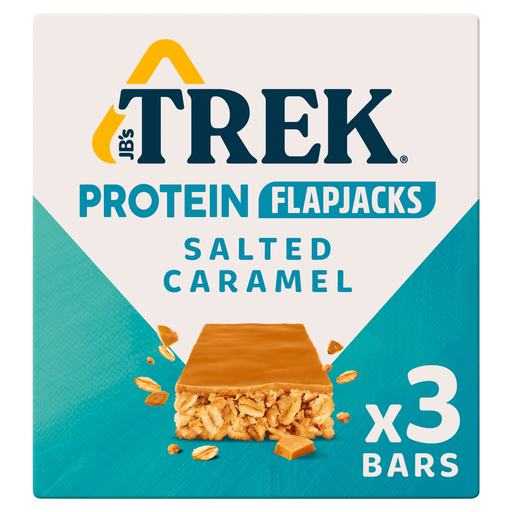
TREK Salted Caramel Protein Flapjacks, 3 x 50g
For a flapjack shortlist, check the current pack for soya and any precautionary statements relevant to the eater’s allergies. The pack contains three 50g bars; use its nutrition panel for a fat comparison.
 No image available
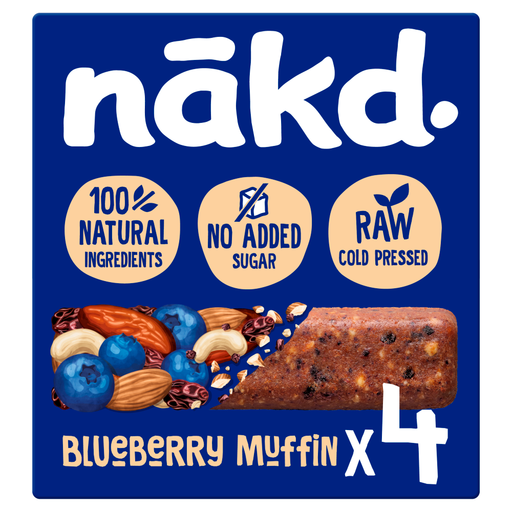
Nakd Blueberry Muffin Raw Fruit & Nut Bars, 4 x 35g
For a fruit-and-nut bar, check the current pack for cashews, almonds and any precautionary peanut or soya statement before comparing its fat content. The pack contains four 35g bars.
 No image available
Grenade Soft Core Double Chocolate Protein Bars, 12 x 50g
If considering this protein bar, check the current pack for milk, soya and any other allergens relevant to the eater. This is a pack of twelve 50g bars; consult its nutrition panel for total fat per 100g.
 No image available
Grenade Soft Core Golden Caramel Protein Bars, 12 x 50g
Check this variant’s current pack for milk, soya and any precautionary allergen statements before assessing its nutrition panel. It comes as twelve 50g bars; do not assume its ingredients match the Double Chocolate variant.
 No image available
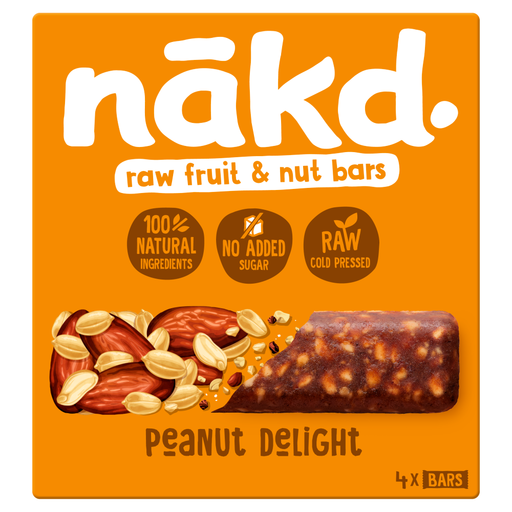
Nakd Peanut Delight, 4 x 35g
This fruit-and-nut option is not appropriate for someone avoiding peanuts; check the current pack for hazelnuts and other relevant statements too. The pack contains four 35g bars, and its fat figure should be assessed per 100g if it passes the allergen check.
Questions about allergy labels and fat
Is a lower-fat bar safer for someone with a food allergy?
No. Total fat does not tell you whether a bar contains, or may contain, the allergen you need to avoid. Check the current pack’s ingredients and relevant precautionary statement first, then compare fat among suitable options.
What does ‘may contain’ mean on a snack-bar label?
The Food Standards Agency says precautionary allergen labelling communicates that an allergen could be unintentionally present. Read it separately from the ingredients list and assess it against the eater’s specific allergy plan.
Does gluten-free, dairy-free or vegan mean suitable for every food allergy?
No. Tesco lists cashews in gluten-free, dairy-free Nakd Cocoa Delight and soya ingredients in gluten-free, vegan TREK Cocoa Oat flapjacks. Check the particular allergen you need to avoid on the current pack.
How should I compare fat in bars of different sizes?
Use total fat per 100g for a like-for-like product comparison, then check the per-bar amount for the portion you plan to eat. Among the named examples, Weetabix Cereals lists Alpen Light Chocolate & Fudge at 6.5g per 100g, while Tesco lists Nakd Cocoa Delight at 14g per 100g; their allergen profiles still need separate checks.
Can I use an online listing to make the final allergy check?
Use a listing to shortlist bars, but check the current physical pack’s ingredients and precautionary statements before eating. Nature Valley advises shoppers to check the ingredients and nutrition information on packs, which matters when choosing a specific product for an allergy.


