Parents comparing fat content
If reducing fat is the main aim, compare the per-100g figures on the nutrition panels before looking at front-of-pack descriptions. Then check the amount in the bar your child would actually eat.


For a school packed lunch, compare snack bars by fat per 100g, then check the amount in one bar and the school’s allergen policy. Eat Natural lists 4.9g fat per 100g for its Apple Soft Fruit Bar—the lowest figure among the five products compared here—but that is above the 3g-per-100g condition for a low-fat claim on solid food published on legislation.gov.uk. Check the current pack before deciding whether any bar fits a child’s needs.
If reducing fat is the main aim, compare the per-100g figures on the nutrition panels before looking at front-of-pack descriptions. Then check the amount in the bar your child would actually eat.
A bar that meets a nutrition preference may still conflict with a child’s allergy plan or the school’s approach to packed lunches. Check both the current pack and the school’s policy before buying a multipack.
Gluten-free, dairy-free and vegan descriptions can help narrow a shortlist, but they do not establish a bar’s fat content or settle whether its ingredients are suitable for school.
Start with the school and child’s ingredient requirements, then compare nutrition on the same per-100g basis and in the portion being packed.
| Priority | What to check | Your needs |
|---|---|---|
| Allergens and school rules | Read the current ingredients and any “may contain” statement. Confirm the school’s packed-lunch policy; the Department for Education says food brought from home should be considered in a school’s allergy-safety approach. | I need a bar that fits both my child’s allergy arrangements and the school’s rules. |
| Fat content | Compare fat per 100g, then fat per bar. Eat Natural lists 4.9g per 100g and 1.2g per 25g Apple Soft Fruit Bar; the low-fat condition for solids published on legislation.gov.uk is no more than 3g per 100g. | If lower fat is my priority, I want figures I can compare on the same basis—not a decision based on “natural”, protein or sugar wording. |
| Sugars and portion | Check “of which sugars” per bar alongside the ingredient list and bar weight. Nature Valley explains that the sugars figure includes sugars from all sources. | A lower-fat figure alone does not tell me how much sugar is in the portion going into the lunchbox. |
| Dietary fit | Check gluten-free, dairy-free or vegan information for the exact product, as well as its ingredients, precautionary allergen wording and nutrition panel. | When a dietary requirement narrows my choices, I still need to check fat and school suitability separately. |
Those descriptions answer different questions. For example, Tesco Groceries lists 22g fat per 100g for Graze Honey Oat Boost, regardless of its sugar positioning.
Use the total-fat figure per 100g to compare bars, then check the amount per bar.
Nutrition figures cannot establish whether a bar fits an individual allergy plan or a school’s approach to food brought from home.
Check the physical pack’s ingredients and precautionary statements against the child’s arrangements and the school’s current policy.
A no-added-sugar description does not give the total sugars in a bar. Tesco Groceries lists 12g sugars per 35g nākd. Peanut Delight bar.
Compare the “of which sugars” amount for the portion being packed and read the ingredient list.
These examples show why it helps to compare individual products rather than assume a brand’s whole range has the same nutrition or ingredients.
Its Apple Soft Fruit Bar is a 25g fruit-bar example for comparing declared fat per bar and per 100g.
Oat Boost is an oat-flapjack range whose sugar messaging should be considered separately from fat content.
Its Protein + Fibre Chocolate & Orange bar illustrates a choice centred on the amounts of protein and fibre in a bar, rather than on reducing fat.
The brand describes its fruit-and-nut bars as vegan and gluten-, wheat- and dairy-free; check the exact product when a dietary restriction matters.
Original Oat is a plant-protein flapjack to assess by its own portion, ingredients and nutrition panel.
These cereal, oat and biscuit bars provide different portion sizes and formats to consider for a school packed lunch. For each one, use the current pack to check fat, sugars and allergens against your child’s needs and the school’s policy.
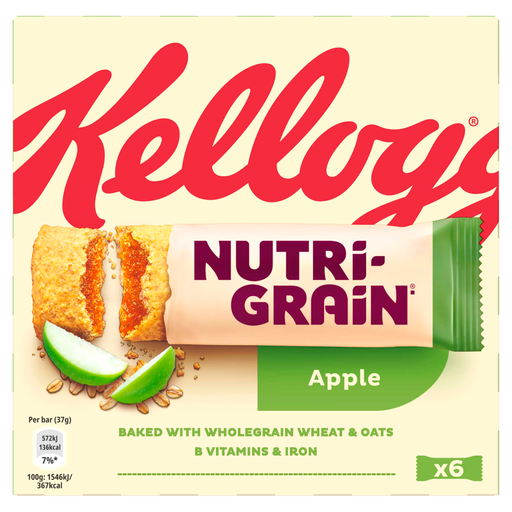 No image available
For a lunchbox cereal bar, compare the fat and sugars on the current pack rather than relying on the product category. Its allergen information includes a “may contain nuts” warning.
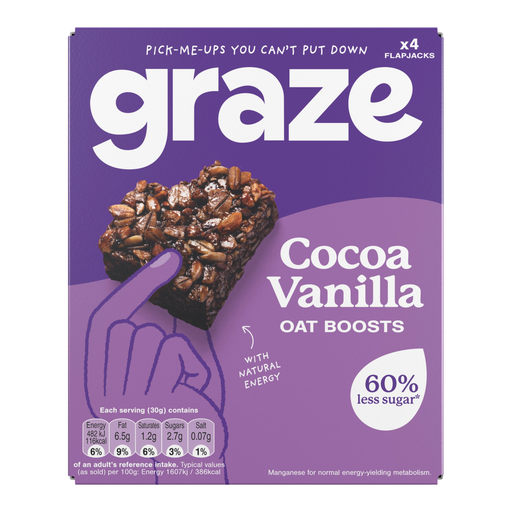 No image available
If the oat-square format appeals, check total fat as well as sugars: the protein name does not establish a lower-fat choice. Check the pack’s precautionary nut wording before putting a square in a school lunch.
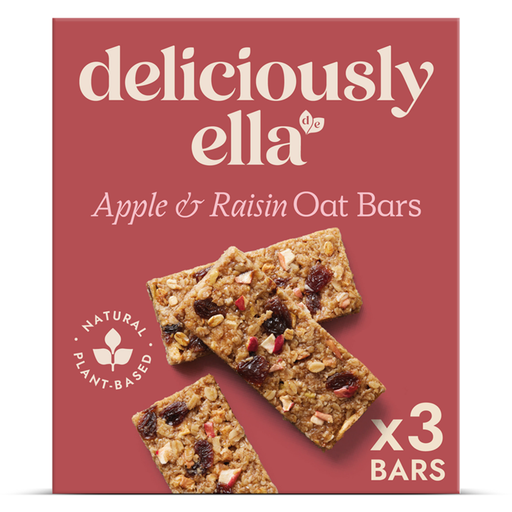 No image available
The 50g bar size is worth considering alongside the rest of the packed lunch. Check its current nutrition panel and “may contain nuts and peanuts” wording rather than assuming an oat bar meets every dietary or school requirement.
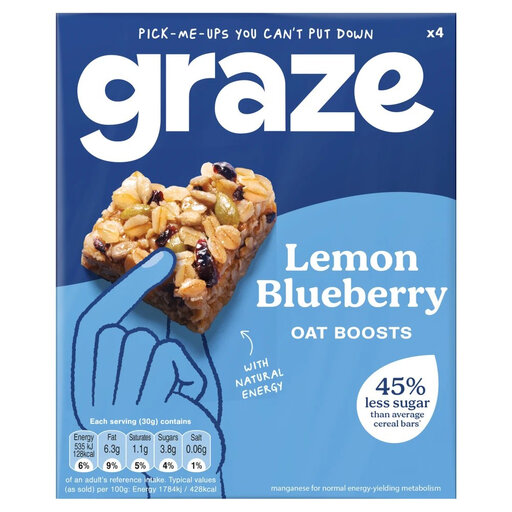 No image available
These 30g oat bars offer a smaller portion than a 50g bar, but portion size does not establish lower fat. Compare the current fat and sugars figures and check the “may contain nuts and peanuts” wording for the school setting.
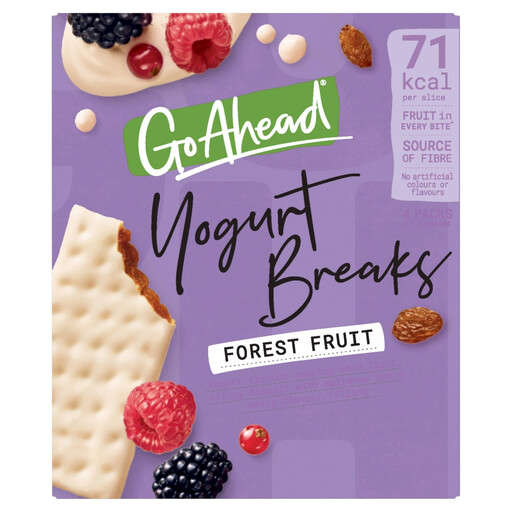 No image available
For a fruit-and-biscuit-style lunchbox bar, check both fat and sugars on the current pack. Its precautionary information mentions traces of nuts, which matters when assessing school and child-specific restrictions.
No. Eat Natural lists 4.9g fat per 100g for its Apple Soft Fruit Bar. The condition for a low-fat claim on solid food published on legislation.gov.uk is no more than 3g fat per 100g.
No. Tesco Groceries lists 22g fat per 100g for Graze Honey Oat Boost and 23g per 100g for nākd. Peanut Delight. Compare fat and sugars as separate figures, using the same per-100g basis and the amount in each bar.
Check the individual school’s current policy and the child’s allergy arrangements before packing it. The Department for Education says schools should consider food brought from home in their allergy-safety approach; that does not establish one rule for every school.
The Department for Education’s school food guidance describes requirements for food and drink provided in state-funded schools in England. For a parent-packed lunch, check the individual school’s published packed-lunch policy rather than treating that guidance as a universal lunchbox rule.
Read “of which sugars” together with the serving size and ingredient list. As Nature Valley explains, the nutrition-panel figure includes sugars from all sources, so it should not be read as a separate added-sugars amount.