For car boot sale refreshments, compare snack bars’ declared total fat per 100g before checking the amount in each bar, and keep ingredient and allergen information accessible. Protein, fibre or reduced-sugar wording does not establish that a bar is reduced in fat; if you plan to sell refreshments, check the registration requirements for your activity with the local authority.
Who is choosing the bars?
The right checks depend on whether you are handing out refreshments, comparing fat values or accommodating dietary exclusions.
Car boot sale organisers
Individually wrapped bars can be handed out while keeping the manufacturer’s ingredient information with each snack. If you intend to sell or regularly supply food, ask the local authority what food-business requirements apply to your activity.
Buyers prioritising lower fat
Compare total fat per 100g on the same basis across bars, then check fat and saturated fat per bar. A protein, fibre or sugar claim answers a different question from how much fat the bar contains.
Buyers accommodating dietary exclusions
Check the exact variety’s ingredients and allergen statement rather than relying on its brand or snack-bar category. Bars in this selection area may contain cereals containing gluten, nuts, milk or soya.
What should you check?
Start with comparable nutrition figures, then consider the portion you will hand out and whether its packaging gives recipients the information they need.
| Priority |
What to check |
Your needs |
| Total fat |
Compare declared total fat per 100g, then fat per bar and the bar’s weight. A smaller serving can have less fat per bar without having less fat per 100g. |
I’m looking for a lower-fat option to hand out, not assuming that a bar qualifies for a reduced-fat claim because it compares favourably with another bar. |
| Other nutrition figures |
Read saturated fat and sugars on the same per-100g basis, then check the figures for the portion being offered. Do not use protein, fibre or reduced-sugar wording as a substitute for the total-fat figure. |
I want to see what is in an individual bar as well as how its nutrition panel compares with other varieties. |
| Ingredients and allergens |
Check each variety’s ingredient and allergen statement, including any precautionary wording. Keep its original packaging available when offering mixed bars. |
People choosing a refreshment should be able to check whether a particular bar fits their dietary exclusions. |
| Protein and fibre |
Check the stated amounts per bar alongside total fat and allergens. Nature Valley describes its Protein Peanut & Chocolate bar as providing around 10g protein and 4g fibre per 40g bar; Joybuy lists 28.3g fat per 100g for that product. |
A protein-led bar makes sense for me only if protein is the priority rather than a lower total-fat figure. |
| Selling refreshments |
Check whether your planned selling or distribution activity requires food-business registration, and what food-information duties apply. GOV.UK advises food businesses that sell or distribute food to register with their local authority. |
If I’m selling bars at a stall, I need to check the requirements for that activity before trading. |
Mistakes to avoid
-
Taking protein or reduced-sugar wording to mean lower fat
Nutrition claims describe different attributes. For example, Joybuy lists 28.3g total fat per 100g for Nature Valley Protein Peanut & Chocolate, despite its protein positioning.
Compare total fat per 100g and per bar on the exact varieties you are considering. Do not describe a bar as reduced-fat solely because its figure is lower than another bar’s.
-
Mixing varieties without keeping their labels
Ingredients differ: Weetabix Cereals lists nuts and soya in Alpen Fruit & Nut Bars, while Joybuy lists peanuts, soya and milk for Nature Valley Protein Peanut & Chocolate.
Keep bars in their original wrappers and make the relevant ingredient information available, rather than treating a mixed bowl as suitable for everyone.
-
Assuming packaged food has no selling requirements
Packaging does not, by itself, settle whether a car boot sale stall is operating as a food business. GOV.UK’s food-business registration guidance includes businesses that sell or distribute food.
Before trading, describe your planned activity to the relevant local authority and ask which registration and food-information requirements apply.
Brand ranges to consider
Brand positioning can help narrow a search, but use the exact bar’s label for fat values, ingredients and dietary suitability.
Graze
Graze promotes its Oat Boost flapjacks using a reduced-sugar comparison. That does not establish the total-fat content of every Graze bar.
- The Oat Boost range gives buyers a specific variety to check when comparing sugar alongside fat.
- Check the chosen variety’s total fat, saturated fat and serving size rather than treating a sugar claim as a reduced-fat claim.
Nature Valley
The Protein Peanut & Chocolate bar is a protein-led option rather than the lower-fat example in this comparison.
- Nature Valley states that the bar provides around 10g protein and 4g fibre per 40g bar.
- Joybuy lists 28.3g fat per 100g and declares peanuts, soya and milk for this product.
Alpen
Alpen Fruit & Nut Bars provide a product-specific fat figure for comparison with other individually portioned bars.
- Weetabix Cereals declares 7.4g fat per 100g and 2.1g per 28g bar for Fruit & Nut.
- The variety contains nuts and soya; check its full ingredients and packaging before offering it to others.
nākd.
nākd. describes its fruit-and-nut bars as suitable for vegetarians and vegans and for gluten-, wheat- and dairy-free diets.
- Those stated attributes may help when selecting for particular dietary exclusions.
- Fruit-and-nut ingredients do not establish lower total fat, and nut content matters for people with nut allergies. Check the exact bar.
Joybuy snack-bar options
These cereal-bar packs are options to examine for individually portioned car boot sale refreshments. Compare the nutrition and allergen information on each exact pack before choosing a lower-fat option.
 No image available
Special K Dark Chocolate Snack, 6 x 21.5g
The six-bar pack offers defined portions for refreshments; check its label for total fat per 100g and per bar before selecting it for a lower-fat shortlist.
Check the ingredient information for wheat, barley, oats, milk and soya when offering it to others.
View on Joybuy
 No image available
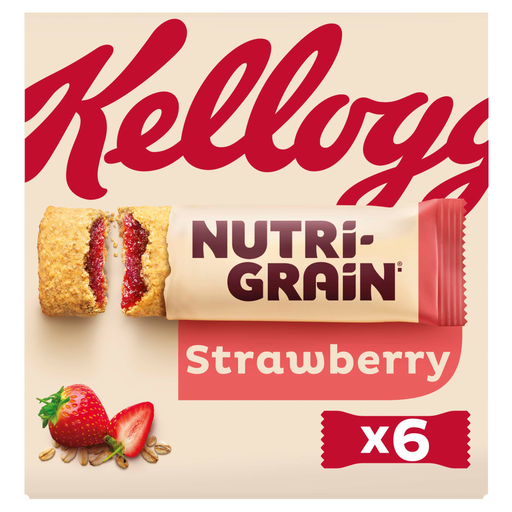
Kellogg's Strawberry Nutri-Grain Bars, 6-pack, 222g
For car boot sale refreshments, compare the pack’s total-fat figures with other bars on a per-100g basis and check the portion information.
Its allergen information identifies wheat, soya and milk and includes a ‘may contain tree nuts’ warning; keep that information available to recipients.
View on Joybuy
Common questions
Does having less fat than another bar make a snack bar ‘reduced fat’?
No. A comparison between two nutrition panels does not establish a reduced-fat claim for either bar. UK Department of Health and Social Care guidance covers nutrition claims; for your selection, compare total fat and saturated fat per 100g and per bar, and check any claim on the exact pack.
How do Alpen Fruit & Nut and Nature Valley Protein Peanut & Chocolate compare on total fat?
Weetabix Cereals declares 7.4g fat per 100g and 2.1g per 28g Alpen Fruit & Nut bar. Joybuy lists 28.3g fat per 100g for Nature Valley Protein Peanut & Chocolate; Nature Valley positions that bar around protein and fibre. These figures compare the named varieties, not their entire ranges.
Should I remove snack bars from their wrappers before offering them?
Keep the original wrappers when recipients need to check ingredients and allergens. If you prepare food prepacked for direct sale as a food business, separate Food Standards Agency labelling requirements may apply; do not assume the rules for food you pack yourself are identical to those for untouched manufacturer-sealed bars.
Do I need to register to sell packaged bars at a car boot sale?
Check with the local authority before trading. GOV.UK’s food-business registration guidance includes businesses that sell or distribute food, but how the requirements apply to your planned activity needs to be established with the relevant authority. Manufacturer packaging does not answer that question on its own.


