Students looking for a reduced-fat claim
If the claim itself matters, check that it names fat and gives a comparison with a similar product. A “Light” name or a lower-sugar statement does not answer that question.


If you want less fat in the portion you eat while moving in, compare the fat amount and bar size on the current pack rather than relying on a name such as “Light”. Weetabix Cereals lists 1.2g fat in a 19g Alpen Light Chocolate & Fudge bar; a bar chosen for protein, fibre or dietary suitability calls for its own nutrition and allergen checks, not an assumption that it is reduced fat.
If the claim itself matters, check that it names fat and gives a comparison with a similar product. A “Light” name or a lower-sugar statement does not answer that question.
When travelling and unpacking interrupt meals, the amount in one bar, its storage directions and its ingredients are useful checks before choosing a pack.
Vegan or gluten-free suitability, nut ingredients and may-contain warnings can change which bar is appropriate. Check the exact flavour and current pack, especially before sharing snacks.
Decide whether you need a comparative reduced-fat claim or simply a particular fat amount in one bar. Then check whether the portion and ingredients suit the occasion.
| Priority | What to check | Your needs |
|---|---|---|
| Fat claim | Read the exact on-pack claim and what product it compares with. Check that it concerns fat, rather than sugar or another characteristic. | I want a bar with an explicit reduced-fat claim, not just a “Light” name. |
| Amount per bar | Compare bar weights and fat per serving as well as per 100g. Read saturated fat separately from total fat. | For a short unpacking break, the amount in the bar I will actually eat matters more to me than its name. |
| Protein and fibre | Read the declared amounts per bar alongside its fat amount and portion size. Nature Valley UK lists 7.1g protein, 6.5g fibre and 9.7g fat in its 36g Protein + Fibre Chocolate & Orange bar. | If a meal might be delayed, I want to compare the whole nutrition panel rather than choose on fat alone. |
| Dietary suitability | Check the exact recipe’s ingredients, emphasised allergens and may-contain statement. Follow its own storage directions. | I need a snack that fits my dietary requirements and can be kept as directed in my accommodation. |
Those words do not establish a reduced-fat claim for the individual bar. Graze’s lower-sugar Oat Boost comparison, for example, concerns sugar.
If a reduced-fat claim is essential to your choice, check the exact wording and its comparison basis on the current product information.
Bars come in different portion sizes, so the fat amount in one bar can tell a different story from the per-100g figure.
Compare both bases, then look at saturated fat, protein and fibre for the portion you intend to eat.
“Vegan” and “natural” do not tell you whether a recipe contains nuts or carries a may-contain warning. Ingredients also differ between flavours.
Read the current pack before buying or sharing a bar; do not use another flavour’s ingredient list as a substitute.
A small bar intended for a quick break may not match what you want when your next meal is delayed.
Check the weight and nutrition per bar, ingredients and storage directions before deciding whether that pack suits your move-in routine.
These brand examples illustrate different things to check; a range description does not establish a reduced-fat claim for every bar in it.
Graze’s Oat Boost range is worth examining if oat-based bars and vegan suitability matter alongside your fat comparison.
Alpen Light Chocolate & Fudge provides an example of a small bar with a stated fat amount per portion.
Nature Valley’s Protein + Fibre range is a different starting point when declared protein and fibre matter to the choice.
Nakd describes its fruit-and-nut bars as suitable for vegan, gluten-, wheat- and dairy-free diets.
TREK offers plant-based flapjack and protein-bar ranges for shoppers comparing protein declarations.
Eat Natural is relevant if you are considering a nut-and-fruit-led bar rather than selecting by a reduced-fat claim.
These options include smaller cereal-bar portions, a fruit-and-nut multipack and oat-based snacks for move-in day. A product name such as “Light” does not, by itself, establish a reduced-fat claim; compare the current nutrition and ingredient labels before choosing.
 No image available
A fruit-and-nut option to compare if dietary suitability matters during move-in. The pack contains four 35g bars; check this flavour’s fat declaration and nut-allergen information.
 No image available
A cereal-bar multipack to consider for short breaks while unpacking. The pack is labelled 104g; compare fat per bar on its nutrition panel rather than treating “Light” as a reduced-fat claim.
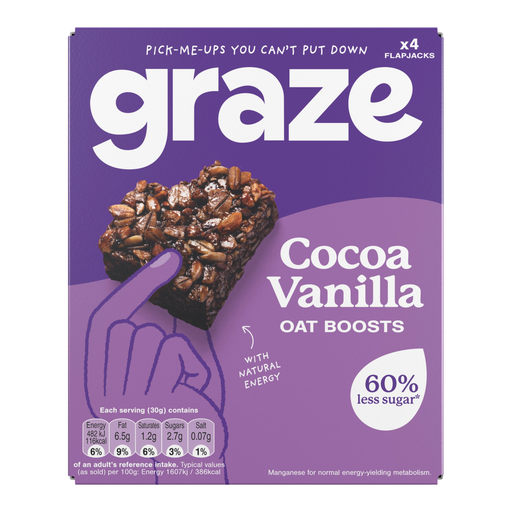 No image available
An oat-square option if you are considering Graze alongside the cereal bars. This pack contains four 30g portions; check this product’s own fat, sugar and allergen declarations rather than applying claims from another Graze range.
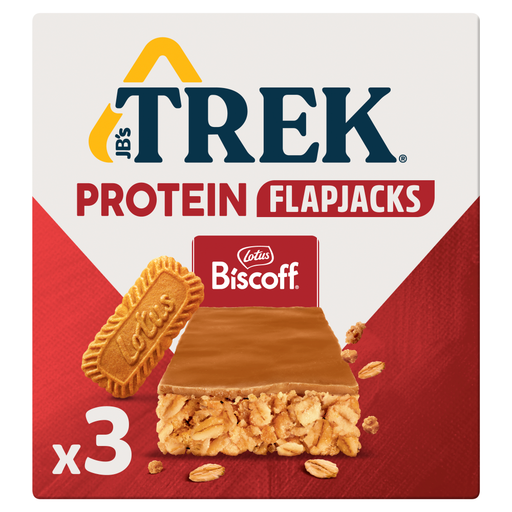 No image available
A flapjack option to compare when portion size and the nutrition panel matter as much as fat. The pack contains three 50g bars; check the Biscoff flavour’s protein, fat and allergen declarations rather than relying on range-wide figures.
 No image available
A smaller cereal-bar portion to compare for a quick move-in break. The pack contains six 21.5g bars; read fat per bar alongside the per-100g figure, and check the ingredients if dietary suitability matters.
No: the name alone does not tell you whether fat has been reduced. If that distinction matters, read the exact claim and comparison on the current pack, then check its total fat and saturated fat figures.
Not necessarily. Graze’s statements about sugar in Oat Boost bars address sugar, while its statement about reducing saturated fat concerns the range’s reformulation since launch. Neither replaces the fat figures for the particular bar you plan to buy.
Start with the bar weight, fat and saturated fat per bar, then use the per-100g figures for a like-for-like comparison. Weetabix Cereals lists 1.2g fat in a 19g Alpen Light Chocolate & Fudge bar; Nature Valley UK lists 9.7g fat, 7.1g protein and 6.5g fibre in its 36g Protein + Fibre Chocolate & Orange bar. Those are different portions with different nutrition profiles.
Read the exact pack’s ingredients, emphasised allergens and any may-contain warning before sharing. Recipes differ: Nature Valley UK identifies peanut, soya and milk ingredients in its Protein + Fibre Chocolate & Orange bar, while Weetabix Cereals says its Alpen Light Chocolate & Fudge bar is not suitable for nut-allergy sufferers.
Follow the storage directions on the bar you buy. A Morrisons listing for Graze Peanut Butter Protein Oat Boost says to store it in a cool, dry place; check other products and flavours individually.