Holidaymakers seeking a low-fat bar
If low fat is a firm requirement, use the NHS benchmark of 3g total fat or less per 100g. A lighter-sounding name or a reduced-fat claim cannot establish that the bar meets it.


For a snack bar that meets the NHS low-fat benchmark, check that the exact variety contains no more than 3g total fat per 100g. The NHS says a “reduced fat” or “lower fat” claim means at least 30% less fat than a similar food, not necessarily a low-fat product. For holiday packing, compare the per-bar portion, sugars, allergens and storage instructions as well; the cited Graze, Eat Natural, Nature Valley, nākd. and TREK examples all exceed the low-fat benchmark.
The useful starting point depends on whether low fat is a firm requirement or one consideration alongside packing and dietary needs.
If low fat is a firm requirement, use the NHS benchmark of 3g total fat or less per 100g. A lighter-sounding name or a reduced-fat claim cannot establish that the bar meets it.
Portion size and packaging matter when bars are going into a bag for a journey or outing. Compare the nutrition panel and allergens for the chosen variety, not just how convenient its pack looks.
Protein, vegan and gluten-free options address different needs from fat reduction. Check the exact variety’s ingredients and allergen statement before packing it for someone with a dietary restriction.
Use the per-100g panel to compare different bars, then read the per-bar figures and pack details for the portion you plan to take.
| Priority | What to check | Your needs |
|---|---|---|
| Low-fat requirement | Read total fat per 100g on the exact variety. The NHS low-fat benchmark is 3g or less per 100g; a reduced-fat claim instead compares the product with a similar food. | I need a bar that meets a low-fat benchmark, rather than one that is simply labelled lighter than another bar. |
| Full nutrition panel | Compare total fat, saturates, sugars and energy on the same per-100g basis. Check the per-bar figures separately, since pack and portion sizes differ. | Fat reduction matters to me, but I also want to know what is in the bar I will actually pack and eat. |
| Dietary compatibility | Read the ingredients, emphasised allergens and any precautionary statements for the exact flavour and multipack. Do not use a brand-wide vegan or gluten-free description in place of the pack label. | Someone travelling with me needs a particular ingredient or allergen check before a bar goes in the bag. |
| Travel and storage | Check the number and size of bars, whether portions are individually wrapped, and the manufacturer’s storage instructions. Follow the instructions for that variety in summer conditions. | For a day trip, I want portions that are straightforward to carry and store as the pack directs. |
The NHS distinguishes a relative reduced-fat claim from its low-fat benchmark of 3g total fat or less per 100g. A bar can carry the former claim without meeting the latter benchmark.
If low fat is your requirement, compare the exact bar’s total-fat figure per 100g before considering its front-of-pack wording.
Protein, fibre, fruit and no-added-sugar claims describe different features. In its November 2025 audit of 458 snack bars from 10 major retailers, Action on Salt & Sugar reported that 37% would be high in sugars and 55% high in saturates under UK traffic-light labelling.
Check fat, saturates, sugars and energy for the particular bar, using per-100g figures for comparisons and per-bar figures for the portion.
Alpen’s product FAQ lists Alpen Light Bars Chocolate & Orange among products no longer being made, so an older reference is not a dependable way to choose a current holiday snack.
Check a current product listing and label before deciding on a particular Alpen bar.
A vegan or gluten-free description does not replace the ingredients and precautionary allergen statement. Recipes and declarations can differ between flavours.
Read the current pack for each variety and multipack when packing for someone with an allergy or other dietary restriction.
These examples show why a brand or product-format label cannot stand in for the nutrition panel of the exact bar.
Graze’s Oat Boost range is relevant to shoppers considering wholegrain-oat flapjacks.
The Protein Peanut & Chocolate bar illustrates the difference between a protein-focused choice and a low-fat one.
Alpen is worth checking carefully if an older Light bar appears in a search or shopping list.
The Red Fruits Soft Fruit Bar provides an individually wrapped example for travel packing.
nākd. fruit-and-nut bars are relevant when ingredients and dietary claims matter alongside fat content.
TREK Original Oat is an example for shoppers comparing a protein-focused bar with a low-fat requirement.
These two cereal-bar multipacks are options to examine for holiday packing. Check each current nutrition label against the NHS low-fat benchmark if that is a firm requirement.
 No image available
The pack contains six 21.5g bars for portion planning on days out. Check the current pack’s per-100g fat figure and allergen declaration before choosing it for a low-fat requirement or a traveller with dietary restrictions.
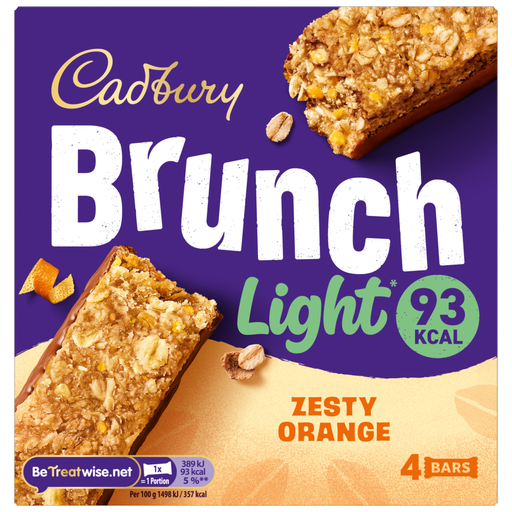 No image available
This four-bar, 104g pack offers portions to plan around for a trip. “Light” in the name is not a substitute for checking total fat per 100g, the per-bar nutrition figures and the current allergen declaration.
No. The NHS uses 3g total fat or less per 100g as its low-fat benchmark for food. It says “reduced fat”, “lower fat”, “lite” and “light” mean at least 30% less fat than a similar product, which can still leave a bar above the low-fat benchmark.
Compare their per-100g nutrition figures first, then check the figures for the bar or portion you intend to eat. The NHS explains that nutrition information is given per 100g and sometimes per portion; per-bar figures alone are not a like-for-like comparison when bars differ in size.
No. Nature Valley lists 28.3g fat per 100g for its Protein Peanut & Chocolate bar, while Tesco Groceries lists 14g fat per 100g for the no-added-sugar nākd. Cocoa Delight variety. Check total fat for the exact product rather than using either claim as a shortcut.
Read the current ingredients, emphasised allergens and any precautionary statement for every flavour and multipack. Food Standards Agency guidance requires accurate allergen information, while the named bar examples show that peanut, nut, soya and milk declarations can matter.
Follow the storage instruction on the exact pack rather than assuming all wrapped bars tolerate the same conditions. Nature Valley, for example, instructs buyers to keep its Protein Peanut & Chocolate bar in a cool, dry place.