Hotel breakfast managers reducing salt
For teams choosing a lower-salt porridge base while keeping breakfast service quick and repeatable. Compare the finished bowl, as dry oats and a milk-prepared serving can have different declared salt values.


For a lower-salt hotel porridge offer, compare declared salt using the same finished serving, preparation liquid and portion size. Plain sachets can simplify portions and ingredient traceability, while bulk oats can suit staffed service when allergen information, measuring and cross-contact controls are in place.
For teams choosing a lower-salt porridge base while keeping breakfast service quick and repeatable. Compare the finished bowl, as dry oats and a milk-prepared serving can have different declared salt values.
For hotels deciding between individually wrapped sachets and bulk self-service oats. Packaged portions can simplify product identification, while loose or prepared buffet food still needs accessible allergen information and effective allergen management.
For operations receiving requests for coeliac-suitable oats. Coeliac UK explains that “100% oats”, “pure oats” and “organic oats” do not by themselves show that a product is gluten free.
Set the buffet recipe and service format first, then compare labels on the same basis before placing an order.
| Priority | What to check | Your needs |
|---|---|---|
| Salt in the finished serving | Compare salt per prepared portion using the same liquid and serving size. Check whether the label refers to dry oats, water preparation or milk preparation. Prefer a plain oat base where this fits the menu. | I want the salt figure to reflect what guests are actually served, not just the dry sachet or oats before milk and toppings are added. |
| Service format | Check whether preparation needs a microwave, hob or boiling water. Compare individual sachets with bulk packs for portion consistency, replenishment work and packaging use. Confirm stated preparation times against available equipment. | The breakfast team needs a format that fits the morning service flow, whether that means measured individual portions or a controlled bulk-oat station. |
| Allergen information | Review the current ingredients and allergen statement for the oat base, milk and toppings. Check the food format: prepacked, PPDS or loose buffet food. Verify gluten-free status on the exact delivered product where a coeliac-suitable option is required. | Guests need clear information about oats and other relevant allergens, and staff need a reliable way to answer questions at the buffet. |
Preparation changes the food served to guests. Quaker UK lists 0g salt for a dry 27g Original sachet, while its stated serving with 180ml semi-skimmed milk contains 0.20g salt.
Set a standard buffet recipe, then compare salt per finished portion using the same liquid and serving size. Keep milk, plant alternatives and toppings documented alongside the oat base.
Standard oats can be contaminated with wheat, barley or rye, and some plain-oat products state possible presence of other cereals. This can make an inaccurate gluten-free claim unsafe for guests.
Describe an option as suitable for coeliac guests only after checking the exact product’s current gluten-free status and packaging. Keep it segregated from standard oats and include it in buffet allergen information.
Loose buffet oats still require allergen information and effective allergen controls. GOV.UK states that food businesses in England, Northern Ireland and Wales must provide allergen information for prepacked and non-prepacked food; Food Standards Scotland sets comparable information requirements for non-prepacked food in Scotland.
Maintain current supplier labels or a controlled allergen matrix for every oat base, milk, topping and garnish. Make sure staff know where the information is and how to respond before service begins.
Food recipes, nutrition information and allergen statements can change, and availability may also vary between orders.
Check stock, pack size, ingredient list, salt value, allergen statement and preparation instructions for each order. Review salt and allergens again before substituting a flavoured or protein product.
A plain instant-porridge option for hotels seeking individually portioned oats prepared with water.
Mainstream instant-oat sachets and hot-water pots for hotels prioritising familiar formats and flexible serving options.
Plain and organic oat products for operators considering bulk oats or sachets with oat-led ingredient lists.
Portioned porridge sachets for hotels where an M&S Food supply route and individual packs are relevant.
Joybuy bulk-oat and rapid-preparation options for a staffed hotel breakfast buffet. Check the delivered pack and the final buffet recipe before making lower-salt or allergen-suitability claims.
 No image available
A bulk plain-oat option for a staffed buffet able to measure portions and manage allergen information.
Listed as 100% rolled oats with 0g salt per 100g. The listing states microwave preparation in 2–3 minutes or stovetop preparation in 4–5 minutes, using water or milk.
May contain wheat and barley; check the delivered pack before making any gluten-free or coeliac-suitability claim.
 No image available
A larger plain-oat format for controlled portioning in a higher-volume breakfast service.
The listing states 100% organic wholegrain oat flakes and less than 0.01g salt per 40g serving.
Confirm the preparation method, serving equipment and current allergen statement before buffet procurement.
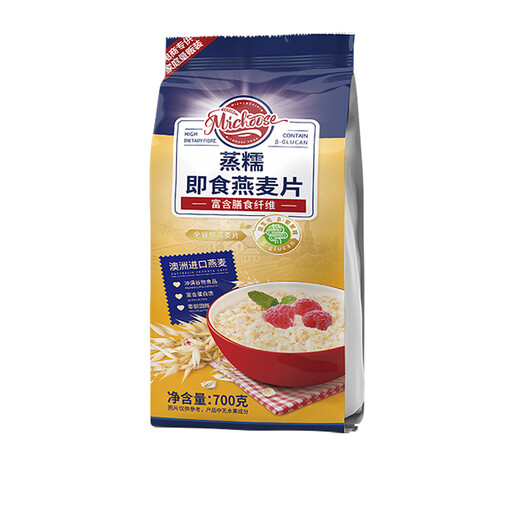 No image available
A water-prepared bulk oatmeal option where rapid breakfast service is the main requirement.
The listing states hot-water preparation in one minute and describes a 700g bag with a 100% oatmeal ingredient.
Set a measured serving and confirm the delivered pack’s salt declaration and allergen information before service.
Compare the salt declaration using the same preparation method and serving basis. Quaker UK declares 0g salt in a dry 27g Original sachet but 0.20g in its stated serving with semi-skimmed milk, while Tesco Groceries lists less than 0.01g per water-prepared serving for Tesco Natural Oats. Do not assume that “plain”, “natural” or “reduced salt” makes products directly comparable.
No. GOV.UK states that food businesses in England, Northern Ireland and Wales must provide allergen information for both prepacked and non-prepacked food. In Scotland, Food Standards Scotland says allergen information for non-prepacked food must be available before purchase, such as on a menu, shelf label or from staff.
No. Coeliac UK states that “100% oats”, “pure oats” and “organic oats” do not establish that a product is gluten free. Standard oats can be contaminated with wheat, barley or rye, so check the exact product’s gluten-free status and current packaging before offering it as coeliac-suitable.
Use sachets when consistent portions and straightforward product identification matter most. Bulk quick oats can suit a staffed service that can measure portions and maintain allergen controls; compare salt, ingredients and preparation instructions on the exact products before deciding.
Not automatically. Pots and tins are separate ready-to-eat formats, so check their ingredients and salt values independently. Quaker UK lists skimmed milk powder and 0.07g salt per prepared Original pot, while canned oat porridges should not be treated as like-for-like substitutes for plain instant oats.