Parents making quick lunches at home
Need a warm, portioned oat meal that can be made quickly while keeping salt in perspective across the day. Plain dry oat sachets let you choose toppings separately rather than relying on flavoured mixes.


For a lower-salt school-holiday lunch, compare the dry product’s salt figure per 100g before looking at prepared-bowl values. Tesco lists Quaker Oat So Simple Original sachets at 0g salt per 100g and M&S Traditional Porridge sachets at 0.03g per 100g; both are below the NHS low-salt benchmark of 0.3g per 100g. Preparation time, allergens and the liquid added to the bowl can still change which option is practical for your family.
Need a warm, portioned oat meal that can be made quickly while keeping salt in perspective across the day. Plain dry oat sachets let you choose toppings separately rather than relying on flavoured mixes.
Need to compare salt per 100g and per prepared portion, then consider milk and the rest of lunch. NHS guidance gives maximum daily amounts of 3g for ages 4–6, 5g for ages 7–10 and 6g for ages 11 and over.
Need the exact current ingredients and precautionary warnings rather than assuming that plain oats suit every allergy or coeliac requirement.
Start with the nutrition table for the product as sold, then check how it is prepared and whether the current pack suits the child who will eat it.
| Priority | What to check | Your needs |
|---|---|---|
| Salt comparison | Compare salt per 100g for products in the same state. The NHS defines low salt as 0.3g or less per 100g. Check whether a serving value includes milk. | I want to compare dry oat products fairly, then account for the liquid and the rest of lunch separately. |
| Lunch-time preparation | Check microwave time, whether a bowl and measured liquid are needed, and whether hot water is an option. Match the format to the equipment available at lunch. | A quick lunch needs to work with the bowl, microwave and adult supervision available at home. |
| Allergen suitability | Read the exact pack’s ingredients, allergen statement and may-contain warnings. Check any gluten-free claim and oat suitability against individual dietary advice. | Where there is a coeliac, oat or other food-allergy requirement, the current pack information matters more than a product being described as plain. |
Milk changes the nutrition of the prepared bowl. Tesco lists Quaker Oat So Simple Original at 0g salt per 100g dry, while a serving made with 180ml semi-skimmed milk is listed at 0.20g salt.
Compare products as sold first, using salt per 100g. Then use the prepared-serving figure to plan the lunch you will actually make.
Oat products can carry different may-contain statements and suitability exclusions, and oats remain an allergen even where a food is labelled gluten-free.
Read the current ingredients and allergen panel whenever changing product or buying a reformulated pack. Choose only a product whose label fits the child’s clinical dietary advice.
Flahavan’s describes its Quick Oats Pot Original as low in salt, but a numerical per-100g salt value is needed to compare it fairly with products that provide one.
When salt reduction is the priority, look for a current nutrition table giving salt per 100g and use non-numerical claims as a prompt to inspect the pack.
Flahavan’s states that its Original Quick Oats Pot is available only in Tesco Northern Ireland, and its ingredients include sugar and skimmed milk powder.
Check local availability and the ingredient list before relying on a pot format for school-holiday lunches.
Portioned original microwaveable oat sachets for shoppers prioritising speed; Tesco lists the Original format as ready in two minutes.
Own-label Easy Oats Original sachets for a basic rolled-oat option with supermarket availability.
Traditional portioned porridge sachets for shoppers wanting a declared low-salt, high-fibre option.
Quick-oat pots and oats in hot-water or microwave convenience formats.
These Joybuy oat options include portioned microwave sachets and larger plain-oat packs for school-holiday lunches where the family can choose the liquid, toppings and serving size.
 No image available
A plain oat option for households able to measure portions and prepare lunch in a microwave-safe bowl.
The dry nutrition table states 0g salt per 100g, and the listed microwave method takes 2–3 minutes with water or milk.
May contain wheat and barley; check the current pack for coeliac or allergy suitability.
 No image available
A portioned microwave option for quick at-home lunches when a bowl, liquid and supervision are available.
The pack contains six sachets and states a 2½-minute microwave preparation time; the ingredients list wholegrain rolled oats only.
Check the current nutrition panel before buying for a lower-salt comparison, as the listed dry salt figures need to be read carefully. Confirm suitability where an oat allergy or coeliac requirement applies.
 No image available
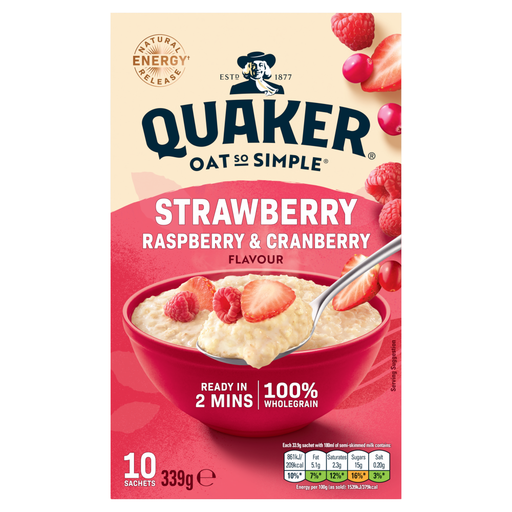
A flavoured, portioned choice for a fast microwave lunch when milk and a bowl are available.
The dry nutrition table states 0g salt per 100g, and each sachet has a stated two-minute microwave method with milk.
This is not a plain-oat option and lists 19g sugars per 100g. It contains cereals containing gluten and oats, and may contain barley, soya and wheat.
 No image available
A larger plain-oat pack for households that regularly prepare measured portions and choose additions separately.
The dry nutrition table declares less than 0.01g salt per 100g, and the ingredients list organic wholegrain oat flakes only.
Check the pack directions for cooking method and timing before depending on it for a rapid lunch. Confirm suitability for coeliac disease or an oat allergy from the current pack.
 No image available
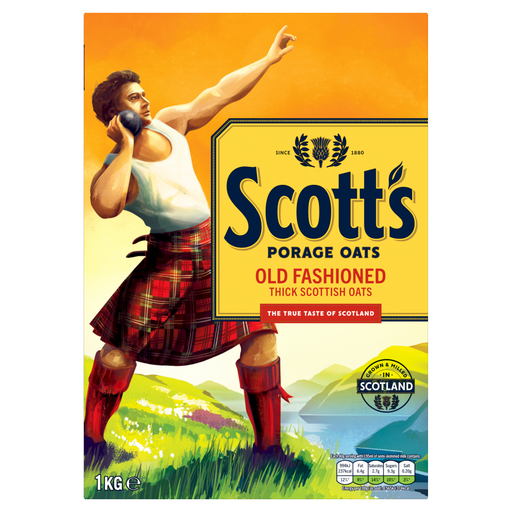
A plain 1kg oat pack for families who can measure servings and add their own liquid and toppings.
The dry nutrition table declares less than 0.01g salt per 100g, with organic wholegrain oat flakes as the only listed ingredient.
Check the current pack for cooking directions and timing when a fast lunch is essential. It contains oats, so confirm suitability for coeliac disease or an oat allergy.
The NHS classifies 0.3g of salt or less per 100g as low. Compare products using the same per-100g basis rather than comparing one dry product with another product’s serving prepared with milk.
NHS guidance gives maximum daily amounts of 3g for children aged 4–6, 5g for ages 7–10 and 6g for ages 11 and over. Treat these as whole-day amounts and consider oats alongside lunch, snacks and drinks.
No. Tesco lists Quaker Oat So Simple Original at 0g salt per 100g and per 27g sachet, but at 0.20g salt for a serving made with 180ml semi-skimmed milk. Check whether the nutrition value is for the dry product or the prepared bowl.
No. The current product warning is what matters. Quaker’s Original listing carries may-contain wheat, barley and soya information, while M&S says its Traditional Porridge is not suitable for coeliacs and several listed allergies. The Food Standards Agency also notes that oats remain an allergen even where a product is gluten-free.
Do not assume so. The manufacturer states that this specific 44g Original pot is available only in Tesco Northern Ireland, so check local availability before planning lunches around this format.