Carers choosing breakfast for a 1–3-year-old
Choose a breakfast with salt in the context of the whole day. The NHS states that children aged 1 to 3 should have no more than 2g of salt daily.


For a child aged 1 to 3, start with plain oats showing a small salt amount on the stated serving basis, and do not add salt during preparation. The NHS says this age group should have no more than 2g of salt a day, so compare dry and prepared values like for like, then check the exact ingredients and allergen statement.
Choose a breakfast with salt in the context of the whole day. The NHS states that children aged 1 to 3 should have no more than 2g of salt daily.
A sachet, dry oats and an add-water pot can show nutrition on different bases. Check whether the value is for dry oats or the prepared serving, including any milk.
Use the specific pack statement rather than assuming that all oat products have the same allergen status. Wheat, barley, soya, milk and nut information can differ by product.
Start with the serving basis for salt, then compare ingredients, allergen information and preparation requirements on the exact pack.
| Priority | What to check | Your needs |
|---|---|---|
| Salt basis | Check whether salt is listed per dry serving, per 100g or after preparation. Compare values on the same basis. The NHS daily maximum for children aged 1 to 3 is 2g of salt. | I want the oat portion to make a small contribution to the day’s salt total, without adding salt while making breakfast. |
| Ingredients and sweetness | Look for plain or original formats if you want to control additions. Compare the ingredients and sugars on the prepared serving where a pot is ready with hot water. | I would rather choose the toppings myself than start with a flavoured pot containing extra ingredients. |
| Allergens | Read the pack’s oat, milk and may-contain statements. A gluten-free label has a defined standard, but oats remain an allergen in their own right, according to the Food Standards Agency. | I need the exact product’s allergen statement to fit my household’s requirements, rather than relying on the word “oats”. |
| Preparation | Check whether the product needs a bowl and milk, only hot water, or a microwave. Follow the stated method and allow porridge to cool to a suitable serving temperature. | I need a format that can be prepared reliably on a busy morning and served safely. |
A lower-salt breakfast is only one part of the decision. The NHS maximum of 2g salt a day for children aged 1 to 3 applies to the whole day, while ingredients, allergens and preparation also affect whether a product fits.
Use salt as an initial screen, then read the ingredient list, allergen statement and preparation instructions on the exact pack.
Preparation can change the stated value per serving. Quaker Oat So Simple Original lists 0g salt per 27g dry sachet, while its stated serving with semi-skimmed milk lists 0.20g; Tesco Original Instant Oats lists 0.08g per prepared pot.
Compare dry values with dry values, or prepared servings with prepared servings, and note the liquid assumed by the label.
Product labels can include milk, wheat, barley, soya, peanut, nut or cross-contact information. Foods labelled gluten-free must contain no more than 20mg/kg gluten, according to the Food Standards Agency.
Where gluten avoidance or an allergy matters, choose only a pack whose specific gluten-free and allergen statement meets the child’s needs.
Original Oat So Simple is a microwaveable sachet format for households wanting a portioned plain-oat option.
Own-label Original sachets and Ready Oats provide quick-cook dry oat formats for carers comparing simple ingredients with fortified cereal options.
Tesco offers instant porridge pots that only need boiling water, in original and flavoured formats.
M&S has ready porridge pots as well as traditional and gluten-free oat options for shoppers comparing formats.
Flahavan's Irish Quick Oats are a dry rolled-oat format for households preparing porridge rather than relying on a ready pot.
Joybuy product options for a plain oat base where you can compare dry-serving salt information, ingredients, allergen statements and preparation directions.
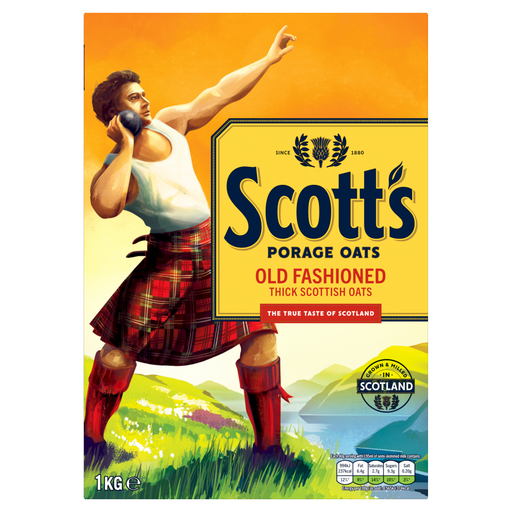 Image unavailable
A plain oat option for carers who want to choose the liquid and toppings themselves.
100% rolled oats; 0g salt per 40g dry serving. Microwave preparation is stated as 2–3 minutes, followed by one minute standing time.
May contain wheat and barley. The nutrition value is for dry oats, so milk and toppings change the finished breakfast.
 Image unavailable
A single-ingredient dry oat base for households controlling additions at breakfast.
100% organic wholegrain oat flakes; less than 0.01g salt per 40g dry serving.
Contains oats (gluten) and is not presented as gluten-free. Check the pack directions if a quick or microwave method is needed.
 Image unavailable
A plain oat choice for households that specifically need a gluten-free and wheat-free product.
100% gluten-free oat flakes; trace salt and 0.4g sugars per 40g portion.
Oats remain an allergen. Check the pack directions if fast preparation is required, and account for the chosen liquid and toppings.
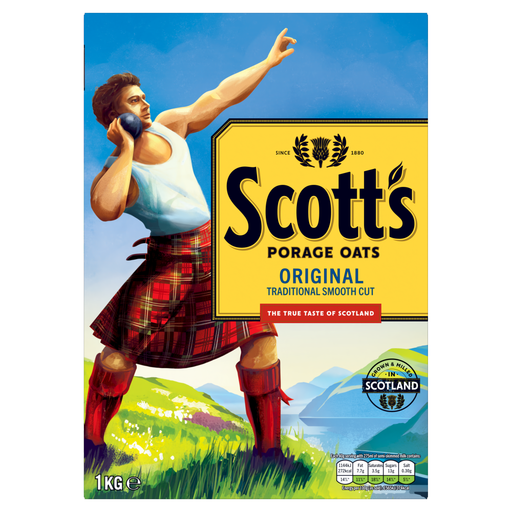 Image unavailable
A plain porridge base for carers who prefer to control the liquid and other additions.
100% oatmeal; 0g salt and 0.4g sugars per 40g dry oats.
May contain wheat and barley. A 0.30g salt value applies to a serving prepared with 275ml semi-skimmed milk, not the dry oats; check pack directions for cooking time.
 Image unavailable
A single-ingredient dry oat option for breakfasts where you choose the additions.
100% organic wholegrain oat flakes; less than 0.01g salt per 40g dry serving.
Contains oats (gluten) and is not presented as gluten-free. Check the pack directions for cooking time and include milk and toppings when considering the finished serving.
The NHS says children aged 1 to 3 should have no more than 2g of salt a day. Treat the porridge label as one contribution to that total and avoid adding salt during preparation.
Compare values on the same basis shown on the pack. Quaker Original lists 0g salt per 27g dry sachet but 0.20g when that sachet is prepared with 180ml semi-skimmed milk, while Tesco Original Instant Oats lists 0.08g per prepared pot.
Do not make a category-wide assumption. The Food Standards Agency states that foods labelled gluten-free contain no more than 20mg/kg gluten, while oats must still be emphasised as an allergen; check the exact pack for gluten-free and possible wheat or barley cross-contact statements.
Check the setting’s own food and allergen policy before packing. Use the product’s ingredient and allergen information, then follow the nursery or school’s instructions.