Parents serving a lower-salt tea-time bowl
Choose a plain oat base with 0g or very low declared salt per 100g, then check what is added through milk and toppings. NHS guidance explains how to read salt values on food labels.


For a lower-salt tea-time bowl, compare the dry oats first: NHS guidance defines low salt as 0.3g or less per 100g, and plain oats can give you the greatest control over additions. Choose smooth or quick-cook oats when texture or preparation time is the main issue, and choose gluten-free-labelled oats only where that suitability is required, as ordinary oats may carry wheat or barley warnings.
Choose a plain oat base with 0g or very low declared salt per 100g, then check what is added through milk and toppings. NHS guidance explains how to read salt values on food labels.
Quick-cook flakes and smooth oat cereals can make porridge faster to prepare or easier to accept, but the nutrition panel still needs checking. Mornflake and Waitrose product information describe these texture-focused formats.
Check the full ingredients list and precautionary allergen statement before serving or packing oats for school. Coeliac UK notes that standard oats can be subject to cross-contact with wheat, barley or rye.
Choose this when: You want control over the oat base, milk and toppings at tea time.
Consider: They need measuring and cooking, and ordinary rolled oats may have wheat or barley warnings.
Choose this when: A smoother texture or shorter preparation time makes tea time more manageable.
Consider: Convenience, flavoured and protein formats need their own salt, sugar and allergen comparison.
Choose this when: A child’s dietary plan requires gluten-free-labelled oats.
Consider: “100% oats” or “organic” alone does not establish gluten-free suitability.
| Priority | What to check | Your needs |
|---|---|---|
| Salt in the oat product | Compare salt per 100g on the dry product. NHS label guidance defines low salt as 0.3g or less per 100g. Check the pack rather than judging by flavour or format. | I want the oats to make a small contribution to salt across the day. NHS guidance gives maximum daily amounts of 3g for ages 4–6 and 5g for ages 7–10. |
| Dry versus prepared values | Use dry-product values per 100g for a like-for-like comparison. Check whether a serving figure includes milk or water. | I want to compare the oats themselves before deciding what milk, portion and toppings to use for the bowl. |
| Texture and preparation | Check whether flakes are quick-cook, smooth or traditional rolled oats. Confirm the stated cooking method and time. | A softer bowl or a faster method may matter when larger flakes are not well accepted at tea time. |
| Allergens and gluten | Read the ingredients and precautionary statements on the current pack. Look for an explicit gluten-free label where gluten-free suitability is required. | I need an oat product that fits the child’s dietary plan and any school or childcare food policy. |
Formats within the same range can have different salt, sugar and ingredient profiles. Quaker’s Traditional Rolled Oats declare 0g salt per 100g, while its Protein Original and Hazelnut Chocolate sachets have different declared salt figures.
Start with plain oats when ingredient control matters, then add non-salty flavour such as fruit or cinnamon. If buying sachets, compare their dry-product salt and sugar figures with plain oats.
A prepared serving can show different salt, sugars, fat and energy values because the milk is included. Comparing dry product with dry product keeps the basis consistent.
Compare salt per 100g of the dry oats first, then check the prepared serving using the milk, water and portion you intend to use.
Standard oats may be exposed to wheat, barley or rye. Product warnings also vary: some oat products may contain wheat and barley, while others may carry nut or other gluten-source warnings.
Match the current gluten-free label, ingredients and precautionary statements to the child’s dietary plan. For coeliac disease, allergy or unresolved symptoms, follow clinical advice.
Packaging format does not establish salt content. UK prepacked-food nutrition information provides salt values, with the per-100g figure offering the clearest comparison point.
Use the nutrition panel and ingredient list to decide, rather than relying on the product name, pack type or a general impression.
Waitrose offers own-label plain porridge oats for shoppers able to use its grocery retail service.
Quaker’s UK range includes traditional rolled oats alongside flavoured, protein and instant formats.
Mornflake offers jumbo, organic, quick-cook and gluten-free porridge-oat formats.
Flahavan's makes Irish oat products in standard, organic, jumbo and quick-oat formats.
Jordans offers organic, chunky wholegrain porridge oats for shoppers who prefer larger flakes.
Joybuy product options for lower-salt tea-time porridge, including plain rolled oats and quick-preparation sachets. Check each current pack for salt and allergen information before buying.
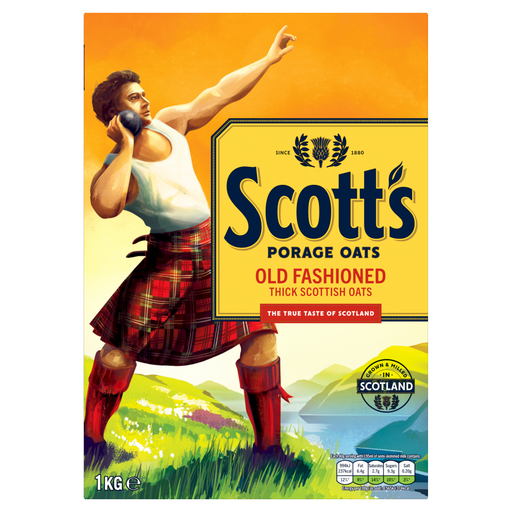 No image available
A plain traditional-oat option for a child who accepts a thicker porridge texture.
100% rolled oats; declared salt 0g per 100g. Stated preparation is 2–3 minutes in a microwave or 4–5 minutes on the hob.
May contain wheat and barley, and the thicker texture may not suit a child who needs very smooth porridge.
 No image available
A plain oat base for families who want to choose their own milk and toppings.
Lists 100% organic wholegrain oat flakes and less than 0.01g salt per 100g.
Contains oats (gluten) and is not presented as gluten-free. Check the pack instructions if cooking time or texture matters.
 No image available
A straightforward plain-oat route for a family-prepared tea-time bowl.
Lists 100% organic wholegrain oat flakes and less than 0.01g salt per 100g.
Contains oats (gluten) and should not be treated as a gluten-free option. Check the pack if a particular cooking time or texture is needed.
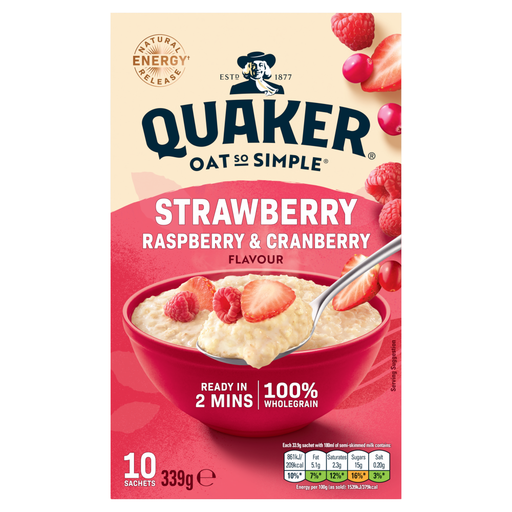 No image available
A flavoured sachet option when a 2-minute microwave method is the main tea-time priority.
The dry nutrition panel declares 0.0g salt per 100g; the product declares 19g sugars per 100g.
Contains cereals containing gluten and may contain barley, soya and wheat. Its flavoured format gives less ingredient control than plain oats.
 No image available
An individual-sachet option for a quick tea-time bowl with separately chosen toppings.
Lists wholegrain rolled oats and a stated 2½-minute microwave method.
Check the current salt panel before buying because the listed dry-product salt figures conflict. Gluten-free suitability is not stated.
NHS label guidance defines low salt as 0.3g salt or less per 100g. Compare similar oat products using their dry-product per-100g figures rather than only a per-bowl figure.
The NHS maximum recommended daily amount is 3g for children aged 4 to 6, 5g for ages 7 to 10, and 6g for people aged 11 and over. These are whole-day limits, not targets for one tea-time meal.
Some packs show separate figures for dry oats and for a bowl made with milk. Milk changes the displayed nutrition values, including salt, so compare dry oats per 100g between products and then check the prepared serving you plan to make.
Not necessarily. Coeliac UK says many standard oats are produced alongside wheat, barley and rye and may be contaminated. Where gluten-free suitability is required, look for a gluten-free label and check the child’s clinical or school-care guidance.
Read the current pack rather than relying only on an online title. Food Standards Agency guidance states that allergens in prepacked foods must be emphasised in the ingredients list, and schools or childcare settings may have their own food-sharing policies.