What to check before buying
Start with the ingredient list and as-sold salt value, then choose the oat texture your recipe needs and review every other ingredient that will go into the bake.
| Priority |
What to check |
Your needs |
| Salt in the oat base |
Read the salt declaration per 100g as sold; check whether oats are the sole ingredient; calculate salt from the rest of the recipe separately. |
I want a plain oat base before deciding how much salt comes from butter, cheese, nuts, sauces, seasonings or toppings. |
| Texture for the recipe |
Choose jumbo rolled oats for distinct flakes and textured flapjacks; use a finer oatmeal where the recipe calls for parkin, biscuits, bread or crumble topping. |
My bake needs the texture specified by the recipe, rather than simply the lowest salt figure on the shelf. |
| Nutrition basis |
Compare like with like; distinguish dry-product values from servings made with milk or other ingredients; use dry quantities when working out a recipe. |
I need to know what belongs to the oats and what has been added during preparation or baking. |
| Allergen suitability |
Read the current ingredients and allergen statement; check cross-contact warnings; use a specifically labelled product where a required dietary standard applies. |
I am baking for someone whose needs mean that a plain oat ingredient list alone is not enough. |
Joybuy oat options
Joybuy product options for lower-salt home baking, including plain rolled oats, jumbo oats and oatmeal. Match the oat format to your recipe and use the as-sold nutrition information when assessing the oat base.
 No image available
Morrisons Free From Gluten Free Oats 1kg
A plain oat option for baking where a gluten-free and wheat-free product description is relevant.
Listed as 100% gluten-free oat flakes, with trace salt declared on the as-sold label and baking listed among its uses.
Check the pack and recipe guidance for the flake texture needed for flapjacks, parkin or crumble.
Joybuy
 No image available
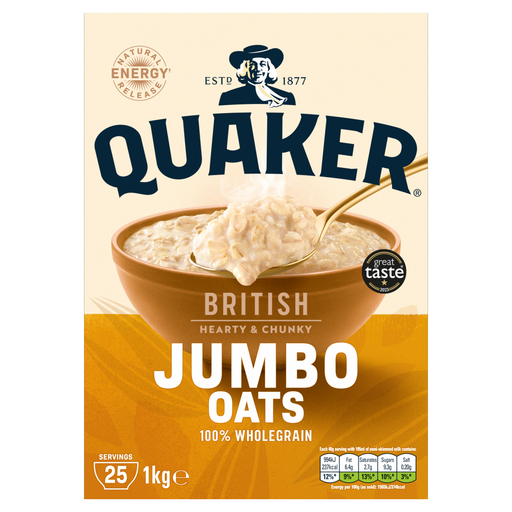
Quaker Jumbo Rolled Oats 1kg
A loose-oat option for recipes where jumbo rolled oats and baking use are wanted.
Listed as 100% wholegrain oat flakes with 0.01g salt per 100g as sold.
The listing notes possible traces of wheat; check whether jumbo flakes suit recipes intended for finer oatmeal.
Joybuy
 No image available
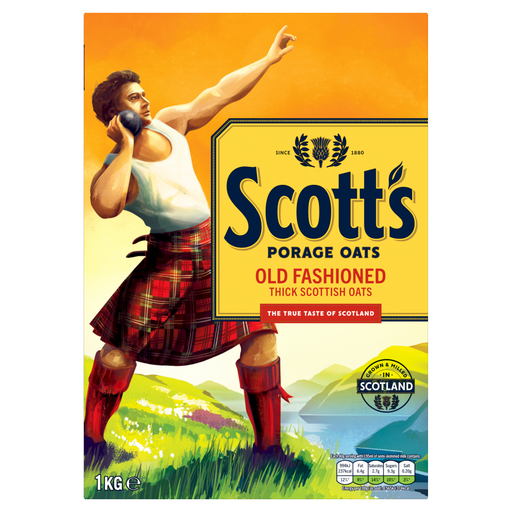
Scotts Porage Oats Old Fashioned Porridge Oats 1kg
A simple loose rolled-oat base for measuring dry oats separately from recipe additions.
The listing states 100% rolled oats and 0g salt per 100g as sold.
It may contain gluten from wheat and barley; check the recipe before relying on its thicker rolled texture for a particular bake.
Joybuy
 No image available
Scotts Porage Oats Original Porridge Oats 1kg
An oatmeal-based option for bakers who need to assess dry oats separately from a prepared serving.
The listing states 100% oatmeal and 0g salt per 100g and per 40g dry portion.
It may contain wheat and barley. The prepared serving includes semi-skimmed milk, so use the dry figures for the oats and check whether the grind suits the recipe.
Joybuy
Frequently asked questions
Do I need specially labelled reduced-salt porridge oats for home baking?
Usually not. Plain porridge oats can have zero or only trace declared salt, so the larger difference often comes from the recipe: assess salted butter, cheese, sauces, stock, salted nuts and toppings, and compare oats using their as-sold nutrition panel. NHS guidance advises using less salt in cooking.
Which oats should I use for lower-salt flapjacks?
Choose plain rolled oats as the base, and choose jumbo oats when you want a thicker flapjack with distinct oat texture. Mornflake presents its Jumbo Oats for flapjacks and lists less than 0.01g salt per 100g.
Should I use oatmeal rather than porridge oats for parkin or crumble?
Use medium oatmeal when the recipe needs a finer oat texture. Mornflake identifies its medium oatmeal for parkin, biscuits, bread and crunchy crumble topping, so it is not a direct texture substitute for jumbo flakes in a textured flapjack.
Why can prepared porridge show more salt than a dry oat sachet?
Prepared nutrition figures include the ingredients used to make the serving. Quaker lists 0g salt for its dry 27g Original sachet and 0.20g for the stated serving made with semi-skimmed milk; for baking, calculate the dry oats and each added ingredient separately.
Are ordinary porridge oats suitable for someone who needs gluten-free oats?
Do not assume they are. Standard oat products can carry warnings about wheat, barley, other gluten sources or nut cross-contact, so use a specifically labelled product only when its current pack and allergen statement meet the individual dietary requirement.


