Older adults reducing dietary salt
For people aged 65 and over who want a lower-salt breakfast base and can compare declared salt per 100g before choosing toppings and cooking liquid. NHS guidance covers salt intake for adults.


For a lower-salt porridge, start with plain oats that declare 0.0g or a very low salt figure per 100g, then consider the liquid and toppings used to make the bowl. Rolled oats are a straightforward option when ingredient simplicity matters, while quick oats or sachets can be more practical where preparation time or texture is important; check the current pack for allergens and added ingredients.
For people aged 65 and over who want a lower-salt breakfast base and can compare declared salt per 100g before choosing toppings and cooking liquid. NHS guidance covers salt intake for adults.
For family members or carers looking for plain oats that are simple to prepare and may be easier to serve as smooth porridge, while checking allergens and the current nutrition panel.
For people with reduced appetite or a clinician-directed nutrition plan, where porridge needs to be considered as part of the full meal rather than chosen on salt alone. The SACN statement considers nutrition in adults aged 65 and over.
Choose this when: Reducing salt is the main aim and a hob or microwave preparation of around four to five minutes is manageable.
Consider: The finished bowl still changes with the milk, toppings and portion chosen.
Choose this when: A quicker-cooking or smoother porridge is more realistic for the person preparing or eating it.
Consider: Check exact cooking directions and allergen warnings, especially for individual sachets.
Choose this when: Extra protein has a clear place in the person's wider nutrition plan.
Consider: These products can include ingredients such as sugar, milk protein and maltodextrin, so they are not equivalent to plain oats.
Start with the dry product label, then assess how the oats will be prepared and whether the finished bowl fits the person's dietary needs.
| Priority | What to check | Your needs |
|---|---|---|
| Declared salt | Compare salt per 100g on dry-product labels; check the ingredient list; do not rely on a reduced-salt phrase alone. | I want a breakfast base with a clearly stated low salt figure and control over whether salt is added during cooking. |
| Preparation and texture | Check cooking time, microwave or hob directions, portion format and whether smaller flakes are intended to cook quickly. | A quick, smooth porridge may be more manageable when measuring, stirring or eating a firmer texture is difficult. |
| Whole-meal nutrition | Consider the liquid, toppings and any added sugar or protein ingredients; compare the prepared meal, not only the dry oats. | If appetite is lower or protein intake has been discussed with a clinician, I need the bowl to fit the wider meal plan. |
| Allergens and gluten | Read ingredients and allergen statements on the exact pack; look for a gluten-free label where medically required; check may-contain warnings. | I need to avoid assumptions about plain-looking oats where coeliac disease, milk allergy or nut allergy applies. |
A reduced claim is comparative, while plain porridge oats can still have different declared salt values. Comparing salt per 100g gives a like-for-like starting point.
Compare the current nutrition panel and ingredient list. Plain-oat examples in the supplied product information range from 0.0g to 0.03g salt per 100g.
Milk, toppings and any added salt can change the salt, energy and protein content of the finished bowl.
Plan preparation as well as the oat pack: avoid adding table salt and consider the chosen milk, fortified alternative and toppings within the person's overall diet.
Plain oats can still carry gluten, milk, nut or cross-contact warnings, which matters for people with coeliac disease or allergies.
Read the exact pack each time. Where gluten-free food is medically required, choose a product specifically labelled gluten-free rather than relying on oats being naturally gluten-free.
Protein-enhanced products may contain extra ingredients and may not suit every dietary plan. Reduced appetite or malnutrition risk involves more than one cereal choice.
Use protein-added porridge only where it fits the person's nutrition plan; otherwise, a plain lower-salt oat base gives more control over additions.
A retailer own-label route with plain rolled oats and plain instant oat sachets in its porridge range.
A plain-oat option for shoppers who prioritise quicker cooking and a smooth, creamy texture.
An organic wholegrain rolled-oat option for shoppers seeking a plain product with a very low declared salt value.
A range including natural plain sachets, quick oats and protein-added options, with selected products listed by a UK retailer.
These Joybuy options include plain oat packs and portioned porridge sachets for this lower-salt porridge decision. Check the current pack label before buying, especially where salt, allergens or preparation needs are important.
 No image available
A plain rolled-oat option for a lower-salt breakfast base with flexible hob or microwave preparation.
The listed dry nutrition panel declares 0g salt per 100g, and the ingredient list is 100% rolled oats.
May contain wheat and barley; check that the cooked texture, milk and toppings suit the individual.
 No image available
A plain organic wholegrain oat option for shoppers comparing very low declared salt figures.
The product information lists 100% organic wholegrain oat flakes and salt below 0.01g per 100g; a 40g serving is listed with 4.5g protein and 3.3g fibre.
It is not presented as a gluten-free option, and the final bowl depends on the chosen liquid and toppings.
 No image available
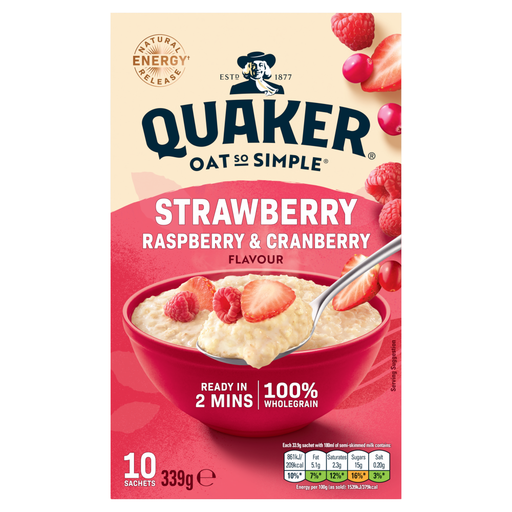
A portioned microwave option where a quick breakfast and fewer measuring steps are useful.
The dry product declares 0.0g salt per 100g and has a stated two-minute microwave method.
This is a flavoured oat-and-sugar mix rather than a single-ingredient plain-oat product, and it contains cereals containing gluten.
 No image available
A plain, pre-portioned porridge-sachet option with a stated 2½-minute microwave method.
The ingredient list names wholegrain rolled oats only, allowing control over what is added to the bowl.
Check the current pack's salt panel before relying on it for salt reduction, as the listed per-100g and per-serving figures are inconsistent. The record does not establish gluten-free suitability.
No. A 0.0g declaration applies to the dry oats, while the finished bowl also depends on the milk or alternative, toppings, sauces and any salt added during cooking. The NHS says adults should have no more than 6g of salt a day in total, including salt already in food and salt added during cooking.
Not automatically. A protein-added option may be relevant where a clinician or dietitian has identified a need to increase protein, but the full recipe matters: Flahavan's high-protein plain sachet also contains sugar, milk protein and maltodextrin. Choose according to the person's overall dietary plan and appetite.
Do not assume they are. Check the exact pack for a gluten-free claim and allergen statement. The Food Standards Agency states that food labelled gluten-free must contain no more than 20mg/kg gluten; the supplied Waitrose instant oats may contain milk and nuts, while Jordans Organic Porridge warns of other gluten sources and nuts.
The NHS adult maximum is no more than 6g of salt per day for people aged 11 and over. A clinician may set a different plan where health conditions, medicines or a prescribed diet need to be considered, so do not change prescribed medicines solely to reduce salt.