Care-home cooks planning lower-salt menus
Compare salt per 100g, then account for the amount of tomato used alongside other ingredients. The finished meal must also fit residents’ individual eating plans.


Choose chopped tomatoes by the salt value per 100g on the current pack, then check how much the recipe uses. ASDA lists 0.01g per 100g after hob heating and M&S lists 0.02g per 100g, but a lower-salt ingredient does not make a meal suitable for every resident: texture and individual nutritional needs still matter, as Public Health England and the Care Quality Commission’s guidance makes clear.
Compare salt per 100g, then account for the amount of tomato used alongside other ingredients. The finished meal must also fit residents’ individual eating plans.
Check the current pack rather than relying on a brand name or an earlier online listing. The salt declaration, pack format and instructions for opened tins all affect kitchen planning.
A lower-salt cupboard staple may be relevant to an agreed meal plan, but it cannot settle questions about a resident’s nutrition, hydration or required food texture. Public Health England’s residential-care catering guidance calls for diets to reflect individual needs.
Start with the exact tin’s salt declaration, then assess the whole recipe, the required texture and how opened tins will be used.
| Priority | What to check | Your needs |
|---|---|---|
| Salt declaration | Compare salt per 100g on the exact pack, not just a per-serving figure. The NHS defines a low-salt food as one with no more than 0.3g salt per 100g. | For a lower-salt tomato base, I want a figure I can compare across tins. I will check it again on the pack used for the meal. |
| Whole recipe | Work out the tomato’s contribution from the quantity used, then consider other ingredients that add salt, such as stock or cheese. Check the meal against each resident’s plan. | The tin is only one part of the dish; I need to know whether the finished recipe fits the people being served. |
| Food texture | Check whether chopped pieces suit the recipe and each resident’s assessed eating or swallowing needs. Do not assume a finely chopped product meets a texture-modified plan. | If a resident needs an adapted texture, I need the prepared meal—not just the tin’s description—to match their plan. |
| Pack use and storage | Match the tin or multipack size to planned meals. Follow that product’s instructions for transferring, refrigerating and using leftovers; ASDA specifies 4 days after opening, while M&S specifies 3 days. | When I open a tin, I want its remaining contents used within the period stated for that product. |
Published values differ between products. For example, Napolina lists 0.10g salt per 100g for its chopped tomatoes, while Mutti lists 0.30g per 100g for Polpa. Both meet the NHS low-salt criterion, but they contribute different amounts to a recipe using the same quantity.
Compare the current label for the exact product and calculate the contribution from the amount used. A brand name or Italian origin does not give you the salt figure.
Choosing a lower-salt tomato base does not address every nutritional, hydration or eating need. Public Health England’s residential-care guidance emphasises diets appropriate to individuals, while Care Quality Commission guidance addresses managing eating and drinking risks.
Use the tomato within the resident’s assessed plan and seek the appropriate clinical or dietetic input when that plan requires it.
Napolina describes its chopped tomatoes as chunky. Neither a chopped nor a finely chopped description establishes that a prepared dish meets a resident’s assessed texture requirements.
Check the required meal texture before choosing the tomato format or deciding how the sauce will be prepared.
ASDA instructs shoppers to use its opened chopped tomatoes within 4 days; M&S gives 3 days. Both specify transfer to a suitable non-metallic container, covering and refrigeration.
Follow the instructions on the tin being used and plan when the remaining contents will go into meals.
These figures describe the named products, not every tomato tin sold under each brand; check the pack selected for the kitchen.
ASDA Chopped Tomatoes 400g is a chopped-tomato option with a published salt declaration.
M&S Chopped Italian Tomatoes is a 400g chopped option with a published salt figure.
Tesco Grower’s Harvest Chopped Tomatoes is a 400g own-label option.
Napolina sells chopped tomatoes in several pack formats and describes its standard chopped product as chunky.
Mutti Polpa is a finely chopped tomato pulp; Mutti lists salt among its ingredients.
Sainsbury’s lists a Chopped Tomatoes Can 400g that purchasers can assess alongside other tins.
These Joybuy options are chopped or finely chopped tomato multipacks for kitchen planning. Compare each pack’s current salt declaration and format with the recipe and residents’ meal plans.
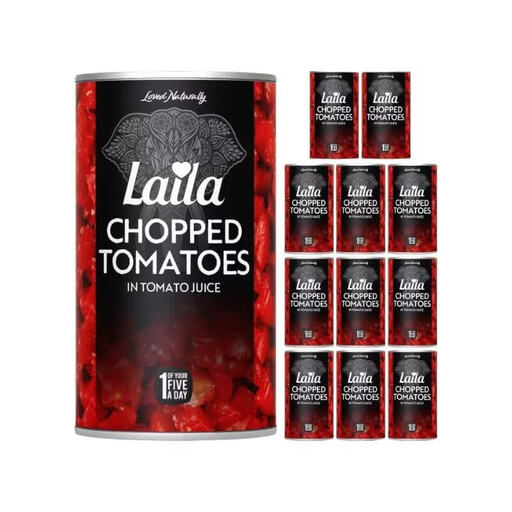 Image unavailable
A 12-tin chopped-tomato pack for recipes using a tomato base. The listing states 0.03g salt per 100g and says to refrigerate opened contents and use them within 2 days. Check the delivered pack’s label and the prepared meal’s required texture.
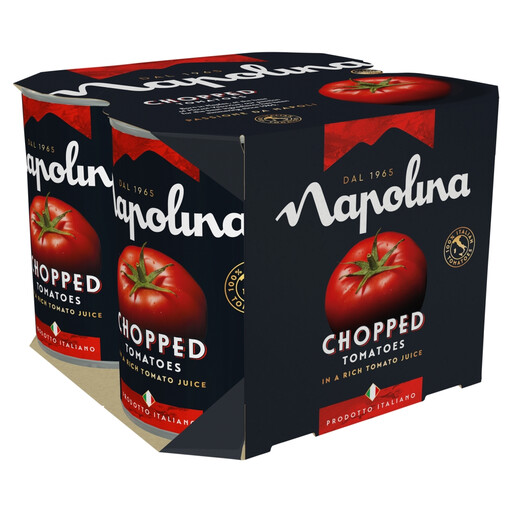 Image unavailable
This four-tin pack offers a chunky chopped texture for recipes where pieces of tomato are appropriate. The listing states 0.10g salt per 100g and instructs refrigeration and use within 2 days after opening. Check the delivered label and any resident-specific texture requirements.
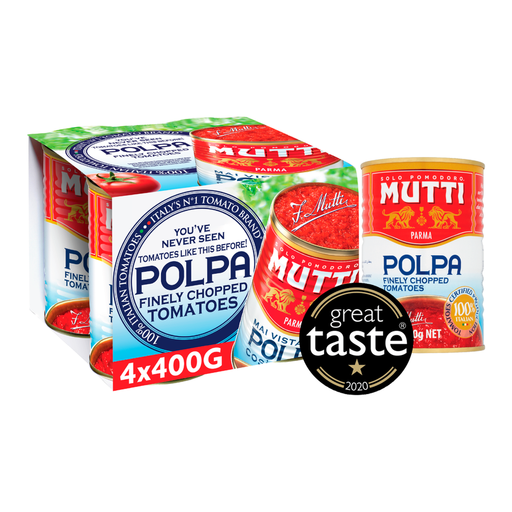 Image unavailable
Consider this four-tin finely chopped format when it fits the recipe, without assuming it meets a texture-modified meal plan. The listing states 0.30g salt per 100g and includes salt in the ingredients; check the current UK pack label and the full recipe’s salt contribution.
Image unavailable
This six-tin chopped-tomato pack suits a kitchen planning use across several recipes where its chunky texture is appropriate. The listing states 0.10g salt per 100g and says to refrigerate opened contents and use within 2 days. Check the delivered pack and residents’ meal plans.
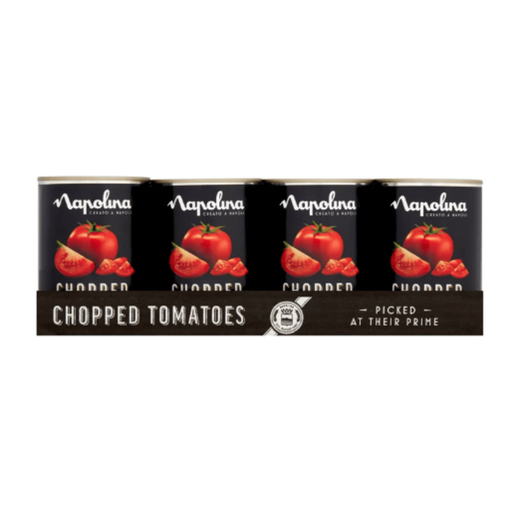 Image unavailable
The 24-tin format is worth assessing against planned kitchen use, including whether its chunky texture fits the meals. The listing states 0.10g salt per 100g and instructs refrigeration and use within 2 days after opening. Confirm the delivered pack’s label before using its figure in menu calculations.
The NHS defines a low-salt food as one containing no more than 0.3g salt per 100g. Use the per-100g declaration to compare tins, then account for the quantity going into the recipe.
No. The tomato’s salt value is one part of meal planning. Public Health England’s residential-care catering guidance calls for diets appropriate to individual needs, and Care Quality Commission guidance addresses risks associated with eating and drinking; check each resident’s nutritional and texture requirements.
Follow the instructions for the exact product. ASDA and M&S both specify transferring unused contents to a suitable non-metallic container, covering and refrigerating them, but ASDA says to use its product within 4 days and M&S says 3 days.
Check the current delivered pack as well. Retailer product information can change, so use the pack’s salt declaration, ingredients and handling instructions for the product going into the meal.