Choose a chocolate biscuit according to when you plan to eat it: for a snack around training, compare sugars and total carbohydrate in the portion you will have, then check ingredients and tolerance. For food during a long run, a familiar carbohydrate snack that you can carry and eat while moving may be more practical than choosing a biscuit for its lower-sugar wording alone; practise your choice in training.
Who is this choice for?
Runners planning food for a long run
If you intend to eat while running, consider the carbohydrate in your portion as well as whether you can carry and eat the snack comfortably. University College London Hospitals NHS Foundation Trust notes that activities lasting longer than 60 minutes may call for a snack; Nutrition X recommends practising race nutrition during training.
Shoppers looking for a lower-sugar snack
A chocolate-style biscuit for before or after training is a different decision from food eaten mid-run. Compare sugars per 100 g across products, then read the figures for the portion you intend to eat. A no-added-sugar name does not tell you the total carbohydrate.
Runners checking ingredients
If particular ingredients matter to you, read the exact pack’s ingredient and allergen statements. Some of the Gullón Zero biscuits considered here contain maltitol; try an intended training snack before relying on it for an important run.
What should you check?
Decide whether the biscuit is an everyday training snack or food for a run, then compare portions on the same nutritional basis.
No-added-sugar chocolate-style biscuits
Consider when: reducing sugars in a biscuit snack is your priority and the ingredients suit you.
Bear in mind: no added sugar does not mean no carbohydrate, and a sweetened biscuit still needs a tolerance check before use on a run.
Conventional chocolate biscuits
Consider when: a familiar biscuit fits the portion and nutritional values you have planned around training.
Bear in mind: sugar and fat figures vary by recipe; one variety’s label cannot stand in for another’s.
A practised snack for the run
Consider when: you need food during a longer run and can carry, eat and tolerate that snack while moving.
Bear in mind: choosing food for use during exercise and choosing a lower-sugar chocolate biscuit are separate aims.
| Priority | What to check | Your needs |
|---|
| Sugar and carbohydrate |
Compare sugars per 100 g, then sugars and total carbohydrate in the portion you will eat. Read both lines rather than relying on no-added-sugar wording. |
I’m choosing a chocolate-style snack with less sugar, but I also want to know how much carbohydrate my portion supplies. |
| Timing and practicality |
Check the carbohydrate in the intended portion and whether the food is workable while moving. Practise an in-run choice during training, as Nutrition X advises. |
For a long run, I need food I can carry, eat and tolerate—not just a biscuit with an appealing sugar figure. |
| Ingredients and tolerance |
Read the exact pack for sweeteners, fibre, allergens and relevant ‘may contain’ statements. Try an intended running snack during training. |
If I’m considering a maltitol-sweetened biscuit, I want to establish whether it suits me before an important session. |
| Like-for-like portions |
Use per 100 g figures to compare recipes, then check the biscuit weight and values per biscuit or serving. Keep different varieties separate. |
A smaller sugars-per-biscuit number is not enough for me to judge a recipe if the biscuits are different sizes. |
Common buying mistakes
-
Comparing only sugars per biscuit
Different biscuit sizes can make per-biscuit figures look unlike per-100 g comparisons. McVitie’s, Tesco and Sainsbury’s publish figures for their particular chocolate digestives, not for a standard-sized chocolate biscuit.
Compare sugars per 100 g first, then use the pack’s serving information to assess how many biscuits you plan to eat.
-
Using ‘no added sugar’ as a running-fuel plan
A no-added-sugar biscuit can still supply carbohydrate. Whether it works during a run also depends on the portion and how practical it is to eat.
Plan food for the session separately from your preference for less sugar, and practise anything you intend to eat while running.
-
Skipping the ingredient check
The Gullón Zero products considered here use maltitol, while their recipes and allergen statements need to be checked individually.
Read the pack you will use, including relevant ‘may contain’ wording, and try a new training snack before depending on it during an important run.
Brand and product-line references
These examples show why the exact variety and serving size matter; a brand name alone does not establish a lower-sugar recipe.
Gullón
The Zero range includes Cookies & Cream cocoa sandwich biscuits and dark-chocolate Ginger Oaties for shoppers considering a chocolate-style snack without added sugar.
- Joybuy UK lists 2.4 g sugars and 65 g carbohydrate per 100 g for the Gullón Zero Cookies & Cream biscuit.
- Gullón UK lists maltitol in these recipes. Check the particular pack’s ingredients and whether the portion suits your intended use.
McVitie’s
Milk Chocolate Digestives offer a conventional coated-biscuit reference; Penguin and Club varieties need their own label checks.
- McVitie’s lists 10.4 g carbohydrate and 4.8 g sugars per Milk Chocolate Digestive.
- McVitie’s lists different per-bar figures for Penguin Orange and Club Orange. Do not apply the digestive’s figures to those bars.
Tesco
Tesco Milk Chocolate Digestives are another conventional chocolate-coated biscuit to compare by recipe and portion.
- Tesco lists 31.5 g sugars per 100 g and 5.4 g per 17 g biscuit for this product.
- Check the current pack when buying, since Tesco notes that product information can change.
Sainsbury’s
Its Milk Chocolate Digestives provide a separate own-label comparison, not a figure for all chocolate digestives.
- Sainsbury’s lists 25.6 g sugars per 100 g and 4.1 g per biscuit for this variety.
- Compare per 100 g as well as per biscuit before judging it against a different-sized product.
Fox’s
The Chocolatey milk-chocolate half-coated cookies represent a different biscuit style from the no-added-sugar options above.
- The product listing published by Sainsbury’s gives 40 g sugars and 25 g fat per 100 g for the 157 g pack.
- Those figures describe this half-coated cookie, not every Fox’s biscuit.
Lower-sugar biscuit options on Joybuy
These chocolate-style biscuits and biscuit sticks are options to examine for a lower-sugar snack around training. Check each pack’s portion, carbohydrate and ingredients before deciding whether it also suits a planned run.
 No image available
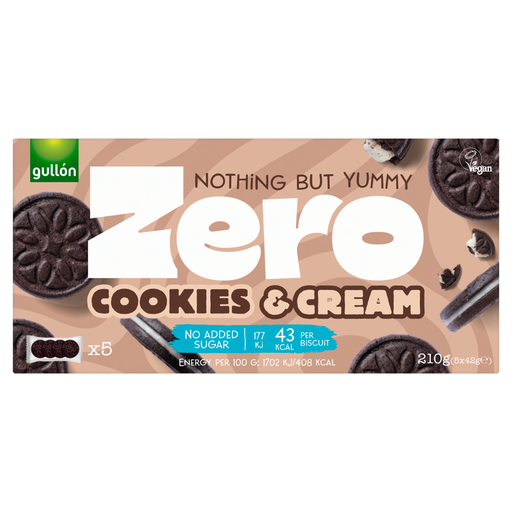
Gullon Zero No Added Sugar Cookies and Cream 210g
For a chocolate-style snack where sugars and carbohydrate both matter, Joybuy UK lists 2.4 g sugars, 65 g carbohydrate and 9.0 g fibre per 100 g. Gullón UK lists maltitol among the ingredients; check the exact pack for allergens and try your intended portion during training.
View on Joybuy
 No image available
Oreo Zero Sugar Sandwich Cookies 97g
If this cocoa sandwich biscuit appeals as a training snack, use the exact pack to compare sugars and total carbohydrate in the portion you intend to eat. Check its ingredients and try it during training before considering it as food for a run.
View on Joybuy
 No image available
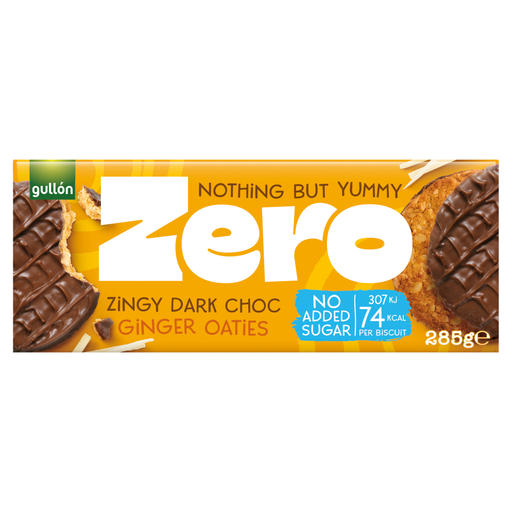
Gullon Zero Dark Chocolate Ginger Oaties 285g
This oat-and-dark-chocolate variety offers a different biscuit style for a planned snack. Joybuy UK lists 1.0 g sugars and 57 g carbohydrate per 100 g; Gullón UK identifies maltitol in the recipe. Check the pack’s ingredients and your intended portion before use around running.
View on Joybuy
 No image available
Glico Pock 5-Red Crunchy Chocolate-Flavoured Biscuit 37g
The biscuit-stick format is worth considering if you prefer a portion you can divide up. Check the pack’s sugars, total carbohydrate and ingredients against your planned portion, and try it in training before relying on it while running.
View on Joybuy
Frequently asked questions
Does ‘no added sugar’ mean a biscuit has no carbohydrate?
No. Joybuy UK lists 65 g carbohydrate alongside 2.4 g sugars per 100 g for Gullón Zero Cookies & Cream. Read the carbohydrate and sugars lines separately, then assess the portion you plan to eat.
Should I first try a new biscuit during a marathon?
Try it during training instead. Nutrition X recommends practising race nutrition on training runs; this lets you assess whether the biscuit and portion are practical for you before an important run.
Does a lower-sugar biscuit name tell me whether it suits my allergies?
No. Read the exact pack’s ingredients and relevant precautionary statements. Gullón UK lists wheat ingredients in its Zero Cookies & Cream biscuit, so its sugar description cannot replace an allergen check.


