Afternoon tea snackers comparing sugars
If you want a cracker for savoury or lightly sweet toppings, compare its total sugars per 100g and for the number you plan to eat. A plain appearance does not tell you what the nutrition panel says.


Compare the total sugars per 100g on similar crackers rather than assuming a plain cracker carries a “reduced sugars” claim. For an afternoon tea break, also consider how many you will eat, what you will put on them, and the pack’s salt, saturated fat and allergen information.
If you want a cracker for savoury or lightly sweet toppings, compare its total sugars per 100g and for the number you plan to eat. A plain appearance does not tell you what the nutrition panel says.
If you are weighing up sugar alongside salt and saturated fat, check those figures on the same per-100g basis. The topping can change the comparison for your finished snack.
If crackers will be shared, check the exact pack’s ingredients and allergen statements. Plain crackers can contain wheat; a separately labelled gluten-free product needs its own ingredient and allergen check.
Start with comparable per-100g figures, then work out what matters for the crackers and toppings you intend to serve.
| Priority | What to check | Your needs |
|---|---|---|
| Total sugars | Compare sugars per 100g between similar crackers. The NHS describes 5g or less total sugars per 100g as low for foods; check the actual figure rather than assuming it is a “reduced sugars” claim. | I want a cracker with a lower listed sugars figure for my afternoon tea, whether or not the pack makes a comparative claim. |
| Portion and toppings | Check the stated serving size against the number of crackers you will eat. Consider the ingredients or nutrition information for any spread or topping separately. | A small per-cracker figure matters less to my choice if I plan to have several crackers with a sweet topping. |
| Other label values | Compare salt and saturated fat per 100g as well as sugars. GOV.UK’s label guidance describes traffic-light information as a way to compare fat, sugars and salt. | I may serve crackers with cheese or a spread, so I want to look beyond the cracker’s sugars figure. |
| Allergens | Read the exact product’s ingredient list and any precautionary allergen statement. Look for an explicit gluten-free label if that distinction is needed. | Before I share a plate, I need to check that each cracker suits the people eating it. |
“Reduced sugars” compares a food with a similar product, while the NHS low-sugars label threshold for foods concerns total sugars per 100g. One description does not establish the other.
Read the exact wording on the pack. To compare crackers without a comparative claim, use their listed sugars per 100g.
Crackers with similar sugars figures can differ in other label values. For example, Waitrose & Partners lists 0.8g sugars and 1.7g salt per 100g for Jacob’s High Fibre Cream Crackers.
Compare salt, saturated fat and the portion you expect to eat before deciding between packs.
Jam, honey or a sweet spread contributes to the finished snack even when the cracker itself has little listed sugar.
Choose the topping alongside the cracker, and check its label or ingredients if sugars are your main comparison.
Several plain cracker products contain wheat, and precautionary allergen statements can differ between packs.
Check the current ingredients and allergen statement before serving; assess a gluten-free label and any other relevant allergens separately.
These product-line examples help distinguish plain, fibre-focused and sweeter-style crackers; the figures apply to the named products, not every cracker from each brand.
Original Cream Crackers offer a plain base, while High Fibre Cream Crackers are a distinct variant with a different nutrition panel.
Table Water Crackers are a plain option for serving with toppings; a Carr’s selection pack is a different product and should be checked on its own label.
Ritz Original is a sweeter-style savoury cracker to compare against plain cream or water crackers, rather than assuming all cracker styles have similar sugars figures.
Its own-label range includes standard Cream Crackers and a separately labelled Free From cream cracker; check which pack meets your requirements.
Hi-Baked Crackers provide another labelled option when comparing sugars and salt across cracker styles.
These options span rye crispbread, cream crackers, a cracker selection and flavoured crackers for an afternoon break. Compare the exact pack and your planned toppings rather than treating them as interchangeable plain crackers.
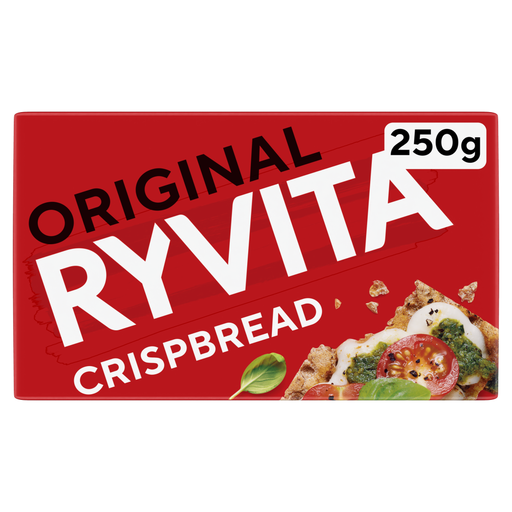 No image available
A rye crispbread option if you want a base for afternoon tea toppings rather than a cream cracker. It contains rye, and the product information notes that it may contain sesame; check the pack if either matters to your choice.
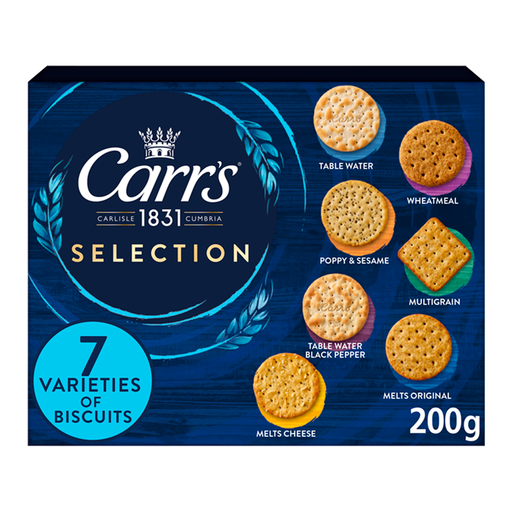 No image available
A selection pack for serving more than one cracker style. Nutrition figures for an assortment may be representative rather than identical for every cracker inside, so check the pack when comparing sugars. The product information identifies wheat and barley and notes possible traces of milk and sesame.
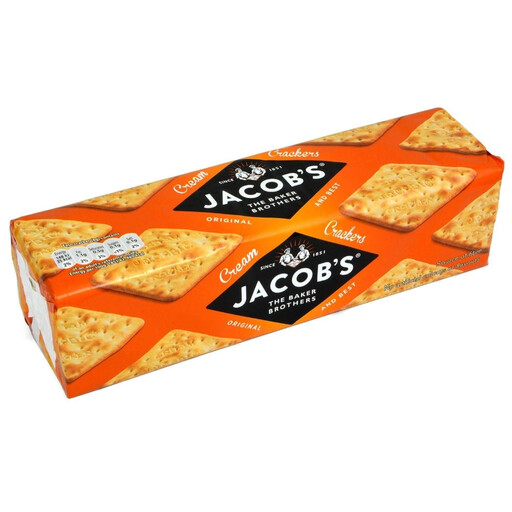 No image available
A plain cream cracker for pairing with your chosen topping. Joybuy’s product information lists 0.6g sugars and 1.3g salt per 100g; compare both figures with any alternative you are considering. It contains wheat.
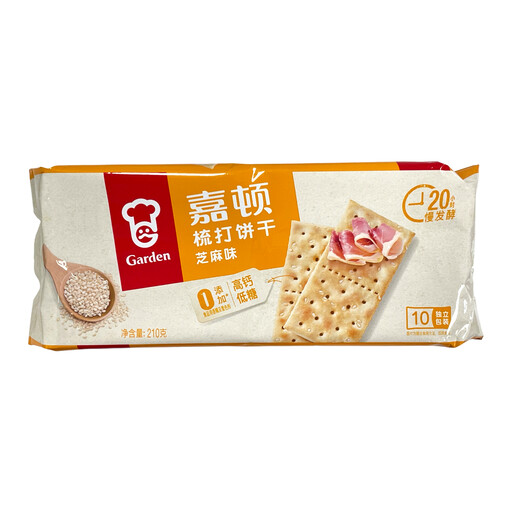 No image available
A sesame-flavoured soda biscuit if you prefer a flavoured base to a plain cream cracker. The product information identifies wheat, sesame, soya and barley; check the current pack before sharing.
 No image available
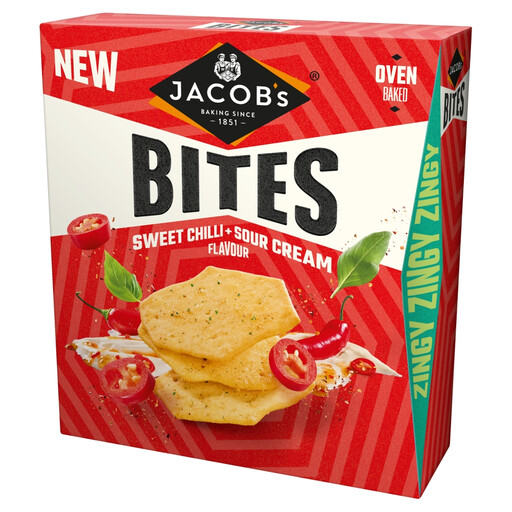
A flavoured, bite-sized option to consider as a standalone snack rather than a neutral base for toppings. Check the exact pack’s nutrition figures for your comparison. The product information identifies milk, wheat, barley and sulphites, and notes that it may contain sesame.
No. “Reduced sugars” compares a product with a similar one; Food and Drink Federation guidance also describes an energy condition for that comparative claim. The NHS uses 5g or less total sugars per 100g as its low-sugars label threshold for foods. Read the pack’s wording and its nutrition figure separately.
Compare total sugars per 100g between similar crackers first. Then check the serving you expect to eat, salt and saturated fat, and the topping you plan to add.
No category-wide rule follows from a plain appearance. In the named product listings, Tesco Groceries gives 0.6g, 1.3g and 1.5g sugars per 100g for Jacob’s Original, Tesco Cream and Carr’s Table Water Crackers respectively; Waitrose & Partners lists 8.5g per 100g for Ritz Original. Check the exact pack when buying.
Do not assume a plain cracker is gluten-free: several of the named products contain wheat. Choose a product explicitly labelled gluten-free if that is required, and check its current ingredients and any other relevant allergen statements before serving.
Follow the instructions on the specific pack. Tesco Groceries’ pages for Tesco Cream Crackers and Jacob’s Original Cream Crackers advise keeping them in a cool, dry place and using an airtight container after opening.