Conference menu planners
You need to compare sugars on the same per-100g basis, work out how many servings each pack will provide and give the catering team the details of the crackers and toppings you select.


Start with the ‘of which sugars’ figure per 100g: checked listings from ASDA, Sainsbury’s and Tesco put several plain cream crackers and table water biscuits at 0.6–1.5g, while ASDA lists Ritz Original at 8.5g. For a conference table, choose the serving format that works with your toppings, then check salt, portions and allergen information for the finished food. A lower sugars figure does not, by itself, establish a formal ‘reduced sugar’ claim.
You need to compare sugars on the same per-100g basis, work out how many servings each pack will provide and give the catering team the details of the crackers and toppings you select.
You need ingredient and allergen information for each finished serving, including its toppings. Preparation and service also matter when managing allergen cross-contact.
Compare sugars per 100g to narrow the cracker choice, then plan the finished serving and check the exact packs that will be used.
| Priority | What to check | Your needs |
|---|---|---|
| Sugars and wording | Compare ‘of which sugars’ per 100g on the exact pack. Checked listings from ASDA, Sainsbury’s and Tesco give 0.6–1.5g for several plain crackers; ASDA lists Ritz Original at 8.5g. Do not treat a small absolute figure as proof of a ‘reduced sugar’ claim. | I want a cracker that fits a lower-sugar menu brief, with figures I can compare consistently and wording I can use accurately. |
| Other nutrition | Read salt, saturates and carbohydrate alongside sugars, using the same per-100g basis. ASDA lists 1.3g salt per 100g for Jacob’s Original Cream Crackers and 1.5g for Carr’s Table Water Crackers. | A low sugars figure is not the only number I need when deciding what to serve with the chosen toppings. |
| Allergens | Check the ingredients and precautionary statements on each cracker pack and topping. Keep the information for each finished option together, and plan how to manage cross-contact during preparation and service. | Guests need accurate information about the food on the table, not just the cracker before it is topped. |
| Serving format | Check pack weight, any stated biscuit count or serving size, and the number of finished portions planned. ASDA lists approximately 36 biscuits in the checked 125g Carr’s Table Water Crackers pack; count and portion information may differ on another pack. | For a small accompaniment or a topped cracker, I need to know how the selected pack fits the serving plan. |
The figure on a nutrition panel describes that product; it does not establish the comparison needed for a reduced-sugar claim.
Use the per-100g figure when selecting crackers. Check the applicable claim requirements and comparator before using comparative wording on a catering menu.
Toppings can change the finished serving’s sugars and ingredients. A cracker’s allergen information alone cannot describe everything being offered to guests.
Keep ingredient and allergen details for each completed option, and manage cross-contact during preparation and service. Food Standards Agency guidance covers food businesses in England, Northern Ireland and Wales; Food Standards Scotland provides guidance for Scotland.
Crackers with relatively small sugars figures still have other nutrition values to consider. For example, ASDA lists 1.5g salt per 100g for the checked Carr’s Table Water Crackers.
Compare sugars, salt, saturates and the intended portion on the labels of the products you are considering.
These figures describe the specified products and pack sizes, not every cracker sold under each name.
Original Cream Crackers in the checked 300g pack provide a plain base for planning topped servings.
The checked 125g Table Water Crackers pack offers a small biscuit format for an accompaniment.
The checked 300g Cream Crackers pack is another plain-cracker reference.
The checked 300g Cream Cracker pack can be compared with other plain crackers on a per-100g basis.
The checked 300g Classic Cream Crackers pack provides a further plain-cracker comparison.
The checked 150g Original box is a snack-style alternative when that format matters more than selecting one of the plainer crackers above.
These Joybuy options include cream crackers, a cracker selection and saltines. Use the format and pack size to plan service, and check each selected pack’s nutrition and allergen information before finalising the menu.
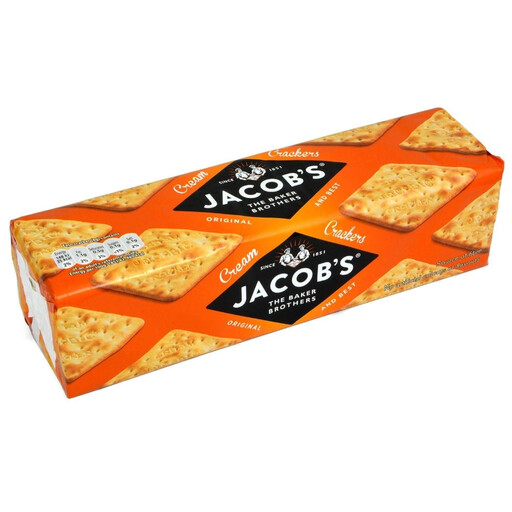 No image available
A 300g cream-cracker pack to consider when planning topped portions for a conference table. Joybuy lists wheat flour among the ingredients for this product; check its current pack and the toppings when preparing allergen information.
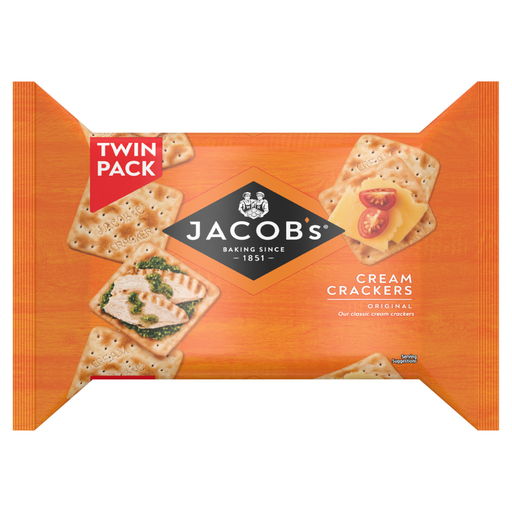 No image available
The two 200g packs give caterers a format to consider when planning how many crackers to put out at once. Check the nutrition panel and allergen information for this twin-pack variant rather than applying figures from a different pack.
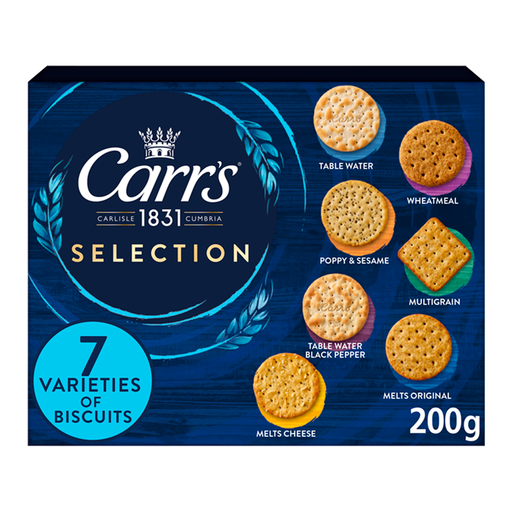 No image available
This 200g selection is an option to examine if the serving plan calls for more than one cracker style. Check the contents, nutrition information and allergen statements for this selection; figures for Carr’s Table Water Crackers do not describe it.
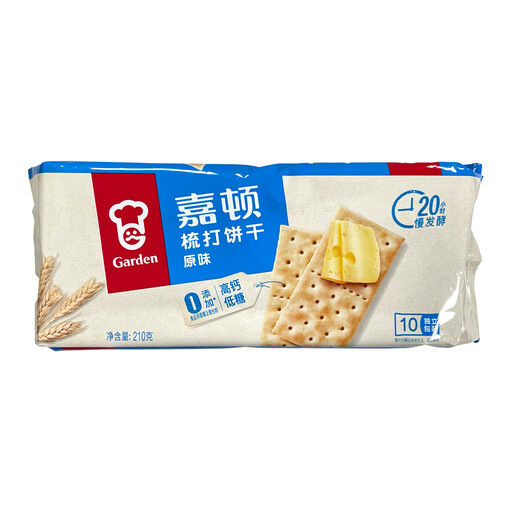 No image available
A 210g saltine-cracker pack to assess if that format suits the conference spread. Compare its sugars and salt per 100g with the other packs under consideration, and check its ingredient information before pairing it with toppings.
No. Sugars per 100g lets you compare products, but a comparative ‘reduced sugar’ claim needs its own applicable requirements and a valid comparator. Check those before using the claim in catering materials.
Follow the directions on the selected pack. The checked Jacob’s, Tesco and Carr’s listings call for cool, dry storage and an airtight container after opening; keep the packaging information available to the catering team.
Provide information for the applicable allergenic ingredients in the food being served, including its toppings, and manage allergens during preparation and service. Food Standards Agency guidance covers businesses in England, Northern Ireland and Wales; Food Standards Scotland provides guidance for Scotland. Check the requirements for the way each item is packaged or served.