Tea-time snackers comparing sugar
If you would consider a savoury cracker instead of a sweet biscuit, compare total sugars per 100g and think about what you would put on it.


For a savoury alternative to biscuits with tea, compare the ‘of which sugars’ figure per 100g: the plain cream crackers and crackerbread in the retailer examples list less sugar than the Ritz, TUC and Carr’s snack crackers cited here. Sugar is only one part of the choice, so check salt, saturated fat, allergens and any topping on the pack you intend to buy.
If you would consider a savoury cracker instead of a sweet biscuit, compare total sugars per 100g and think about what you would put on it.
If fibre matters to your choice, look at it alongside salt and saturated fat rather than treating the sugar figure as an overall nutrition verdict.
If an ingredient or allergen affects your purchase, check the declaration on the exact pack and any may-contain statement before swapping your usual biscuits for crackers.
Start with total sugars per 100g to compare differently sized crackers, then check the rest of the label and the portion you expect to eat.
| Priority | What to check | Your needs and surveyed shoppers |
|---|---|---|
| Total sugars | Compare ‘of which sugars’ per 100g, then look at the amount per serving. Wirral Community Health and Care NHS Foundation Trust describes 5g total sugars or less per 100g as low on nutrition labels. | I want a savoury option with less sugar than the snack crackers I might otherwise choose; a small per-cracker figure alone would not let me compare packs fairly. |
| Other label values | Read the per-100g figures for salt, fat, saturated fat and fibre as well as sugar; use traffic-light labelling where it appears. | I want to see the wider nutrition profile before choosing. In the Food Standards Agency and Ipsos Northern Ireland’s 2024 survey of 611 Northern Ireland adults, 49% said they actively used traffic-light labelling when shopping for food; that figure is not specific to crackers. |
| Format and toppings | Decide whether you want a conventional cream cracker, a thin crackerbread or a snack-style cracker. Check the ingredients and nutrition of any spread you add. | A plain base suits me if I want to choose my own topping; if I prefer a more strongly flavoured cracker, I would compare its sugar figure rather than assume savoury means low in sugar. |
| Ingredients and allergens | Read the ingredients and emphasised allergens on the exact pack, plus any may-contain statement. Recheck when buying a different variant. | Before replacing familiar biscuits, I need to know whether this particular cracker and its topping fit my ingredient requirements. |
Ocado lists 8.5g sugars per 100g for Ritz Original and 6.6g for Jacob’s TUC Original; Tesco lists 7.3g for Carr’s Original Melts. Ocado lists 0.6g for Jacob’s Original Cream Crackers on the same basis.
If reducing sugar drives your choice, compare the current per-100g figures before choosing by flavour or packaging.
A per-piece or suggested-serving figure depends on the size of that piece or serving, so it can obscure differences between products.
Compare ‘of which sugars’ per 100g first, then use the serving information to consider how many crackers you would have with tea.
Ocado lists 0.8g sugars, 9.0g saturated fat and 1.7g salt per 100g for Jacob’s High Fibre Cream Crackers. Its Original Cream Crackers list 0.6g sugars, 6.3g saturated fat and 1.3g salt per 100g.
After checking sugar, compare fibre, salt and saturated fat on the exact product, and account for the topping you plan to add.
Ingredients can differ between cracker varieties, so a brand name does not establish whether a particular pack meets an allergen requirement.
Check the ingredients, emphasised allergens and any may-contain statement on the pack you buy.
These examples illustrate why the variety matters more than the brand name when comparing sugar; they are not a list of products available in the Joybuy selection below.
The cited cream-cracker and TUC varieties have different nutrition figures.
The cited crackerbread varieties offer a thin base for toppings, with different sugar and fibre figures.
Ritz Original is a snack-style cracker to compare separately from the plain cream crackers cited here.
The cited Original Melts are one specific Carr’s variety, not a nutrition profile for the whole range.
These Joybuy options include plain crackers, Ryvita products and a cracker selection for tea-time snacking. Check the nutrition and ingredients for each exact pack rather than applying one variety’s figures to another.
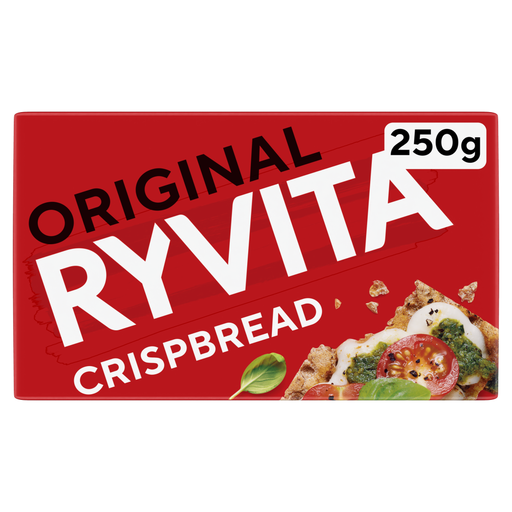 No image available
Consider this as a base for a tea-time topping. Compare the sugar figure and ingredients on this Original pack rather than using figures for Ryvita Crackerbread.
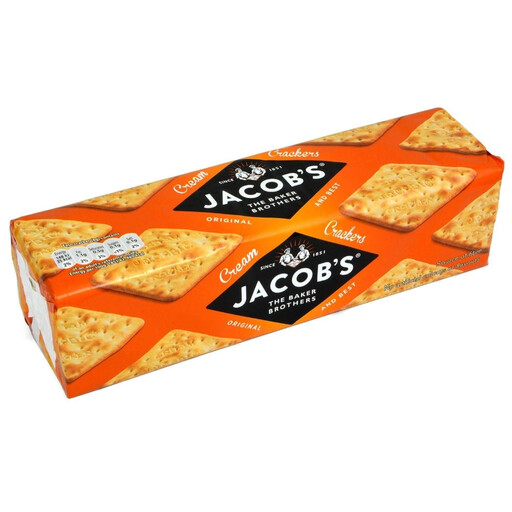 No image available
A conventional plain cracker for tea with a topping. Check this pack’s sugar, salt and saturated-fat figures, as well as its ingredients.
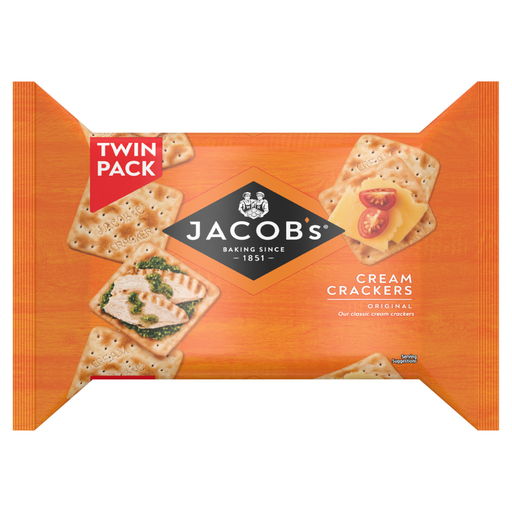 No image available
The twin-pack format suits a preference for separate packs of plain cream crackers. Compare the nutrition and allergen information on this exact variant.
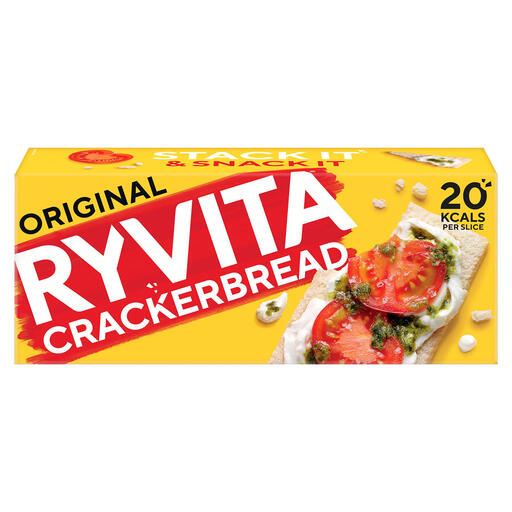 No image available
A crackerbread option if you prefer a thin base for a topping. Check the sugar figure on the pack: product information for this 200g crackerbread differs from the Sainsbury’s figure for Ryvita Original Crackerbread.
 No image available
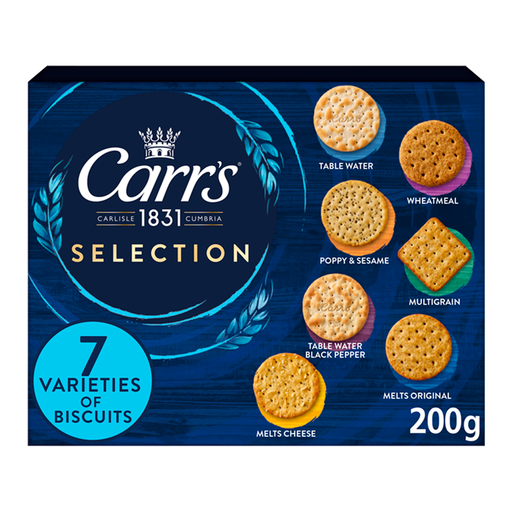
A selection pack for serving different crackers with tea. Check the pack’s ingredients and how its nutrition figures apply to the crackers inside; do not use the figure for Carr’s Original Melts as a substitute.
No. Total sugars and ‘sugar-free’ are not interchangeable descriptions. Compare ‘of which sugars’ per 100g, then read the ingredients if you also want to know whether sugar or syrup appears in the recipe.
Use ‘of which sugars’ per 100g first. Wirral Community Health and Care NHS Foundation Trust describes 5g total sugars or less per 100g as low on nutrition labels; the serving figure then helps you assess the amount you are likely to eat.
Yes. GOV.UK guidance says allergens requiring declaration must be emphasised in the ingredients list of pre-packed food. Read the exact pack’s ingredients and any may-contain statement, even if you have bought a similar-looking variety before.