Hosts offering a lower-sugar biscuit
You want a digestive to share, but need to distinguish a reduced-sugar comparison from the amount of sugar on the nutrition label.


McVitie’s The Light One offers a comparative sugar reduction, while Asda’s listing for Gullón Zero Digestive Original gives a lower sugars figure but includes sweeteners. An ordinary digestive remains an option if the group prefers that recipe and reducing sugar is not the deciding factor. Compare sugars per 100g, how many biscuits you plan to serve and the actual pack’s ingredient and allergen information.
You want a digestive to share, but need to distinguish a reduced-sugar comparison from the amount of sugar on the nutrition label.
You need to check wheat, precautionary milk or soya statements, and whether guests are comfortable with a recipe containing sweeteners before putting biscuits out.
You want enough biscuits for the table without assuming that a larger ordinary pack meets a lower-sugar preference. Think about what you will do with an opened pack, too.
Start with sugars per 100g so the recipes are on the same basis, then check the ingredients and the number of biscuits you expect to serve.
| Priority | What to check | Your needs |
|---|---|---|
| Sugar claim | Compare sugars per 100g and read what any reduction is measured against. McVitie’s lists 8.9g per 100g for The Light One and says its 30% reduction is against the average digestive biscuit; Asda lists less than 0.5g per 100g for Gullón Zero Digestive Original. | I want to know whether a biscuit has a comparative reduced-sugar claim or a lower labelled sugars figure. Those are different reasons to choose a pack. |
| Portions and nutrition | Check the energy and carbohydrate lines as well as sugars, then consider how many biscuits will be served. Asda lists 430kcal and 68g carbohydrate per 100g for Gullón Zero Digestive Original. | If several biscuits will be on the table, I want to use the amount we are likely to eat rather than assume the pack’s stated portion matches it. |
| Ingredients | Read the actual pack’s ingredients and allergen statements. Asda’s Gullón Zero Digestive Original listing names isomalt and maltitol and carries an excessive-consumption warning; the reduced- and sugar-free options described here contain wheat and have precautionary allergen statements. | A guest may need to check allergens or may prefer to avoid sweeteners. Keeping each pack identifiable makes that choice easier. |
| Pack planning | Check the stated biscuit count rather than using weight alone: McVitie’s gives a typical 17 biscuits for The Light One 250g pack, while Asda describes approximately 30 in its Gullón Zero 400g listing. Follow the chosen pack’s storage directions after opening. | Will one pack cover the group, or am I likely to have leftovers? I can choose a suitable pack size without treating size as evidence of lower sugar. |
McVitie’s lists 8.9g sugars per 100g for The Light One. The NHS food-label guide uses 5g total sugars or less per 100g as its low-sugar guide, so the two descriptions do not mean the same thing.
Read both the sugars line and the comparison named alongside a reduced-sugar claim.
Asda’s Gullón Zero Digestive Original listing also gives carbohydrate and energy figures, names isomalt and maltitol, and warns about excessive consumption.
Check the full nutrition and ingredients panels, particularly if guests may have several biscuits.
The reduced- and sugar-free recipes described here differ in ingredients and precautionary allergen statements. Guests cannot check which information belongs to which biscuit if the packs are put away and the biscuits are mixed together.
Keep the packs available and serve the varieties separately when guests have stated ingredient or allergen concerns.
Compare named recipes rather than assuming every digestive from a brand has the same sugars figure or ingredients.
The Light One provides a reduced-sugar comparison; The Original is a distinct ordinary digestive.
Asda’s Gullón Zero Digestive Original listing describes a sugar-free digestive made with sweeteners.
Tesco’s own-label Digestives 400g is an ordinary biscuit to compare with the alternative recipes.
Asda’s own-label Digestive Biscuits and its listing for Gullón Zero are different products.
Sainsbury’s Digestives 400g is another ordinary own-label pack for a per-100g comparison.
M&S Digestive Biscuits 400g is an ordinary recipe containing demerara sugar.
Crawford’s Digestives 400g is an ordinary digestive reference, rather than a reduced-sugar recipe.
These options cover a sugar-free digestive and an ordinary McVitie’s multipack for board game night. Compare their own pack labels if reducing sugar or accommodating guests’ ingredients is important.
 No image available
A 400g sugar-free digestive option for a group considering an alternative to an ordinary recipe. Check this pack’s sugars per 100g, sweeteners, warning and allergen statements before serving; figures from another retailer’s Gullón listing should not be assumed to describe this pack.
 No image available
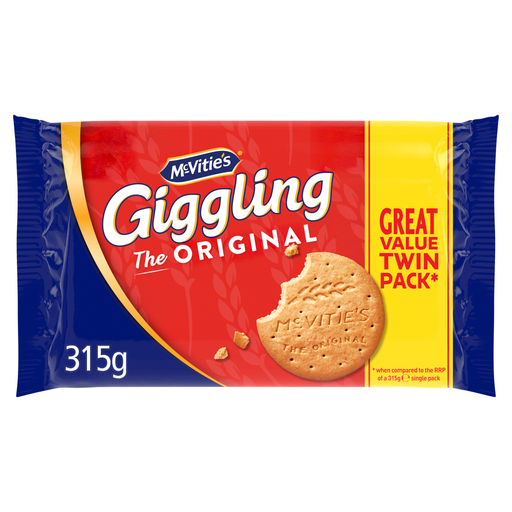
An ordinary digestive multipack for a group that prefers this recipe rather than a reduced-sugar option. The bundle contains two 315g packs. McVitie’s lists 15.1g sugars per 100g for The Original; check the multipack label for its current nutrition and allergen information.
No. McVitie’s says The Light One has 30% less sugar than the average digestive biscuit and lists 8.9g sugars per 100g. The NHS food-label guide uses 5g total sugars or less per 100g as its low-sugar guide. Read the named comparison and the nutrition figure separately.
No. Asda lists Gullón Zero Digestive Original at less than 0.5g sugars, alongside 68g carbohydrate and 430kcal, per 100g. Check all three lines on the particular pack you plan to serve.
Ask which ingredients the guest needs to avoid and check the actual pack’s ingredients and precautionary statements before serving. The reduced- and sugar-free products discussed here contain wheat and carry additional “may contain” information; do not assume a lower sugars figure changes their allergen suitability.
Follow the instructions on the pack you opened. Tesco’s and Asda’s ordinary digestive listings advise transferring biscuits to an airtight container after opening.