Long-run fuel planners
Check the carbohydrate in the portion you intend to take, then practise carrying and eating it during a longer training run.


Compare sugars per 100g to find a lower-sugar figure among the Jaffa cakes you are considering, then check carbohydrate for the portion you would take on a run. A lower figure alone does not establish a ‘reduced sugars’ claim; practise carrying and eating your chosen portion during training rather than assuming cakes will suit you as well as a more compact format.
Check the carbohydrate in the portion you intend to take, then practise carrying and eating it during a longer training run.
Compare sugars on the same per-100g basis without mistaking a lower figure for a ‘reduced sugars’ claim. Keep the portion’s total carbohydrate in view when planning fuel.
Check the exact pack’s ingredients as well as its carbohydrate figures. Schär labels its Jaffa cakes gluten-free, but the checked Asda listing says they contain egg and soya and may contain hazelnuts and milk.
Start with a like-for-like sugar comparison, then work out what the portion and format mean for the run you have planned.
| Priority | What to check | Your needs |
|---|---|---|
| Sugars | Compare sugars per 100g on the exact packs. Schär lists 44g and the checked Sainsbury's 24-cake pack lists 46.8g, according to Schär and Sainsbury's; neither figure alone establishes a ‘reduced sugars’ claim. | I want a lower sugar figure without choosing on cake size alone. |
| Carbohydrate | Read total carbohydrate separately from sugars and calculate the portion you intend to eat. Tesco Groceries lists 7.6g carbohydrate per cake for its McVitie's Original 10-pack; other pack sizes need their own labels checked. | For a training run, I need to know what my planned number of cakes contributes. |
| Carrying and eating | Trial the pack, portion and eating pace during training. The Australian Institute of Sport describes gels as a compact carbohydrate format and advises practising a plan around gut comfort and hydration. | If opening or chewing cakes feels awkward while running, I would consider another practised format. |
| Ingredients | Check ingredients and precautionary allergen statements on the purchased pack. Asda's listing says Schär's gluten-free cakes contain egg and soya and may contain hazelnuts and milk. | Gluten-free wording is useful to me only alongside an ingredient list that meets my requirements. |
| Serving size | Check whether the nutrition column describes one cake or a larger serving. Waitrose & Partners gives figures for a 25g serving of its mini Jaffa cakes, not for one mini cake. | With mini cakes, I want to count or weigh the amount I will actually take. |
A comparison between two labels does not, by itself, establish that a product qualifies for that claim.
Describe the exact per-100g difference and the packs compared, without turning it into a claim about the product’s status.
A smaller sugars-per-piece figure may reflect a smaller cake. A declared serving of mini cakes may contain several pieces.
Compare sugars per 100g, then use the exact pack’s total-carbohydrate declaration and serving definition to calculate your training portion.
A flavoured protein bar is a different product with its own ingredients and carbohydrate declaration; flavour and sugar wording do not establish how it will work in your running routine.
If considering one, check its actual serving and trial it separately during training.
These figures describe the named packs or listings, not every Jaffa cake sold under each brand.
A gluten-free Jaffa cake to compare by both its nutrition label and ingredient declaration.
The checked 24-cake, 282g pack has both per-cake and per-100g declarations.
The checked Ocado listing is for a 125g pack of dark-chocolate orange Jaffa cakes.
Standard and mini packs use different serving definitions.
The examined Original 10-pack provides a per-cake figure for planning a portion.
The checked own-label orange Jaffa cakes come in a 2 × 150g pack.
The checked 125g mini-cake pack declares nutrition per 100g and per 25g serving.
These McVitie's packs are options for runners considering a practised Jaffa-cake snack. Compare their pack formats, then use the purchased pack’s label to plan a portion; this selection does not establish a lower-sugar option.
 No image available
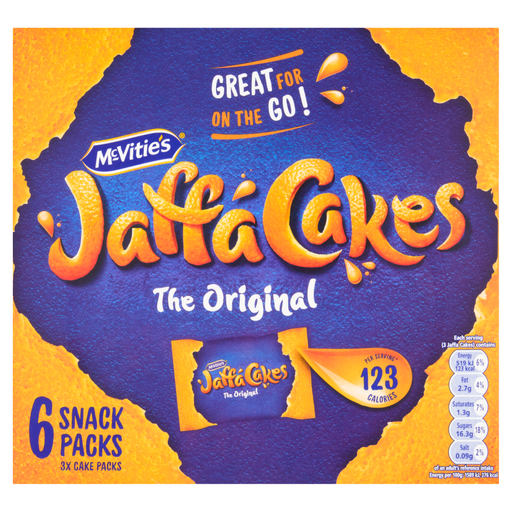
The six three-cake packs offer a defined portion to trial as a training snack. Check the purchased pack’s carbohydrate declaration and whether its packaging works for the run you have planned.
 No image available
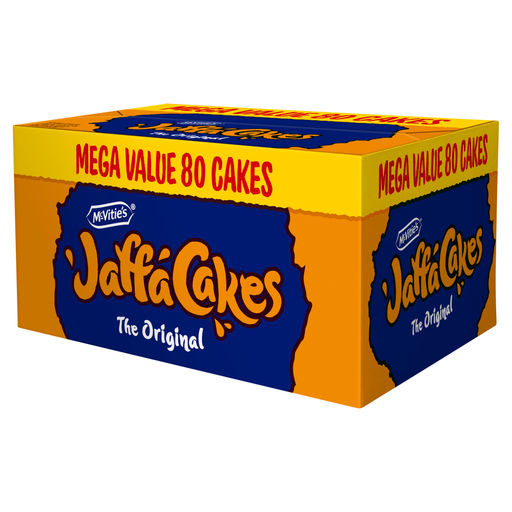
The 80-cake pack calls for portioning before a run rather than carrying the whole pack. Check its own carbohydrate declaration when deciding how many cakes to take.
Not on that figure alone. Compare sugars per 100g between the exact packs, then check total carbohydrate for the number of cakes you intend to eat. A listed serving of mini cakes may contain more than one piece.
Practise your intended portion, including how you carry and eat it, during training. The Australian Institute of Sport advises adapting an endurance-fuelling plan to individual goals, gut comfort and hydration; its general guide of 30–60g carbohydrate per hour concerns endurance exercise lasting 1–2.5 hours, not every run.
No: a lower figure than another named pack does not by itself establish a ‘reduced sugars’ claim. Describe the particular per-100g comparison instead of assuming that the pack qualifies for that wording.
Check the ingredients and precautionary allergen statements on the exact pack before eating it. For example, Asda's listing for Schär's gluten-free Jaffa cakes says they contain egg and soya and may contain hazelnuts and milk.
Follow the storage directions on the pack you buy. The checked McVitie's listing calls for airtight storage after opening, while Tesco's checked own-label pack says to consume its cakes within two days of opening.