Office snack buyers
If several colleagues will use the supply, compare sugars and other nutrition figures per 100g, then consider whether the pack is easy to divide and store between breaks.


For a shared office tin, compare oatcakes by their sugars per 100g rather than assuming that a small figure establishes a ‘reduced sugars’ claim. Pack format, the rest of the nutrition label and allergen information also affect the choice. If a colleague needs gluten-free food and can eat oats, keep a specifically labelled option in its original packaging rather than mixing it with ordinary oatcakes.
If several colleagues will use the supply, compare sugars and other nutrition figures per 100g, then consider whether the pack is easy to divide and store between breaks.
Choose for the particular colleague’s requirements and keep ingredient and allergen information accessible. Ordinary oatcakes and oatcakes labelled gluten-free are not interchangeable.
Start with comparable per-100g labels, then check how the oatcakes will be shared and whether everyone can identify what they are taking.
| Priority | What to check | Your needs |
|---|---|---|
| Sugars and claims | Compare ‘of which sugars’ per 100g on the exact products. Check ingredients separately from claims such as ‘no added sugar’ or ‘reduced sugars’. | I want an oatcake with less sugar than another option I am considering, without assuming it is sugar-free. Nairn’s lists 0.7g sugars per 100g for Rough Oatcakes; M&S lists 3.0g per 100g for its Scottish Oatcakes. |
| Other nutrition | Read the per-100g salt, saturated fat and energy figures alongside sugars. Consider the number of oatcakes someone might take. | A small sugar figure is only part of my choice for a regularly stocked office tin. |
| Sharing and storage | Check for inner packs and follow the opened pack’s storage instructions. Sainsbury’s lists four individually wrapped packs of six for its Rough Oatcakes. | If the supply lasts several days, I want colleagues to be able to take a portion while the remaining oatcakes can be stored as directed. |
| Allergens and oats | Read the current ingredient and allergen label. For someone needing gluten-free food, check for a specifically gluten-free-labelled product and whether they can eat oats. | Everyone needs to know which pack they are choosing. Coeliac UK notes that a small number of people are sensitive even to gluten-free oats. |
| Texture and flavour | Check whether the product is a plain rough oatcake or a flavoured biscuit, and whether colleagues plan to eat it without toppings. | For an untopped snack, I would choose a flavour and texture colleagues actually want rather than assume every oat-based product tastes alike. |
Oatcakes with similar sugar figures can differ in salt and saturated fat.
Compare those figures on the same per-100g basis, then think about the portion someone is likely to take.
Recipes and allergen warnings differ. Coeliac UK also notes that a small number of people are sensitive to gluten-free oats.
Keep products for specific dietary needs in their original, separate packaging so colleagues can check the current label.
An ingredients statement does not, by itself, establish a comparison with another product. Neither phrase replaces the total sugars figure on the nutrition label.
Use the exact product’s sugars-per-100g figure when comparing oatcakes, and read any claim on its own terms.
These examples show why the exact oatcake and its label matter more than a brand name alone.
Nairn’s lists both Rough Oatcakes and a separate Gluten Free Original product.
Its Rough Oatcakes come as four individually wrapped packs of six, a format to consider for shared storage.
Tesco describes its Scottish Rough Oatcakes as coarse and crumbly.
Waitrose Rough Oatcakes are another plain option to compare by the exact pack label.
M&S Scottish Oatcakes use a wheat-and-oatmeal recipe.
These options include flavoured oatcakes and an oat-based biscuit. Choose between them by flavour, the current pack label and the dietary needs of the people sharing the supply; they are not a like-for-like list of plain oatcakes.
 No image available
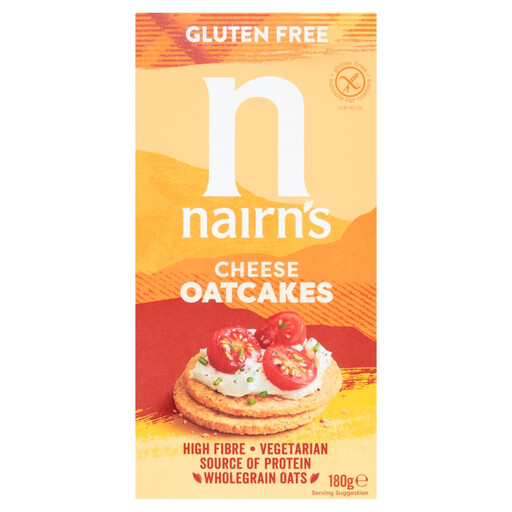
A cheese-flavoured option to consider when a colleague needs a gluten-free-labelled oatcake and can eat oats. Keep its pack available for ingredient checks; gluten-free oats do not suit everyone who reacts to avenin.
 No image available
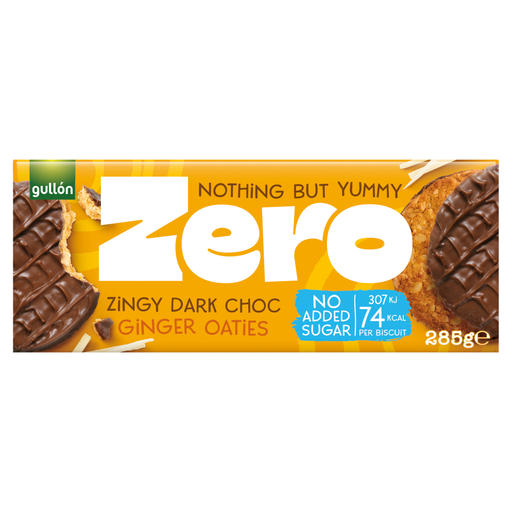
This dark-chocolate-and-ginger oat-based biscuit is a flavoured alternative, not a plain savoury oatcake. Compare its nutrition and allergen label with the oatcakes under consideration, and check the pack’s sweetener advice before putting it out to share.
 No image available
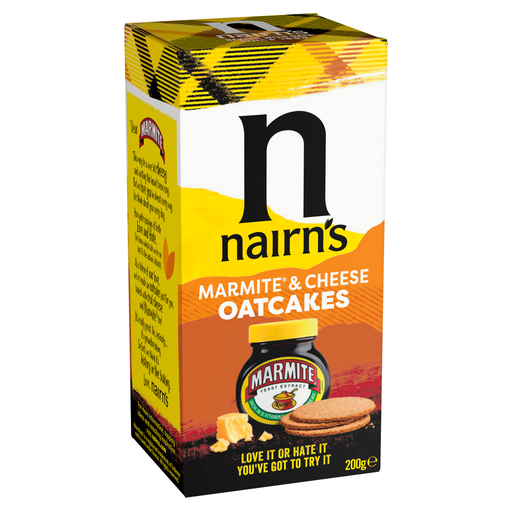
The Marmite-and-cheese flavour offers a savoury choice for colleagues who want something other than plain oatcakes. Check the current ingredient and allergen label before sharing, and keep the packaging with the product.
No. Nairn’s describes its Rough Oatcakes as having no added sugar while listing 0.7g total sugars per 100g. Read ‘of which sugars’ on the nutrition label rather than treating the ingredients statement as a zero-sugar figure.
Follow the particular pack’s storage directions. Tesco, M&S and Waitrose instruct buyers to use an airtight container after opening; keep the original packaging accessible so colleagues can check ingredients and allergens.
Do not assume they are. For a colleague who can eat oats, check for a specifically gluten-free-labelled product and keep it separate from ordinary oatcakes. Coeliac UK notes that a small number of people remain sensitive to gluten-free oats.
No. Those are separate figures on the nutrition label. Nairn’s lists 0.7g sugars and 1.46g salt per 100g for its Rough Oatcakes, so compare each nutrient that matters to your choice.
No. ‘Reduced sugars’ describes a comparison, while a sugars-per-100g figure describes the product itself. Compare figures on the same basis, but do not assume that the lower figure establishes a ‘reduced sugars’ claim for either pack.