Tea-time shoppers comparing sugar labels
If you are replacing a sweeter biscuit with an oatcake, compare the sugars figure on both labels. ‘No added sugar’ describes the recipe; it does not, by itself, compare one finished product with another.


For an oatcake to have with tea, compare the declared ‘of which sugars’ figure per 100g rather than treating ‘no added sugar’ as proof that it contains less sugar than another product. Then choose the texture and flavour you want, and check salt, saturated fat and allergens separately; a savoury flavoured oatcake or oat biscuit will not serve the same purpose as a plain oatcake.
If you are replacing a sweeter biscuit with an oatcake, compare the sugars figure on both labels. ‘No added sugar’ describes the recipe; it does not, by itself, compare one finished product with another.
A rough, crumbly oatcake and a thin oatcake offer different textures for cheese or spreads. Check the oatcake and topping separately when comparing the finished snack.
Choose a pack explicitly labelled gluten free and suitable for coeliacs when that requirement applies. An oat-based recipe or a wheat-free description is not a substitute for product-specific suitability information.
Start with sugars on a consistent weight basis, then check whether the format, ingredients and full nutrition panel suit how you will eat the oatcakes.
| Priority | What to check | Your needs |
|---|---|---|
| Sugar wording | Compare ‘of which sugars’ per 100g. Read ‘no added sugar’ and ‘reduced sugar’ as different claims; a reduction needs a comparison with a similar product. | I want to compare oatcakes without assuming that ‘no added sugar’ means less sugar than the next pack. |
| Tea-time serving | Check sugars per oatcake as well as per 100g, accounting for different piece sizes. Consider any topping separately. | For a biscuit alternative with tea, the number of oatcakes I eat and what I put on them both matter. |
| Texture and flavour | Read whether the oatcake is fine-milled, rough, thin, plain or flavoured. Do not assume a thin format has a particular nutrition profile. | A plain oatcake suits my tea or chosen topping; a cheese-flavoured one is a different snack. |
| Other label details | Compare salt, saturated fat and energy per 100g alongside sugars. Check ingredients and allergen statements on the particular pack. | If I need gluten-free oatcakes, I will look for explicit suitability information rather than relying on the word ‘oats’. |
‘No added sugar’ does not establish how much sugar an oatcake contains relative to another. Nairn’s Fine Milled, for example, says ‘no added sugar’ while listing 0.7g sugars per 100g, according to Nairn’s.
Compare the declared sugars per 100g. If a pack makes a reduced-sugar comparison, check which similar product it uses as the comparator.
Low declared sugars do not tell you the salt or saturated fat content. Sainsbury’s lists Goodfellows Real Oatcakes at less than 0.1g sugars, but 11.5g saturates and 1.9g salt, per 100g.
Read those figures alongside energy and serving size before comparing products for a regular tea-time snack.
Ingredients and precautionary statements differ between products. Tesco describes Nairn’s Gluten Free Original as suitable for coeliacs, while ASDA’s plain oatcakes carry a precautionary statement for wheat and barley.
Where gluten-free suitability matters, check the current pack for an explicit gluten-free statement and any other relevant allergen information.
These examples show why it is worth comparing individual oatcake lines rather than treating every product from one brand as interchangeable.
Its Fine Milled and Gluten Free Original oatcakes address different texture and gluten-free requirements.
Tesco Scottish Rough Oatcakes are described by Tesco as coarse and crumbly.
ASDA Oatcakes are a plain oatcake option for comparing with other tea-time formats.
Original Thin Oatcakes offer a thin format for topped snacks.
Real Oatcakes illustrate why a low sugars figure needs to be read alongside the rest of the panel.
These options include savoury flavoured oatcakes and an oat-based biscuit. If you want a plain oatcake for tea or toppings, check the flavour before choosing from this list.
 No image available
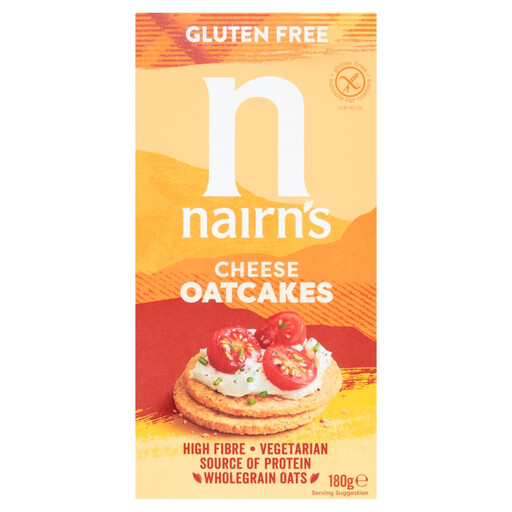
A cheese-flavoured oatcake for someone seeking a savoury option labelled gluten free, rather than a plain base for sweet toppings. Check the pack’s allergen statement, particularly if milk or nuts are a concern.
 No image available
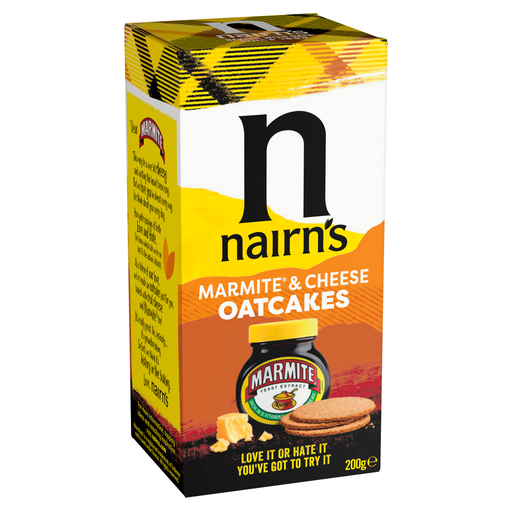
The Marmite and cheese flavour makes this a savoury choice rather than a neutral oatcake for tea or varied toppings. Compare its salt figure with other packs and check the allergen statement if needed.
 No image available
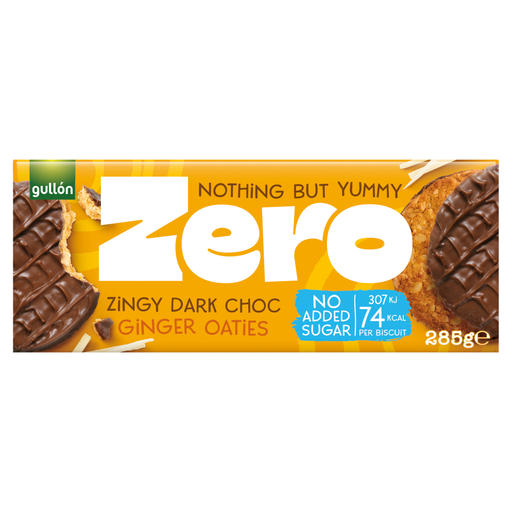
This dark chocolate and ginger oat biscuit is a different choice from a plain oatcake or savoury topping base. Compare its sugars per 100g with the oatcakes you are considering, and read the ingredients and allergen information before buying.
No. ‘No added sugar’ does not tell you how the finished oatcake compares with another product. For a reduced-sugar comparison, look for the similar product used as the comparator and check the ‘of which sugars’ figures per 100g.
No. Nairn’s Fine Milled Oatcakes carry ‘no added sugar’ wording while the manufacturer lists 0.7g sugars per 100g and notes that the product contains naturally occurring sugars. Use the nutrition panel for the declared amount.
Use per 100g to compare products with different oatcake sizes, then check per oatcake for the portion you plan to eat. Tesco, for example, lists 0.8g sugars per 100g and less than 0.1g per oatcake for its Scottish Rough Oatcakes.
Do not assume so from the word ‘oatcake’. Look for explicit gluten-free and coeliac-suitability information on the particular product; Tesco’s Nairn’s Gluten Free Original listing provides both and also warns that it is not suitable for people who react to avenin, a protein in oats.