Brunch hosts controlling sweetness
People making shared Sunday porridge who want plain oats as a base, then choose how much sweetness comes from milk, fruit, syrups or other toppings.


For a lower-sugar Sunday brunch, start with plain oats so you can decide how much sweetness comes from milk and toppings. Treat “reduced sugar” as a comparison claim rather than a synonym for no added sugar. Choose traditional rolled oats for a slower, customisable bowl, superfast oats for speed and a smoother texture, or explicitly gluten-free oats when gluten avoidance is required.
People making shared Sunday porridge who want plain oats as a base, then choose how much sweetness comes from milk, fruit, syrups or other toppings.
People who want a less-sweetened porridge choice but need a fast, smooth bowl rather than a longer-cooked traditional texture.
People with coeliac disease or another gluten-free requirement who need an explicitly gluten-free oat product rather than assuming ordinary oats are suitable. Coeliac UK notes that standard oats can be contaminated during production.
Choose these when: You want to set the sweetness yourself and use either sweet or savoury brunch toppings.
Keep in mind: The sugars for a prepared bowl can differ substantially from the dry-oat figure once milk and toppings are added.
Choose these when: You need porridge quickly and prefer a smooth, creamy texture.
Keep in mind: Faster preparation does not establish the sugar content of a flavoured sachet, pot or other variant.
Choose these when: Gluten avoidance is a requirement for the person eating the porridge.
Keep in mind: “100% oats”, “pure oats” and organic wording do not by themselves establish gluten-free suitability.
| Priority | What to check | Your needs |
|---|---|---|
| Control of added sweetness | Compare dry products on the same per-100g basis. Check the ingredients for a plain oat base, then read any prepared-serving assumptions separately. Treat “reduced sugar” as a comparison claim, not as proof of no added sweeteners. | I want the sweetness of the finished bowl to come from toppings I choose, rather than from built-in flavourings or serving assumptions. |
| Cooking time and texture | Check whether the oats are traditional rolled flakes or a faster-cooking format. Review the exact pack’s ingredients and nutrition panel instead of using preparation speed as a sugar shortcut. | I may prefer a slower, more flexible brunch bowl, or I may need a smoother porridge that is ready quickly. |
| Gluten-free suitability | Look for explicit gluten-free labelling where required. Do not rely only on an ingredient list that names oats, because production cross-contamination can matter. | Where gluten avoidance is necessary, I need a product labelled for that requirement rather than an ordinary oat product. |
A dry-oat nutrition figure and a prepared-bowl figure measure different things. Waitrose & Partners lists Quaker Rolled Porridge Oats at 1.1g sugars per 100g dry oats, while its example serving with 300ml semi-skimmed milk lists 15g sugars.
Compare dry products like for like first, then assess the milk and toppings you plan to use for brunch.
A reduced-nutrient claim is comparative. The retained Regulation (EC) No 1924/2006 describes a reduction of at least 30% versus a similar product for this type of claim.
Read the ingredients and nutrition panel for the exact pack. A plain oat base gives you more direct control over sweetness at the table.
Coeliac UK explains that conventional oats can be contaminated when produced alongside wheat, barley or rye. Wording such as “100% oats”, “pure oats” or organic does not by itself confirm gluten-free suitability.
If gluten-free oats are required, choose a product explicitly labelled gluten free and follow individual clinical advice where relevant.
Mornflake says its smaller, cut-and-rolled flakes absorb liquid faster for a smooth porridge. That preparation characteristic is separate from the sugar profile of a particular sachet, pot or flavoured variety.
Use cooking speed as a secondary filter after checking the exact product’s ingredients, sugars per 100g and preparation instructions.
Relevant for plain rolled oats, jumbo oats, microwaveable sachets and gluten-free traditional oats in the UK porridge category.
Relevant for conventional and superfast oat formats, including a speed-focused option for a quicker brunch bowl.
Relevant for traditional Irish porridge oats and quick oats, including shoppers seeking a wholegrain oat texture for a relaxed breakfast or brunch.
Joybuy product options for a Sunday-brunch oat base, including plain rolled oats, a quick individual sachet format and an explicitly gluten-free option.
 No image available
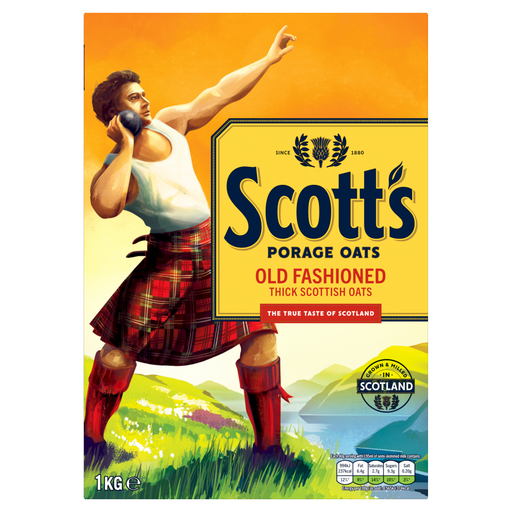
A plain rolled-oat option for a traditional Sunday brunch where you choose the milk and toppings.
Check the pack if gluten avoidance is required: this product may contain wheat and barley. Compare dry oats first, then plan the finished serving separately because milk and toppings affect the bowl’s sugars.
 No image available
An individual sachet option for a quick brunch bowl with toppings chosen separately.
The prepared serving shown with semi-skimmed milk is not nutritionally equivalent to the dry oats. Check an explicitly labelled gluten-free product if that requirement applies.
 No image available
A larger traditional oat-flake pack for a shared brunch with adjustable toppings.
This is not an explicitly gluten-free choice. Check the pack instructions for cooking time and liquid ratio before serving.
 No image available
An explicitly gluten-free oat-flake option for a brunch where gluten-free suitability is required.
Check the pack instructions for the cooking time and liquid ratio. For coeliac disease or ongoing symptoms, follow individual clinical advice.
 No image available
A traditional plain oat-flake option for a relaxed brunch with sweet or savoury toppings.
This is not an explicitly gluten-free choice. Check the pack instructions for cooking time and liquid ratio before serving.
No. A reduced-nutrient claim is comparative: the retained Regulation (EC) No 1924/2006 sets a reduction of at least 30% versus a similar product for this type of claim. For brunch planning, inspect the exact product’s ingredients and per-100g nutrition rather than treating the two terms as interchangeable.
The preparation method can change the displayed bowl nutrition. Waitrose & Partners lists Quaker Rolled Porridge Oats at 1.1g sugars per 100g dry oats, while its example serving prepared with 300ml semi-skimmed milk lists 15g sugars. Check whether a panel refers to dry oats, oats plus milk or a fully prepared serving.
Not automatically. Coeliac UK says standard oats can be contaminated when produced alongside wheat, barley and rye, and descriptions such as “100% oats”, “pure oats” or organic do not establish gluten-free suitability. Choose an explicitly gluten-free product where this requirement applies.
Choose superfast oats when a quick, smooth bowl matters most; Mornflake says its smaller flakes absorb liquid faster. Choose traditional rolled oats when you want a plain base for slower cooking and your own toppings. Neither format alone establishes that a product is lower in sugar.
Compare the exact variant, pack size, ingredient list, dry-oat nutrition basis and any preparation assumptions. A larger pack is not automatically the same lower-sugar choice as a different flavour, sachet or prepared format from the same brand.