Hosts making a lower-sugar Easter oat dish
Useful when making porridge, baked oats or a crumble-style topping and you want a plain oat base so that any sweetness comes from ingredients you choose for the recipe.


For porridge, baked oats or a savoury oat dish, choose plain oats with oats as the only ingredient, then decide separately whether the recipe needs sweeteners or toppings. Compare dry products per 100g rather than a bowl prepared with milk, and choose an explicitly gluten-free pack where oats are needed for someone with coeliac disease.
Useful when making porridge, baked oats or a crumble-style topping and you want a plain oat base so that any sweetness comes from ingredients you choose for the recipe.
Relevant if a quick, unflavoured porridge is needed for family or guests, while traditional rolled oats remain an option when texture and recipe control matter more than speed.
Suitable for households that need oats labelled gluten free rather than standard oats. Coeliac UK advises choosing gluten-free-labelled oats for people with coeliac disease who include oats in their diet.
Start with the ingredient list and dry-product nutrition panel, then match the oat format and allergen information to the dish you plan to serve.
| Priority | What to check | Your needs |
|---|---|---|
| Recipe-controlled sweetness | Check that oats are the only ingredient. Compare sugars per 100g on the dry product, then assess milk, honey, syrups, fruit purées and dried fruit in the finished recipe. | I want to decide whether the Easter dish includes sweeteners, rather than start with a flavoured or syrup-containing oat product. |
| Clear label comparison | Use the ingredients list and the back-of-pack nutrition declaration for the exact pack. Where present, traffic-light labels show whether sugars, fat, saturates and salt are high, medium or low. | I need a like-for-like comparison between packs, without treating a milk-prepared serving as if it were dry oats. |
| Texture and preparation time | Check whether the oats are traditional rolled, jumbo, superfast or portioned sachets. Read the stated hob or microwave method and serving size. | I want oats that work for the dish: a firmer rolled-oat texture for baking or toppings, or a quicker smooth porridge when lunch timing is tight. |
| Gluten and allergens | For coeliac disease, look for an explicit gluten-free label. Also check allergen statements and whether the pack contains wheat bran or may contain wheat or barley. | I need an oat pack that fits a gluten-related dietary requirement, rather than assuming that every plain oat product is interchangeable. |
A prepared serving can include naturally occurring sugars from milk. Quaker UK lists 0.4g sugars for 40g of its Traditional Rolled Oats, while its stated serving made with 300ml semi-skimmed milk lists 15g sugars.
Compare dry oats per 100g first, then work out the recipe using the milk, sweeteners and toppings you actually plan to serve.
Honey, golden syrup and similar syrups count as free sugars under NHS guidance. Dorset Cereals notes that some granolas use honey or golden syrup and can also include dried fruit.
Choose an oat-only base when simplicity matters, then add flavour with spices or measured toppings if wanted.
Standard oats can be contaminated during production alongside wheat, barley or rye. Quaker Traditional Rolled Oats, for example, declares that it may contain wheat and barley.
For coeliac disease, choose an explicitly gluten-free pack and confirm that oats are suitable for the individual.
Fast formats can be practical for a quick bowl, but their portion format and texture may not suit baked oats, toppings or a slower-cooked porridge.
Choose instant or superfast oats for a genuine timing constraint; otherwise, compare preparation methods and use plain rolled oats where they suit the recipe.
Quaker covers traditional rolled oats, microwave sachets and gluten-free options, making it relevant when choosing between a plain oat base and a faster portioned format.
Mornflake is relevant for cooks deciding between standard oats and a faster-cooking, smoother unflavoured oat format.
Flahavan's is relevant for plain organic rolled oats when a traditional oat texture and a simple ingredient list are the priority.
Jordans is relevant for organic plain rolled oats and for distinguishing plain porridge oats from no-added-sugar granola.
Waitrose offers plain rolled oats, oat-and-wheat-bran oats and explicitly gluten-free porridge oats, giving shoppers several distinct formats to compare.
Dorset Cereals is more relevant to oat-based granola than to a plain porridge-oat base for recipe-controlled sweetness.
Joybuy product options for plain oat recipes, quicker warm porridge and gluten-free oat cooking for an Easter Sunday lunch.
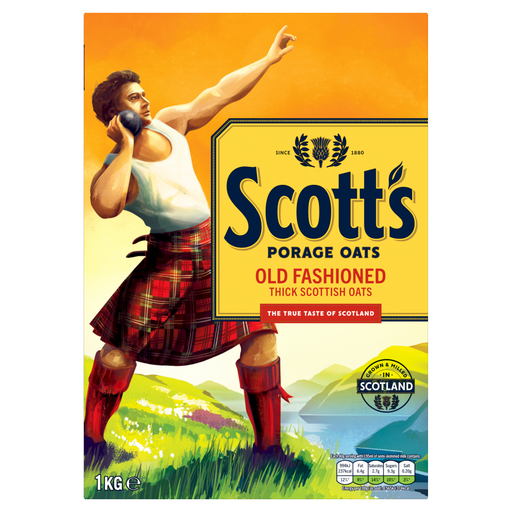 No image available
A plain rolled-oat option for porridge, baked oats or crumble-style toppings where you control additions.
100% rolled oats; 1.1g sugars per 100g. Stated preparation: 4–5 minutes on the hob or 2–3 minutes in the microwave.
May contain wheat and barley, so it is not a gluten-free choice. Milk, honey, syrups and fruit toppings change the finished dish.
 No image available
A portioned plain-oat option when a quick microwave porridge is more useful than a longer-cooked texture.
Wholegrain rolled oats only; 1.0g sugars per 100g for the dry product. Stated microwave method: 2½ minutes.
The 12g sugars figure applies to a serving made with semi-skimmed milk, not dry oats. Check the exact pack if gluten-free status is required.
 No image available
A plain oat-flake option for porridge or baking where an explicitly gluten-free pack is needed.
100% gluten-free oat flakes; 1.1g sugars per 100g; 1kg pack.
For coeliac disease, confirm that oats are suitable for the individual even when the pack is labelled gluten free. Check the pack method before planning serving time.
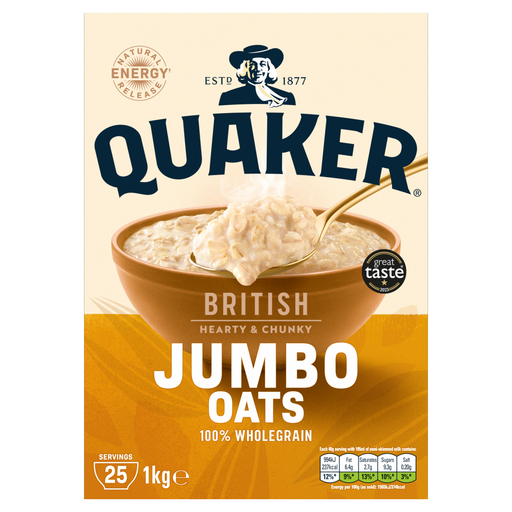 No image available
A plain jumbo-oat base for porridge, overnight oats or baking when one versatile pack is wanted.
100% wholegrain oat flakes; 1.0g sugars per 100g; 9.0g fibre per 100g.
May contain traces of wheat, so it is not a confirmed gluten-free option. Check the pack for preparation guidance if timing matters.
 No image available
A plain organic rolled-oat option for porridge or baking where recipe additions are chosen separately.
100% organic wholegrain oat flakes; 0.9g sugars per 100g; 1kg pack.
The listing does not establish a gluten-free claim, so choose a suitable certified pack where coeliac safety is required. Check the pack for cooking instructions.
No. A prepared bowl can contain naturally occurring sugars from milk. The NHS also states that sugars in honey, syrups, unsweetened juices, smoothies and purées count as free sugars, so check the recipe and toppings as well as the oats.
Compare dry products per 100g where possible, then read the ingredient list. Do not compare dry oats with a serving made using milk: Quaker Oat So Simple Original lists 0.3g sugars in a dry 27g sachet and 8.4g in its specified milk-prepared serving.
Do not assume so. Coeliac UK says standard oats can be contaminated when produced alongside wheat, barley and rye; choose oats labelled gluten free if oats are suitable for the individual.
Nutrition information must appear on prepacked food packaging, while front-of-pack traffic-light information is used by some supermarkets and manufacturers. GOV.UK explains that traffic lights provide a quick indication of fat, saturates, sugars and salt when present, but the ingredients and nutrition panel still matter.
Follow the instructions on the exact pack. Waitrose advises storing Essential Porridge Oats in a cool, dry place and an airtight container after opening, and states that prepared product should not be stored or reheated.