Shoppers comparing sugars
If you want a biscuit with morning tea, comparing sugars per 100 g gives you the same weight basis across packs. The amount per biscuit then helps you consider the portion you plan to eat.


If your priority is the lowest labelled sugars among these options, Farmhouse Biscuits Sugar Free Viennese Shorties list 0.2 g per 100 g, but they contain maltitol and are not conventional all-butter fingers. If you prefer classic shortbread, compare sugars per 100 g before looking at the amount in a biscuit: the Sainsbury's and Waitrose finger listings state 14.8 g and 14.9 g per 100 g respectively. A lower sugars figure alone does not establish a calorie advantage, allergen suitability or a regulated reduced-sugars claim.
If you want a biscuit with morning tea, comparing sugars per 100 g gives you the same weight basis across packs. The amount per biscuit then helps you consider the portion you plan to eat.
If an all-butter finger is what you want, compare conventional recipes rather than assuming a maltitol-containing Viennese shortie will be an equivalent biscuit.
If an ingredient or allergen affects you or someone you are serving, check the exact pack's ingredients and precautionary labelling. Its sugars figure cannot establish whether it is suitable.
Start with the type of biscuit you want, then compare sugars on a consistent basis and check the rest of the label for the portion you expect to eat.
| Priority | What to check | Your needs |
|---|---|---|
| Sugars | Compare total sugars in g per 100 g, then check g per biscuit and its serving size. Sainsbury's lists 14.8 g per 100 g and Waitrose lists 14.9 g per 100 g for their named fingers; both list 3.0 g per biscuit. | I want to compare recipes without mistaking a smaller biscuit for one with less sugar per 100 g. |
| Biscuit type | Check whether the pack is an all-butter finger or a shortbread-style alternative, and read its sweeteners. Springvale Foods lists 0.2 g sugars per 100 g and maltitol for Farmhouse Biscuits Sugar Free Viennese Shorties. | A classic finger matters more to me than choosing the lowest labelled sugars figure; alternatively, I may prefer the maltitol-containing shortie. |
| Whole nutrition label | Read energy and saturates as well as sugars, using the same per-100 g or per-serving basis for each comparison. The Sainsbury's finger listing states 3.7 g saturates per biscuit; Waitrose states 3.1 g per finger. | Choosing less sugar does not answer my separate questions about energy or saturated fat. |
| Ingredients and pack | Check the current ingredients, allergen statements, storage instructions and biscuit size on the exact pack. Confirm availability with the seller if you need a particular product. | I need to know what I am serving and whether the pack suits the person who will eat it. |
A comparison between two nutrition panels does not, by itself, establish that either pack makes a regulated reduced-sugars claim.
Describe the named biscuits by their stated sugars per 100 g, and check the actual pack if a nutrition claim matters to your choice.
Farmhouse Biscuits Sugar Free Viennese Shorties contain maltitol. The sugar figure alone cannot establish an energy advantage over conventional shortbread.
Read the current pack's energy, ingredients and serving information rather than using its name as a calorie comparison.
A sweetswithout listing warns that excessive consumption may have a laxative effect.
Ingredient and precautionary statements differ between products, and an online listing may not reflect the pack in your hand.
Check the exact pack before serving the biscuits and ask the seller or manufacturer if its labelling leaves you uncertain.
Its Sugar Free Viennese Shorties are a shortbread-style alternative to conventional all-butter fingers.
Its Highland All Butter Shortbread Finger Biscuits provide a conventional finger to compare for a tea-break portion.
Waitrose Shortbread Fingers are another conventional option with both per-100 g and per-finger figures.
Walker's offers a conventional shortbread finger for shoppers prioritising a traditional all-butter recipe.
Dean's lists traditional and all-butter shortbread in formats including fingers, rounds and squares.
The M&S shortbread range includes conventional fingers, rounds and other formats.
Tesco lists own-label all-butter fingers and shortbread assortments.
This Island Bakery pack is a conventional shortbread option for a morning tea break. If reducing labelled sugars is your main aim, compare its current nutrition panel with other packs before choosing.
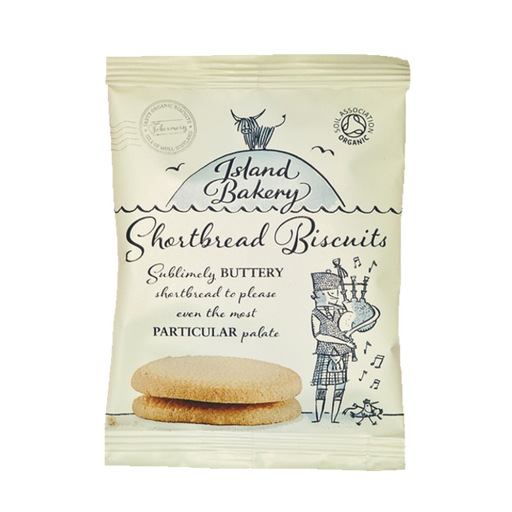 Image unavailable
The 25 g pack is an option for a morning tea break. Check its current sugars per 100 g and ingredients if you are comparing it with other shortbread.
No. Comparing two packs does not establish that either makes a reduced-sugars claim. Use the stated sugars per 100 g to compare the biscuits, and check the wording on the pack if a nutrition claim matters to you.
Compare sugars per 100 g first, then check the amount for the portion you plan to eat. The named Sainsbury's and Waitrose finger listings each state 3.0 g sugars per biscuit, but their per-100 g figures are 14.8 g and 14.9 g respectively.
No. A sugars description does not tell you whether a biscuit contains an allergen. Check the exact pack's ingredients and precautionary statements before serving it to someone with a food allergy.
Yes. The named packaged fingers are sold as biscuits, with no cooking step specified in their product information. Follow the particular pack's storage instructions after opening.
No. GOV.UK explains that a best-before date concerns quality, unlike a use-by date, which concerns safety; it gives stale biscuits as a best-before example. Check the date and storage instructions on the actual pack.