Who is this choice for?
The useful comparison depends on whether you need a complete dinner, a particular portion size or an ingredient for a meal you will prepare yourself.
Busy shoppers looking for a protein-focused dinner
A microwaveable frozen meal may suit you when you need a defined portion. Read its full-pack nutrition rather than choosing on the protein claim alone, particularly if fat and saturated fat matter to your choice.
Shoppers comparing portion sizes
Pack sizes change how much protein, fat, salt and energy you consume. Use the figures for the portion you intend to eat alongside per-100g information when comparing different meals.
Vegetarian meal planners
A frozen protein ingredient such as Quorn Vegetarian Pieces can form part of a meal you assemble yourself. Check the finished portion and its ingredients and allergens, not just the component’s nutrition panel.
What should you check before choosing?
First decide whether you want a complete meal or an ingredient to build one, then compare nutrition on a consistent portion basis.
Complete frozen meal
Consider it when: You want a ready-portioned lunch or dinner with nutrition stated for the serving you will eat.
Bear in mind: A lower fat figure does not tell you whether the meal is also lower in salt; check both on the individual pack.
Frozen protein ingredient
Consider it when: You are willing to prepare the rest of the meal and choose its other ingredients yourself.
Bear in mind: Nutrition for the component is not nutrition for the finished plate; portion size and additions still matter.
| Priority | What to check | Your needs |
|---|
| Protein per portion |
Find the protein figure for the pack or declared serving. Check its weight so that you compare portions you would actually eat. |
I want to know how much protein my meal contributes, rather than relying on a high-protein description. |
| Fat and other nutrients |
Read total fat, saturates, salt and energy alongside protein. Where shown, UK traffic-light labels identify low, medium or high amounts of fat, saturates, sugars and salt, according to GOV.UK guidance. |
If I am looking for a lower-fat option, I also want to see its saturated fat and salt figures before choosing. |
| Portion size |
Use per-100g figures to compare different products, then check per-pack or per-serving figures for the amount you plan to eat. |
A larger pack might change my whole-meal totals even if its per-100g figures look similar. |
| Preparation |
Check freezer storage, whether cooking from frozen is instructed, and the stated cooking and standing times. Follow the individual pack’s directions. |
I need a meal that works with the appliance and time available, without guessing its cooking method. |
| Ingredients and allergens |
Read the current ingredient and allergen information for the exact recipe. For a meal assembled from components, check every addition too. |
Vegetarian ingredients or a protein-focused label do not, by themselves, tell me whether a meal meets my dietary requirements. |
Which brands and ranges are relevant?
These are routes worth checking for this decision, not assurances that every item in a range is frozen or lower in fat.
Iceland / MyProtein
Iceland describes its MyProtein range as meals that can be cooked from frozen.
- Iceland says dishes in the range contain 19g to 60g protein and that over half contain less than 10g fat.
- Those are range-level statements, not figures for every recipe; compare the nutrition and allergens of the meal you choose.
Birds Eye Get Real Protein
The Mexican Style Chicken Burrito Bowl is an example of a portioned frozen meal with a listed nutrition panel.
- The Waitrose & Partners listing gives 3.7g fat, 0.6g saturates and 373kcal per serving.
- The same serving lists 1.6g salt, marked medium and 27% of the adult reference intake; check the current pack when comparing recipes.
Quorn
Quorn Vegetarian Pieces offer a frozen ingredient route rather than a complete ready meal.
- They can be combined with other foods when you want to assemble your own meal.
- Assess the finished plate, check its allergens and note Quorn’s warning that mycoprotein may cause intolerance in some people.
Tesco
Tesco has a frozen under-500-calorie ready-meal category and a separate high-protein ready-meal category.
- Its frozen category includes a Gym Kitchen High Protein Pesto Chicken Pasta listing.
- Check each item’s storage and nutrition details; a high-protein category label does not establish that an item is frozen or lower in fat.
M&S
M&S presents high-protein foods and frozen ready meals in separate assortments.
- Its frozen ready-meal selection includes meat, fish and vegetarian or vegan choices.
- Check the individual item’s storage state and nutrition rather than assuming a high-protein product is part of the frozen selection.
Joybuy frozen meal and ingredient options
These options include two portioned Myprotein chicken meals and a two-pack of frozen chicken burgers to use as a meal component. Compare complete-meal nutrition with component nutrition on the portion you intend to eat.
 No image available
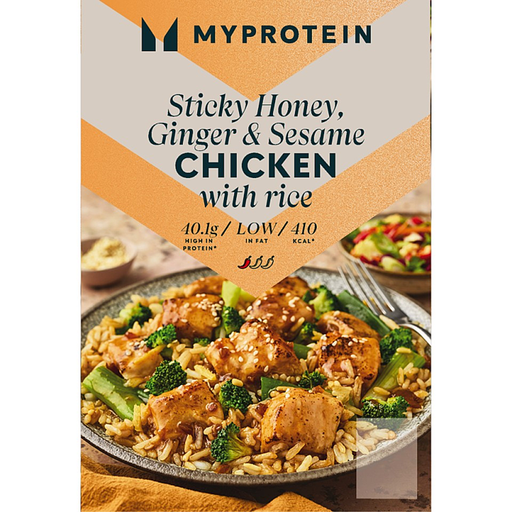
Myprotein Sticky Honey, Ginger & Sesame Chicken with Rice 350g
This 350g chicken-and-rice option is a complete frozen meal. Compare protein, fat and salt for the whole pack, and check the current ingredient panel for wheat, sesame, soya and barley.
View on Joybuy
 No image available
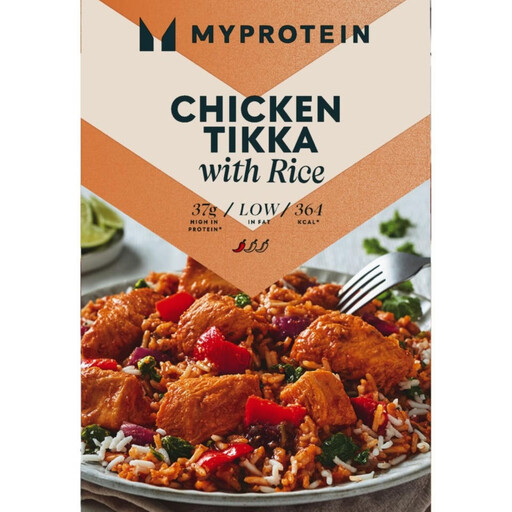
Myprotein Chicken Tikka 350g
This 350g frozen meal offers a defined portion. Check the full-pack fat, saturates and salt alongside protein, and read the current allergen panel for milk and barley.
View on Joybuy
 No image available
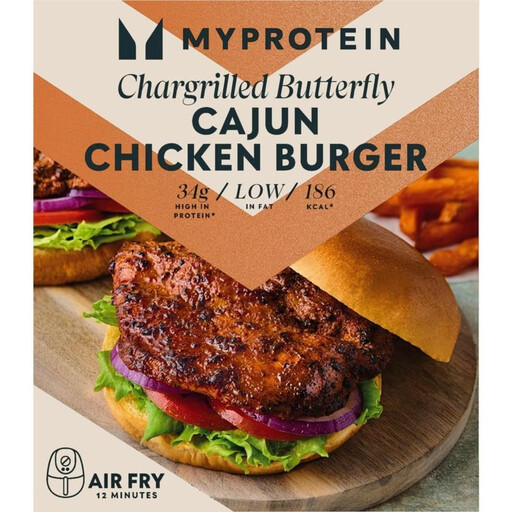
Myprotein Chargrilled Butterfly Cajun Chicken Burgers, 2 pack, 300g
These frozen burgers are a component for a meal you assemble, not a complete ready meal. Work out the portion you plan to eat when using per-100g nutrition figures, and check the current allergen panel for wheat.
View on Joybuy
Questions about frozen meals
Does high protein mean a frozen meal is lower in fat?
No. Protein and fat are separate entries on the nutrition panel. Compare protein, total fat, saturates, salt and energy for the same full serving; where a UK traffic-light label appears, it shows low, medium or high amounts of fat, saturates, sugars and salt.
Should I compare nutrition per 100g or per pack?
Use both for different purposes: per-100g figures help compare products of different sizes, while per-pack or per-serving figures show the nutrients in the portion you will eat. Check whether a pack contains more than one declared serving.
Is a lower-fat frozen meal automatically the right choice for a high-protein diet?
Not automatically. Check its protein, fat, saturates, salt and energy together for your intended portion. If you follow a prescribed diet, use the individual advice you have been given when assessing a product.
Can I microwave a frozen meal straight from the freezer?
Only when that product’s instructions say you can. Iceland Foods gives microwave-from-frozen directions for its Myprotein Piri Piri Chicken with Rice; follow the cooking, stirring and standing instructions on the pack you choose.
Can I refreeze a meal after it has thawed?
Check the specific pack rather than assuming you can. The Joybuy listing for Quorn Pieces says not to refreeze once thawed; other products must be handled according to their own storage instructions.


