Families comparing fat across regular snacks
When several people will eat the bars, compare fat per 100g before looking at individual portions. A high-protein, low-sugar or “lean” description is not a substitute for the nutrition panel.


For a large family shop, compare fat per 100g on the exact bars first, then check fat per bar, ingredients and allergens before buying a multipack. The low-fat claim condition published on legislation.gov.uk sets a limit of 3g fat per 100g for solid foods; high-protein or low-sugar wording does not establish that a bar meets it. If your aim is simply to choose a bar with less fat than your usual one, compare both on the same per-100g basis without treating that relative difference as a low-fat claim.
When several people will eat the bars, compare fat per 100g before looking at individual portions. A high-protein, low-sugar or “lean” description is not a substitute for the nutrition panel.
Pack count matters only if the flavours and ingredients work for the people who will eat them. Check each variety before committing to a larger quantity.
Check the ingredients, highlighted allergens and any “may contain” statement for each flavour. Vegan suitability, for example, does not answer a separate question about soya or peanut allergens.
Decide whether you need a bar that meets the low-fat claim condition or one with less fat than your usual choice. Then check portions and household suitability before choosing a pack size.
| Priority | What to check | When it matters |
|---|---|---|
| Fat content | Compare total fat and saturates per 100g, then the amount per bar. For a solid food described as low fat, legislation.gov.uk sets the claim condition at no more than 3g fat per 100g. | I want either a bar that meets the low-fat condition or one with less fat than our usual bar; those are different choices. |
| Protein and sugar | Read the protein and sugar figures alongside fat for the exact flavour. Myprotein lists 10g fat per 100g for its Lean Protein Bar, while Tesco lists 16g per 100g for TREK High Protein Choc Caramel. | Protein is part of why we buy these snacks, but I do not want a protein or low-sugar claim to stand in for the fat figure. |
| Pack choice | Check the number of bars, individual bar size and flavours in the pack. Compare nutrition for each variety rather than assuming a mixed pack has one set of values. | Before buying a case, I want to know that people at home will eat the flavours and can use the ingredients. |
| Household suitability | Read the current ingredients, highlighted allergens, “may contain” statements and any sweetener warnings on each flavour. | Different people in our household may need different bars; one suitable flavour does not establish that the whole pack works for everyone. |
Myprotein lists 10g fat per 100g for its Lean Protein Bar, and Tesco lists 16g per 100g for TREK High Protein Choc Caramel. Neither figure meets the 3g-per-100g condition for a low-fat claim on a solid food published by legislation.gov.uk.
Start with fat per 100g on the exact flavour; use the per-bar figure afterwards to understand the portion.
The TREK High Protein Choc Caramel pack listed by Tesco contains soya and peanuts and carries “may contain” information for other allergens. A flavour or ingredient that does not work for someone at home can leave part of a multipack uneaten.
Check every intended eater’s requirements against the current pack, and try a smaller quantity first if flavour acceptance is uncertain.
Ingredients, nutrition figures and allergen statements can change when a product is reformulated.
Recheck the exact flavour and pack size when buying again, particularly if the packaging has changed.
GOV.UK food-labelling guidance specifies a laxative-effect warning for foods containing more than 10% added polyols. This is a separate consideration from the bar’s sugar and fat figures.
Read the ingredients and any warning on the current pack before buying bars for several household members.
Brand ranges and individual flavours can differ, so use these references to guide checks on the exact bar rather than assuming a whole range has one fat profile.
Tesco lists individual bars and multipacks, with nutrition and ingredient information on product pages.
Myprotein sells protein bars, including a product named Lean Protein Bar.
PhD offers Smart Protein Bars in a 12-bar pack.
Grenade describes its protein-bar range in terms of protein and low sugar.
Barebells offers several protein-bar styles and flavours.
Quest describes its protein-bar range using protein and low-sugar claims.
These multipacks cover Grenade protein-bar flavours and a TREK protein flapjack for a larger shop. Their pack descriptions do not establish that they meet a low-fat target: compare the current fat-per-100g figures and ingredients before choosing one.
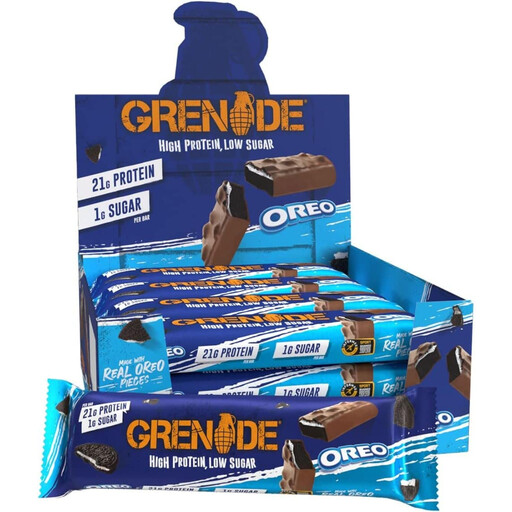 No image available
This 12-bar pack is an option when the household wants the same flavour in quantity. The product name describes it as high protein and low sugar; check the current fat-per-100g figure and allergens separately before buying for a lower-fat shop.
 No image available
The 12 individually sized bars may suit a household that already knows it wants Double Chocolate. Compare fat per 100g with the family’s usual bar, then check the current ingredients for everyone who will eat them.
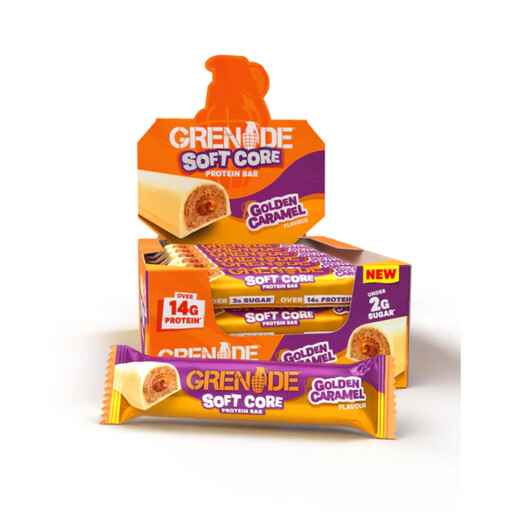 No image available
This is a 12-bar Golden Caramel pack for shoppers considering one flavour in quantity. Check its fat per 100g and per bar, along with the current allergen statement, before deciding whether it fits the household.
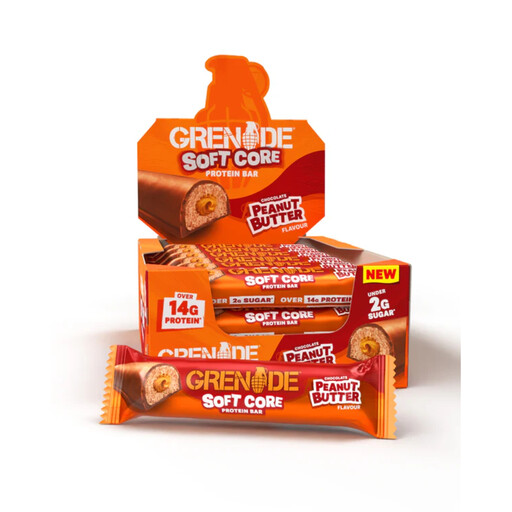 No image available
The Peanut Butter flavour comes in a 12-bar pack. Because this flavour matters particularly to households checking peanut ingredients, read the full current allergen statement as well as the fat figure before buying.
 No image available
This three-pack is a smaller-quantity alternative to the 12-bar cases. It is a protein flapjack rather than one of the Grenade bars, so compare its own fat-per-100g figure and ingredients instead of assuming the products have similar nutrition.
No. Sugar and fat are separate figures on the nutrition panel. Tesco lists 16g fat per 100g for TREK High Protein Choc Caramel despite its low-sugar description, so check the exact bar’s fat and saturates figures.
The low-fat claim condition published on legislation.gov.uk is no more than 3g fat per 100g for a solid food. Use the current per-100g figure for the exact flavour; a smaller bar does not change that comparison basis.
Check the flavours, ingredients and allergens for everyone who will eat the bars before committing to a multipack. A smaller quantity lets the household try a flavour first if you are unsure it will be eaten.
GOV.UK food-labelling guidance specifies that warning for foods containing more than 10% added polyols. Read the warning and ingredients on the particular pack, especially when buying bars for several people.