
24/7 Customer Support

Free returns

Same-day & Next-day Delivery

Quality Guaranteed

Unlock Your Welcome Offers: FREE Delivery | Up to 80% OFF | Free 30-day JoyPlus trial
Download the APP
Choosing lunch boxes and food storage containers can seem straightforward until a lid leaks inside a work bag, compartments prove too shallow or a box takes up half the fridge. For UK households, the right choice depends less on attractive colours and more on capacity, sealing, materials and how the container will be used each day.
This guide from the Joybuy Product Recommendation Officer highlights common buying traps, practical specifications to check and suitable options for different routines.
A bento lunch box or divided lunch box can keep sandwiches, fruit and snacks apart, but internal compartments do not always mean that each section is liquid-tight. Sauces, yoghurt and juicy foods may still move between sections unless the product specifically provides separate seals.
If you need to carry dressing, soup or runny food, look for a dedicated leakproof food container or insulated food jar rather than relying only on built-in dividers.
A large capacity may suit an office worker or meal-prep enthusiast, but it can be awkward for a child’s school bag or a small fridge shelf. Product titles may show fluid ounces, litres or millilitres, so compare measurements as well as volume.
Also check whether the listed dimensions include the lid, clips or external insulation. A container that fits inside a lunch bag at home may be difficult to carry once filled.
Stainless steel food storage containers are reusable and durable, but most metal containers should not be placed in a microwave. Some are also unsuitable for ovens, open flames or prolonged dishwasher use. Always follow the individual product instructions.
For fridge organisation, freezer storage or meal preparation, check the stated temperature and cleaning guidance. For reheating, transfer food to a suitable microwave-safe dish.
Use the intended meal as your starting point:
For children, a lighter reusable lunch container with simple clips may be easier to open independently. For adults, capacity and bag compatibility may matter more than compactness.
Common options include plastic, 304 stainless steel and 316 stainless steel. The grade alone does not determine whether a product suits your routine, but it can help you compare construction:
For UK purchases, look for clear product information covering intended food use, manufacturer details and care instructions. Food-contact products should be used according to their supplied guidance rather than marketing descriptions alone.
A secure lid is only useful when it is correctly fitted. Check whether the product uses:
A tight seal can help reduce spills, but it does not make every container suitable for transporting hot liquids upside down. Keep liquid-filled containers upright unless the instructions clearly state otherwise.
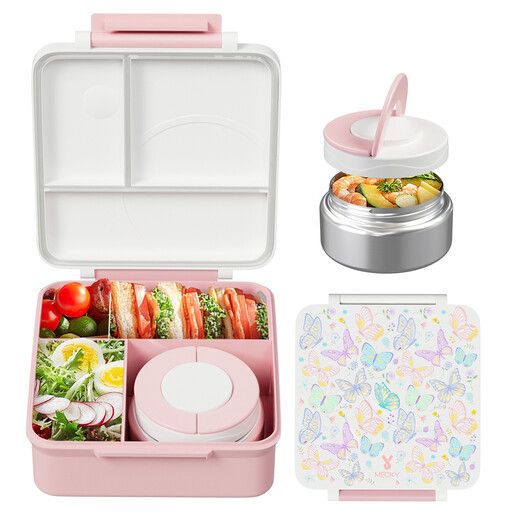
Why This Fits Their Persona: The divided layout offers a straightforward starting point for packed lunches at school, work or day trips, with a single latch for simple opening.
Its product name clearly identifies the 54oz capacity and divided format, making it easier to compare portion size before purchase.
54oz capacity; divided lunch-box format; single-latch closure.

Why This Fits Their Persona: A four-piece set suits households that want reusable stainless steel storage for lunches, leftovers, freezer organisation and different portion sizes.
The stated 316L stainless steel construction and included lids provide clearer material and component information than vague “premium” wording.
Four containers; 316L stainless steel; dishwasher and freezer suitability stated in the product information.
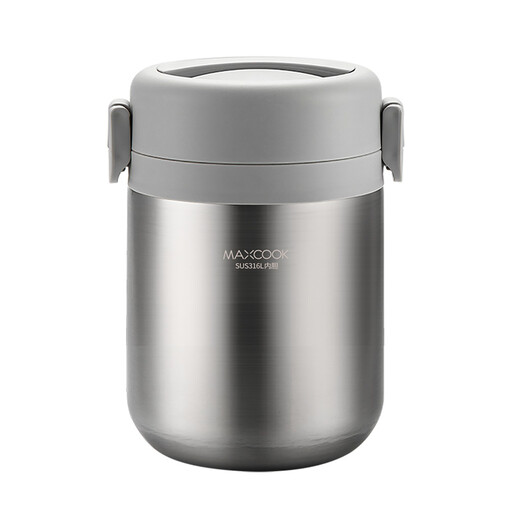
Why This Fits Their Persona: The large 1.5L format is suited to commuters, campers and people carrying substantial hot meals rather than small snack portions.
The wide mouth supports filling and eating, while the stated vacuum insulation and leak-resistant lid address common hot-food transport concerns.
316 stainless steel; 1.5L capacity; wide-mouth vacuum-insulated design.
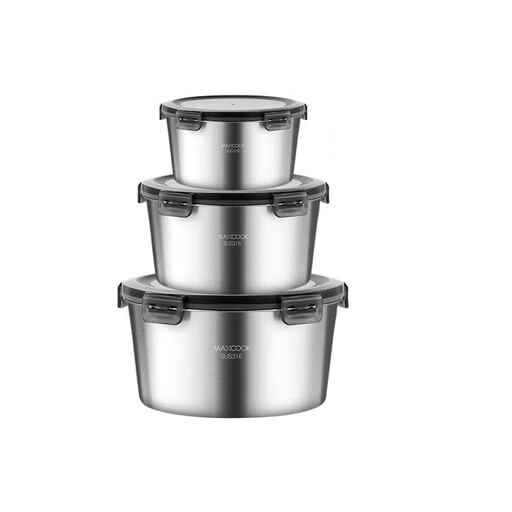
Why This Fits Their Persona: Two 600ml containers and one 2200ml container provide different sizes for packed lunches, leftovers, batch cooking and fridge storage.
The clearly listed capacities make it easier to plan portions and avoid buying a set where every box is the same size.
Two 600ml containers plus one 2200ml container; 316 stainless steel; freezer and dishwasher suitability stated.
We have compiled a complete, real-time list of products that fully satisfy these strict selection criteria and UK safety regulations.
They can be suitable for school if the weight, capacity and closure are manageable for the child. A divided lunch box with a simple latch may work for dry foods, while liquid foods may require a separate sealed container. Check the product’s age guidance and carry it upright.
The holding time depends on the starting temperature, filling level, ambient conditions and how often the lid is opened. The Maxcook insulated food jars listed here state 4–6 hours of thermal retention. Preheating the jar and keeping it closed can support the intended performance, but food should still be handled and stored safely.
Reusable containers have no regular running cost beyond washing. Dishwasher use adds to household energy and water consumption, while hand washing may suit smaller items. Sets with several sizes can reduce the need to buy separate containers, provided you have enough cupboard and fridge space.