
24/7 Customer Support

Free returns

Same-day & Next-day Delivery

Quality Guaranteed

Unlock Your Welcome Offers: FREE Delivery | Up to 80% OFF | Free 30-day JoyPlus trial
Download the APP
Choosing between lunch boxes and food storage containers can seem straightforward until a lid leaks in your work bag, a container will not fit in the microwave, or a supposedly convenient set takes up half the kitchen cupboard. The right option depends on how you carry, heat, wash and store food—not just on its appearance or advertised capacity.
Clips or snap-lock fasteners can help hold a lid in place, but they do not automatically make a container suitable for soup, sauces or dressings. Check whether the product description specifically refers to a sealed, airtight or leak-resistant design. Also consider whether the seal is removable for cleaning, as food residue around silicone or plastic gaskets can cause odours over time.
A 2-litre lunch box may suit a large meal, sandwiches and snacks, but it could be too wide for a small office fridge or commuter bag. Conversely, several small meal prep containers may offer better portion control but require more washing and storage space. Measure your lunch bag, fridge shelf and cupboard before buying.
Microwave-safe containers should be used according to the manufacturer’s instructions, with lids commonly loosened or removed during heating. Stainless steel food containers must not be placed in a microwave, while glass food storage containers may be suitable for microwave use but still require care when exposed to sudden temperature changes. Always check the product instructions rather than relying on material alone.
Plastic lunch boxes are often light and practical for commuting, school and travel. Look for food-contact materials and follow the care instructions, particularly where dishwasher temperatures are concerned.
304 stainless steel is commonly selected for reusable food storage because it is durable, corrosion-resistant and easy to clean. 316 stainless steel is another grade used in some food containers. Stainless steel is useful for packed lunches and outdoor use, but it is not microwave-safe and may require hand washing if you want to maintain its finish.
Glass food storage containers are convenient for seeing contents and reheating, especially when made from high-borosilicate glass. However, glass is heavier and can break if dropped or subjected to sudden extreme temperature changes. Inspect glass bodies regularly for chips or cracks.
A bento lunch box or compartment lunch box can separate sandwiches, fruit, snacks and side dishes. Fixed compartments are useful when you want food kept apart, but they may limit the size of a wrap or leftovers portion.
Removable dividers and separate inner tubs provide more flexibility. For meal prep containers, compare the capacity of each section rather than focusing only on the total volume.
For regular use, check whether the item is:
A reusable lunch box is only convenient if it fits your routine. A container that needs extensive hand washing may be less suitable for a busy weekday than a dishwasher-safe alternative.
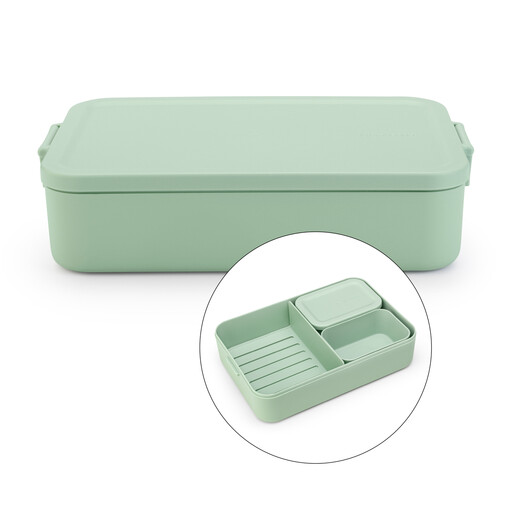
Why This Fits Their Persona: Its 2-litre capacity suits substantial work or study lunches, while the divider and two separate containers allow sandwiches, fruit and snacks to be packed together.
The internal divider and lifting tray make the large capacity easier to organise, rather than leaving food loose in one deep compartment.
Clips secure the lid; the lunch box is listed as dishwasher-, microwave- and freezer-safe. Dimensions are H16.5 × W25.5 × L6.2cm.
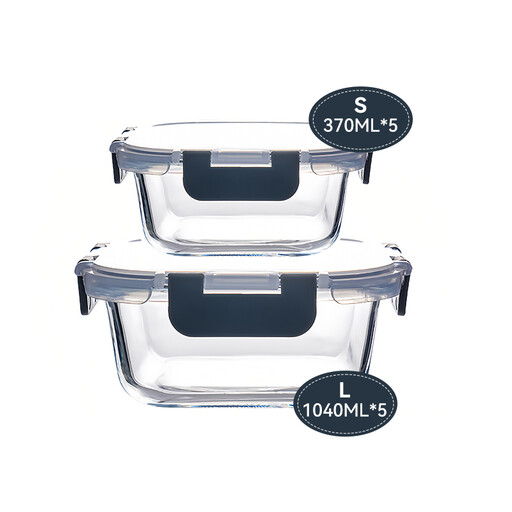
Why This Fits Their Persona: The combination of five 1,040ml and five 370ml glass containers suits shoppers who want a coordinated system for lunches, leftovers and batch cooking.
Different sizes reduce the need to overfill one large box, while snap-lock lids are designed for sealed storage and transport.
High-borosilicate glass bodies are listed as microwave-, freezer- and dishwasher-safe; check lid compatibility and handle glass carefully.
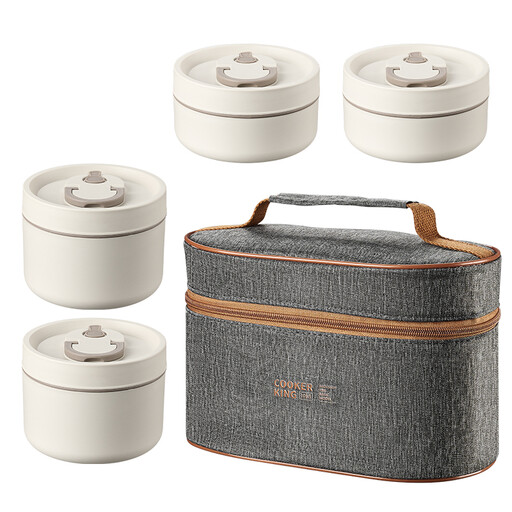
Why This Fits Their Persona: A five-piece stainless steel set is suited to frequent meal preparation, packed lunches, camping and households that prioritise reusable storage.
The stainless steel construction avoids reliance on fragile glass, but buyers should remember that it is unsuitable for microwave heating.
304 stainless steel is reusable and durable; the five-piece format provides several containers for weekly preparation and storage.

Why This Fits Their Persona: Five 870ml containers provide a consistent format for weekday lunches, portioned leftovers and organised fridge or freezer storage.
The stackable design helps use fridge and freezer space efficiently, while the stated capacity makes portion planning more predictable.
Listed features include freezer-safe, microwave-safe and top-rack dishwasher-safe use, plus nesting when empty.
We have compiled a complete, real-time list of products that fully satisfy these strict selection criteria and UK safety regulations.
They can be, particularly when you want to see the contents or reheat food in the same container. They are heavier than plastic or stainless steel and can break if dropped. Allow hot glass to cool before placing it in cold water or a freezer, and inspect it for damage.
There is no universal lifespan. It depends on the material, frequency of use, washing method and condition of the lid or seal. Replace any container or lid that is cracked, warped, heavily stained or no longer closes securely. Following the manufacturer’s dishwasher, microwave and freezer guidance can help preserve its usable condition.
They can be useful for leftovers, dry ingredients and transporting food, but “airtight” does not always mean suitable for liquids during travel. Check how the seal operates, whether the gasket can be removed for cleaning and whether the product is specifically described as leak-proof or leak-resistant.