Parents packing for younger children
A smaller portion may suit a smaller appetite. Check the exact pot’s ingredients and allergens, and plan it alongside the rest of lunch rather than as the main item.


Choose a portion the child is likely to eat, then check the exact yoghurt’s ingredients, allergens, sugars and storage instructions. A small children’s pot may suit a smaller appetite, while larger pots or multipacks can work for repeated lunches; an adult-oriented claim does not establish that a yoghurt suits a child’s lunch.
A smaller portion may suit a smaller appetite. Check the exact pot’s ingredients and allergens, and plan it alongside the rest of lunch rather than as the main item.
Multipacks can provide separate portions for different days. Compare the number of pots, serving weight and ingredients before choosing a pack.
Read the label for the exact variety, including any toppings. Onken’s Raspberry & Banana yoghurt, for example, lists cow’s milk among its ingredients.
Start with the child’s appetite and the rest of the lunch, then compare labels and packing instructions for the formats that fit.
| Priority | What to check | Your needs |
|---|---|---|
| Portion and format | Compare the weight of each pot or pouch, not just the pack count. Tesco lists examples ranging from Yeo Valley Organic Little Yeos 42g pots to Onken Kids 90g pots. | I want a portion my child is likely to eat, whether that means a small pot or a larger single serving. |
| Ingredients and sugars | Read the ingredient list and sugars per 100g on the exact pack. A no-added-sugar claim does not state its total sugar content. | The flavour needs to appeal to my child, and I want to compare what is in it rather than rely on a front-of-pack claim. |
| Allergens | Check the full ingredient and allergen information for the exact variety, including separate toppings. Onken lists cow’s milk in its Raspberry & Banana yoghurt. | When an ingredient matters for my child, a familiar brand or flavour name is not enough to make the choice. |
| Place in the lunch | Plan the main item before adding yoghurt. NHS lunchbox guidance suggests basing that item on foods such as bread, rice, pasta or potatoes. | I’m choosing yoghurt as one part of lunch, not expecting a pot to stand in for the main item. |
| Storage and dates | Follow the pack’s storage directions and check its date. The Food Standards Agency distinguishes use-by dates, which concern safety, from best-before dates, which concern quality. | If lunch will be carried on an outing, I need to know how this particular yoghurt must be stored until it is eaten. |
Children’s pots, fruit yoghurts and products with separate toppings can have different serving sizes and ingredients.
Compare the serving weight, full ingredient list, allergens and nutrition panel for the exact variety.
That claim alone does not tell you the yoghurt’s total sugars or whether its portion and ingredients suit the child.
Use it to identify an option worth considering, then read the nutrition panel and ingredients.
A gut-health or dessert-style description does not establish how a product fits a child’s packed lunch.
Check the child will eat the portion, then assess the exact product’s ingredients, allergens and nutrition information.
The Food Standards Agency says a use-by date relates to food safety, whereas a best-before date relates to quality.
Check the date and follow the storage instructions on the pack when preparing lunch away from home.
Yeo Valley Organic lists Little Yeos No Added Sugar in 6 × 42g pots, a small-pot format to consider for a smaller portion.
Tesco lists Onken Kids Raspberry & Banana as a 4 × 90g multipack. Onken’s ingredient list for Raspberry & Banana includes cow’s milk and sugar.
Müller multipacks are one format to consider when preparing lunches on several days.
If considering an Activia multipack for a child, assess the individual yoghurt rather than its gut-health positioning.
These portioned yoghurt products are labelled for children from 6 months and offer single pouches or a bundle of individual pots. Check the child’s age, portion needs and the product’s packing directions before choosing one for an outing.
 No image available
A single pouch is an option when one portion is easier to take on an outing than a multipack. It contains milk; keep the cap away from children under 36 months. Once opened, refrigerate and use within 24 hours, and check the pack’s instructions before packing it.
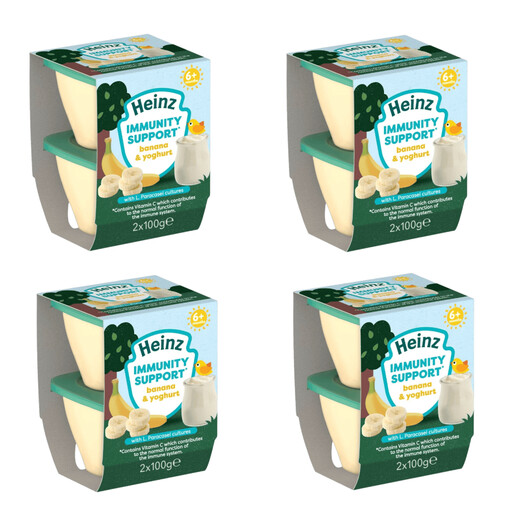 No image available
Eight individual pots allow portions to be set aside for separate lunches if 100g suits the child. The product contains milk. Refrigerate opened pots and use unused, unheated food within 24 hours.
 No image available
This single pouch needs a bowl or spoon for serving: its directions say not to let the child drink from the pouch. It contains milk. Refrigerate unused contents after opening and use within 24 hours.
No. “No added sugar” does not state the product’s total sugar content. Read the sugars per 100g and ingredient list on the exact pack when comparing options.
Choose a serving the child is likely to eat alongside the rest of lunch. Tesco lists examples including Little Yeos 42g pots, Yeo Valley Organic Little Yeos Fruity Favourites 85g pots and Onken Kids 90g pots; the pack size alone does not determine which portion suits a particular child.
No. Check the exact product’s ingredient and allergen information. Onken’s Raspberry & Banana yoghurt lists cow’s milk, but a brand name is not a substitute for reading the particular pack.
Check the date and follow the storage instructions on the actual pack, including any directions for opened portions. The Food Standards Agency explains that use-by dates concern safety, while best-before dates concern quality.