
24/7 全天候客户支持

免费退货

当日/次日达

品质保障

开启新人专享福利: 全场免邮 | 低至 2 折 | 免费试用 30 天 JoyPlus 会员
下载 Joybuy
Finding the right lure fishing rod can feel like a complex task, especially with the diverse range of species and conditions we have in the UK. Whether you are casting from a rocky shoreline for bass, working jigs in a deep reservoir for pike or finessing small lures for perch, the rod you choose is the critical link between you and the fish. An unsuitable rod can lead to poor casting, missed bites and lost fish.
This guide is designed to cut through the clutter and provide clear, practical advice. We will explore the key features to consider when selecting your next rod and present a few standout options tailored to specific modern angling techniques. Our goal is to help you make an informed decision and choose a tool that enhances your time on the water.
Before diving into specific models, let's cover a few essential considerations. Understanding these will help you match a rod to your exact angling needs.
A rod's 'action' describes where it bends under load, while 'power' refers to the strength needed to bend it. These are crucial for lure work.
If you plan to fish in the sea, corrosion resistance is non-negotiable. Salt spray and saltwater are incredibly harsh on fishing tackle. A dedicated saltwater spinning rod or general sea fishing rods will feature components designed to withstand this environment. Look for:
Angling is always evolving, and specialised rods can offer a significant advantage. For instance, a light jigging rod is designed with a very sensitive tip and a powerful butt section to work metal jigs effectively in deep water. Similarly, a Tai Rubber rod is built with a unique, slow-tapered action that allows the sliding jig to work correctly and prevents pulling hooks from lightly-hooked fish.
Here are our recommendations for anglers looking to invest in a performance-oriented lure rod this year. These have been selected based on their features, intended application and overall design.
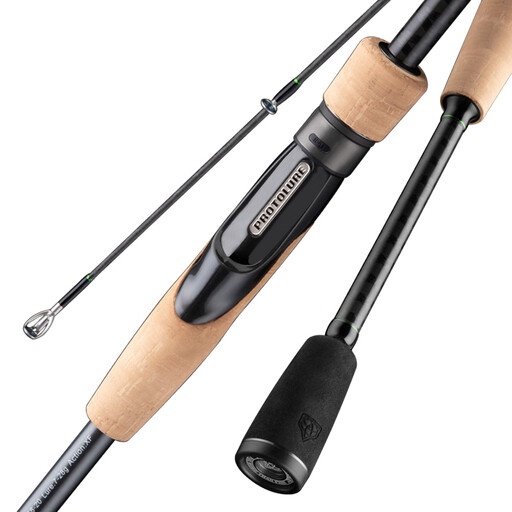
Why It Stands Out This rod is purpose-built for the UK sea bass angler. Its length and casting weight are optimised for launching lures from the shore or a boat, giving you the range needed to cover promising ground. The carbon blank provides an excellent balance of sensitivity for bite detection and power for controlling a strong fish near snags.
Pros
Who is it for? This is an ideal choice for the dedicated coastal angler who primarily targets sea bass and requires a reliable, purpose-built tool.
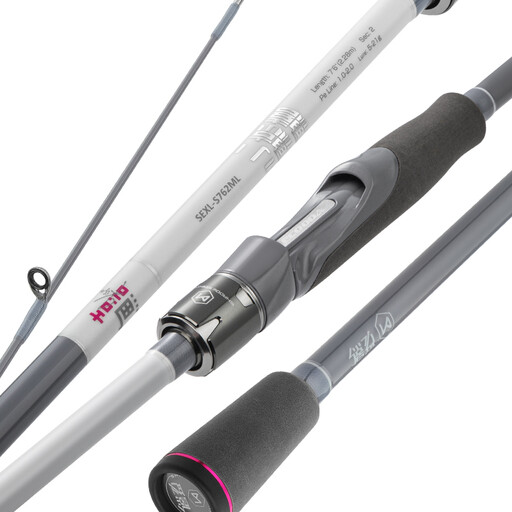
Why It Stands Out Versatility is the key feature of the SEXL model. It is engineered as a multi-purpose lure fishing rod capable of handling a wide range of species, from freshwater bass and trout to inshore saltwater targets. The inclusion of high-quality Fuji components, including SiC guide rings, is a notable feature at this price point, ensuring smooth line flow and excellent durability.
Pros
Who is it for? The angler who enjoys fishing for multiple species across both freshwater and light saltwater settings and wants one high-performing rod to cover most situations.
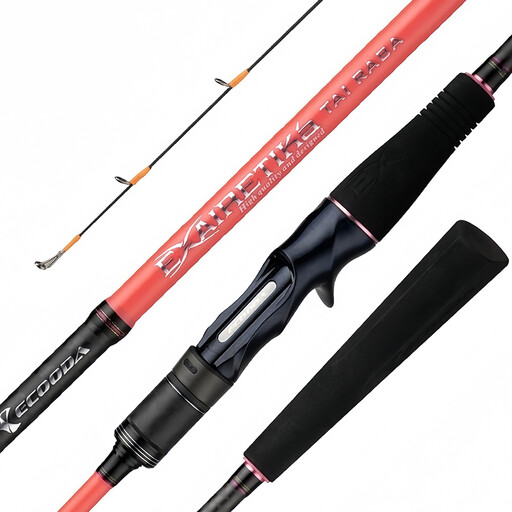
Why It Stands Out This is a specialist tool from the range of ECOODA fishing rods, designed for the increasingly popular Tai Rubber and Tenya jigging techniques. Unlike a standard spinning rod, this Tai Rubber rod has a very soft, sensitive solid carbon tip that allows the lure to work naturally and registers the most delicate of bites. The rest of the blank has a progressive power curve to securely fight fish from the depths.
Pros
Who is it for? This rod is for the modern boat angler who is either already practising or keen to explore the highly effective techniques of Tai Rubber and Tenya jigging for species like cod, pollack and wrasse.
Our recommendations focus on specific angling disciplines, but we understand every angler's needs are unique. If you are searching for a different style, such as a multi-piece travel rod or a different casting weight, there are many other options to consider.
Explore Our Full Collection of Lure Rods
1. What is the main difference between a lure rod and a standard spinning rod? While they may look similar, a dedicated lure fishing rod is typically lighter, more sensitive and has a faster action than a general-purpose spinning rod. This is to better transmit the feel of the lure's action through the water and to allow for quick, sharp hook-sets.
2. Can I use a freshwater lure rod for sea fishing? It is not recommended for long-term use. A standard freshwater rod's components, particularly the line guides and reel seat, are not designed to withstand the corrosive effects of saltwater. While it can be done for a single trip if cleaned thoroughly afterwards, investing in a proper saltwater spinning rod is a much better choice for durability and performance.
3. What casting weight is suitable for a bass fishing rod in the UK? For most UK shore and inshore boat fishing for bass, a rod with a casting weight in the range of 10-35g or 15-40g is very versatile. This covers the most popular hard lures, soft plastics and metal jigs. However, for light rock fishing (LRF) you might use a rod rated 1-10g, while for casting into heavy surf you might need something rated up to 60g or more.