
24/7 Customer Support

Free returns

Same-day & Next-day Delivery

Quality Guaranteed

Unlock Your Welcome Offers: FREE Delivery | Up to 80% OFF | Free 30-day JoyPlus trial
Download the APP
Navigating the market for a new lure fishing rod can feel like casting into murky water. With so many options, it is easy to get caught by marketing hype and end up with a rod that is not quite right for your needs. As the Joybuy Product Recommendation Officer, my role is to help you see through the clutter and focus on what truly matters for UK angling conditions. Let's look at some common pitfalls and how to avoid them.
One of the most frequent traps is the "one-size-fits-all" rod. While versatility is appealing, a rod marketed for every species from tiny perch to powerful sea bass often fails to excel at any specific task. Another costly mistake is overlooking the quality of components. A rod might feel great in the shop, but if the guides and reel seat are not built to last, a few trips to the coast can lead to rust and failure, especially when using a saltwater fishing rod. Finally, the term "carbon" is used widely, but not all carbon is created equal, and a poorly made carbon fishing rod can be heavy, brittle and lack the sensitivity needed for effective lure work.
To make an informed choice, it is crucial to understand a few core parameters. These specifications are not just jargon; they directly impact how the rod performs on the water.
A rod's action describes how much of the blank bends when pressure is applied. A fast-action rod bends mostly in the top third, offering excellent sensitivity for feeling subtle bites and power for setting the hook quickly. This is often preferred for single-hook lures. A medium or moderate-action rod bends further down into the mid-section, which is ideal for casting treble-hooked lures and absorbing the lunges of a fighting fish, reducing the chance of the hook pulling free.
Power refers to the rod's lifting strength, typically rated from ultra-light to extra-heavy. For a versatile bass and trout rod in UK freshwater, a light or medium-light power is often sufficient. However, if you are targeting larger predators or need a dedicated sea bass rod for coastal fishing, a medium or medium-heavy power will provide the backbone needed to handle larger fish and cast heavier lures.
The vast majority of modern lure rods are made from carbon fibre. The key is the modulus of the carbon used. High-modulus carbon creates a lighter, stiffer and more sensitive blank, allowing you to feel every tap and contour of the bottom. Lower-modulus carbon results in a heavier and less sensitive rod, though it can be more durable. For portability and storage, a two piece fishing rod is a practical standard, offering a good balance between performance and convenience without the compromises of older multi-section travel rods.
The small metal rings that your line runs through are called guides. For any angler, but especially those fishing in saltwater, the quality of these components is non-negotiable. Corrosion-resistant materials are essential. Guides from brands like Fuji are often considered a benchmark for quality, with inserts like Silicon Carbide (SiC) or Alconite providing a smooth, hard-wearing surface that reduces friction, improves casting distance and withstands the use of braided lines. A secure, well-made reel seat is equally important to ensure your reel stays firmly attached under load.
Based on these practical considerations, we have identified several options from the ECOODA fishing rod range that align with specific UK angler profiles.
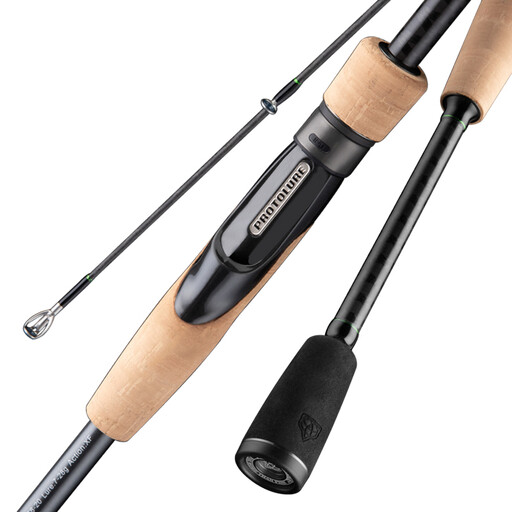
Why This Fits Their Persona: This rod is well-suited for anglers who enjoy targeting a variety of species in canals, rivers and sheltered estuaries. It offers the sensitivity for perch and trout, with enough backbone for school-sized bass or wrasse, making it a great first step into serious lure fishing.
Instead of being a vague "do-it-all" rod, this model is specified for lighter saltwater and freshwater use, giving it a clear performance window. It balances sensitivity and power effectively for its intended targets.
Its two-piece construction makes it easy to transport. The blank is designed for both freshwater and saltwater, offering genuine versatility for the UK angler who fishes different venues.
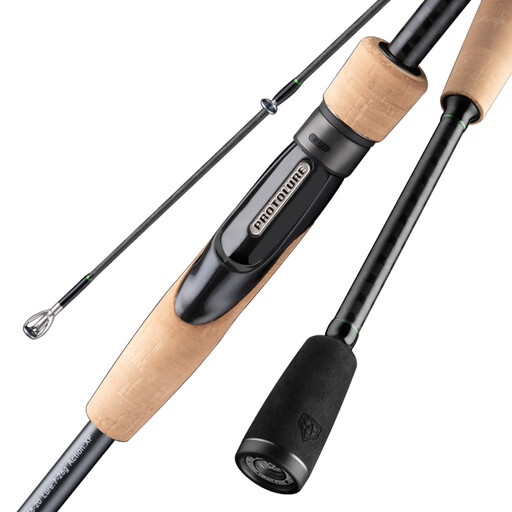
Why This Fits Their Persona: For the angler who spends their time on rocky coastlines and surf beaches chasing silver bars. This rod is built with the power to cast lures into a headwind and the strength to steer a powerful bass away from snags.
It avoids the trap of poor components by being purpose-built as a sea bass rod. The construction is focused on saltwater resilience, reducing the risk of corrosion that plagues unsuitable freshwater rods used at sea.
Specifically designed for sea bass, providing the right combination of casting power and fighting action. Its two-section design makes it practical for travelling to coastal marks.
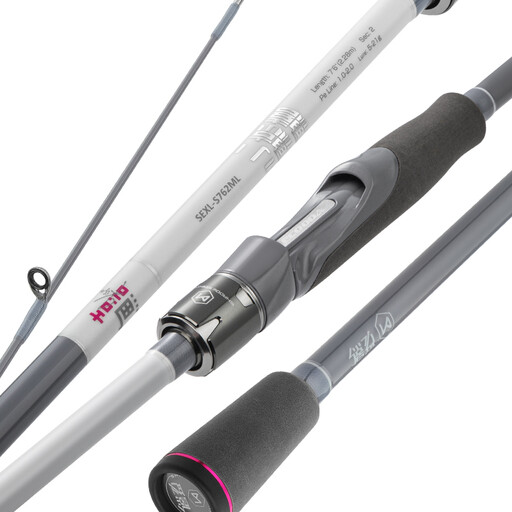
Why This Fits Their Persona: This is for the angler who appreciates high-performance tackle and targets a range of freshwater predators like perch, pike, trout and carp. They understand that quality components translate to better performance and longevity.
This rod sidesteps the component and carbon quality traps by explicitly featuring Fuji SIC guides. This is a clear indicator of a high-quality build, promising superior casting, line management, and durability.
The Fuji SIC guides offer exceptional performance and durability. The sensitive carbon blank is ideal for a dedicated freshwater lure rod targeting species like bass, trout and carp.
We have compiled a complete, real-time list of products that fully satisfy these strict selection criteria and UK safety regulations.
A quality carbon fishing rod can last for many years with proper care. The main threats to its lifespan are physical damage (impacts against hard surfaces, car doors) and component degradation. Rinsing the rod, especially the guides and reel seat, with fresh water after every trip to the coast will significantly extend its life by preventing corrosion.
While you can, it is not recommended for regular use unless the manufacturer specifies it is saltwater-safe. A standard freshwater lure rod often uses components that will corrode quickly when exposed to salt. The guides, whippings and reel seat can all fail, rendering the rod unusable. It is always better to use a dedicated saltwater rod or one explicitly rated for both environments.
The primary differences lie in the quality of the carbon blank and the components. A more expensive rod typically uses a higher-modulus carbon, making it lighter and more sensitive. It will also feature higher-grade components, such as Fuji guides and a more robust reel seat, which improve casting performance, durability and the overall feel of the rod.