
24/7 全天候客户支持

免费退货

当日/次日达

品质保障

开启新人专享福利: 全场免邮 | 低至 2 折 | 免费试用 30 天 JoyPlus 会员
下载 Joybuy
For the dedicated UK angler, selecting the right lure fishing rod is not a trivial matter. It's about finding a precise tool that translates the subtlest of movements into an irresistible lure action and transmits the faintest of takes back to your hands. The market is filled with options, each claiming to offer the ultimate performance. This guide is designed to cut through that clutter, offering practical advice to help you choose a rod that genuinely matches your technique and target species, whether you're casting for wily sea bass along the coast or tempting predators in freshwater.
Understanding a few key technical aspects will significantly narrow your search and ensure you invest in a rod that enhances your fishing, rather than hinders it.
A rod's 'action' describes where it flexes along its blank. This is critical for lure work and bite detection.
'Power' refers to the rod's lifting strength, from ultra-light to extra-heavy. A light power rod is suited for small trout and perch, while a medium-heavy or heavy predator fishing rod is necessary for pike, zander or powerful coastal species. A good sea bass rod, for example, typically falls into the medium to medium-heavy power category.
The blank material and the components fitted to it determine the rod's overall performance and longevity. High-modulus carbon fibre is the standard for a quality lure fishing rod due to its lightness and incredible sensitivity.
Pay close attention to the guides and reel seat. Components from recognised brands like Fuji indicate a focus on quality. For anyone fishing in the sea, a proper saltwater fishing rod with corrosion-resistant guides (like stainless steel or titanium frames with Alconite or SiC inserts) is not a luxury, but a necessity to prevent premature failure.
For many anglers, a 2 piece fishing rod is the most practical format, offering a great compromise between performance and ease of transport. While one-piece rods are favoured by some for their pure action, modern two-piece designs are so well-engineered that any difference is negligible for most applications.
Furthermore, consider rods built for specific methods. A dedicated jigging rod will often be shorter and have a very fast action, whereas a rod for casting soft plastics might be slightly longer with a little more flex to help 'work' the lure. Some rods are also designed as versatile all-rounders, capable of handling lures for a carp fishing rod application one day and light sea work the next.
Based on their features, construction and suitability for popular UK angling styles, here are some standout options to consider.
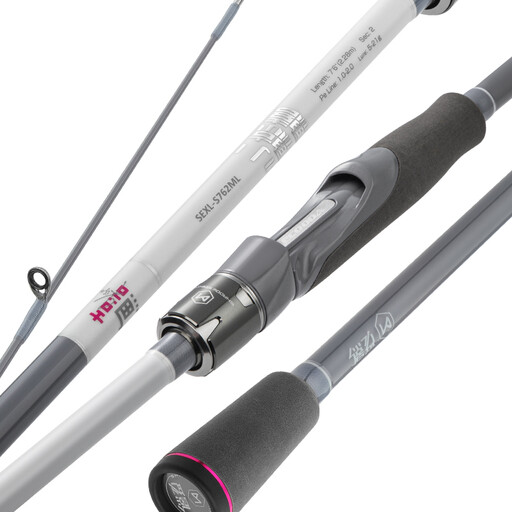
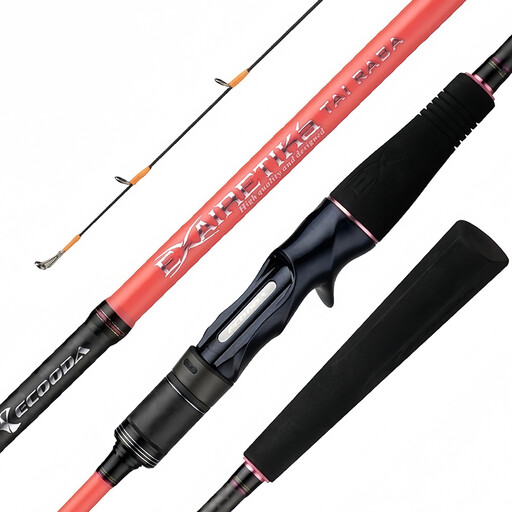
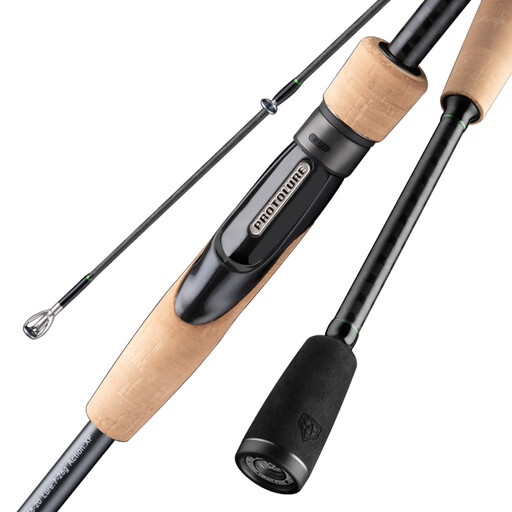
Every angler's needs are unique, and the perfect rod is a personal choice. If our specific recommendations aren't quite what you're looking for, or if you'd simply like to compare a wider range of models, we invite you to browse our full collection.
[Explore our complete range of lure fishing rods here.](https://www.joybuy.co.uk/explore/lure-rod/M0qEQaAA)
A fast or medium-fast action is generally preferred for a sea bass rod. This provides the crispness needed to impart action into lures, the sensitivity to feel takes in moving water and the backbone to achieve a solid hookset. This action is versatile enough to handle the most common bass lures, from surface plugs to weighted soft plastics.
While you can for a single trip, it is not advisable for regular use. A dedicated saltwater fishing rod is built with corrosion-resistant components, including the guides, guide wrappings and reel seat. Saltwater is extremely corrosive, and a standard freshwater rod will show signs of rust and degradation very quickly, even with thorough rinsing.
The main advantage of a 2 piece fishing rod is portability and storage. It breaks down to a manageable length, making it far easier to fit inside a car, carry on public transport or store at home. Modern ferrules (the joints) are so well-designed that the action and strength are almost indistinguishable from a one-piece equivalent, making them the most practical choice for the majority of UK anglers.