
24/7 Customer Support

Free returns

Same-day & Next-day Delivery

Quality Guaranteed

Unlock Your Welcome Offers: FREE Delivery | Up to 80% OFF | Free 30-day JoyPlus trial
Download the APP
As a Joybuy Product Recommendation Officer, my role is to help you navigate the crowded market of angling equipment. When it comes to selecting new lure fishing tackle, it is easy to be swayed by marketing claims that do not hold up at the water's edge. This guide offers practical advice on what to look for, helping you choose gear that performs well in UK conditions, from rocky coastlines to inland reservoirs.
Many anglers, even experienced ones, can fall into common purchasing traps. Understanding these can save you both money and frustration.
To ensure your new equipment is fit for purpose, focus on these key technical specifications.
The performance of a carbon fishing rod is defined by its action and power.
For lure fishing, the reel is just as important as the rod. Whether you choose a fixed-spool or a baitcasting reel, pay attention to two elements:
While braid is a popular mainline for its sensitivity and low stretch, the leader material is critical. A fluorocarbon fishing line is an excellent choice for a leader. Its refractive index is very close to that of water, making it nearly invisible to fish. It also offers superior abrasion resistance compared to monofilament, which is a significant benefit when fishing over sharp rocks or mussel beds.
Based on these practical considerations, here are some options from our catalogue matched to specific angling profiles.
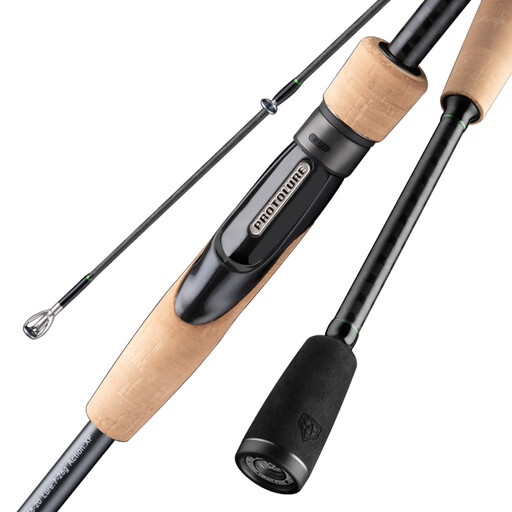
Why This Fits Their Persona: This angler targets bass, pollack and wrasse from the UK's varied coastline. This rod is specifically designed as a sea bass rod, providing the length and power needed for casting from shore, while its carbon blank offers the sensitivity for detecting subtle bites. The two-piece construction makes it easy to transport to remote fishing marks.
It avoids the "one-rod-fits-all" trap by being a purpose-built tool for one of the UK's most popular forms of lure fishing, rather than a generic, compromised design.
Its specified use for saltwater suggests better component choices for corrosion resistance. The carbon construction provides a good balance of casting power and sensitivity.
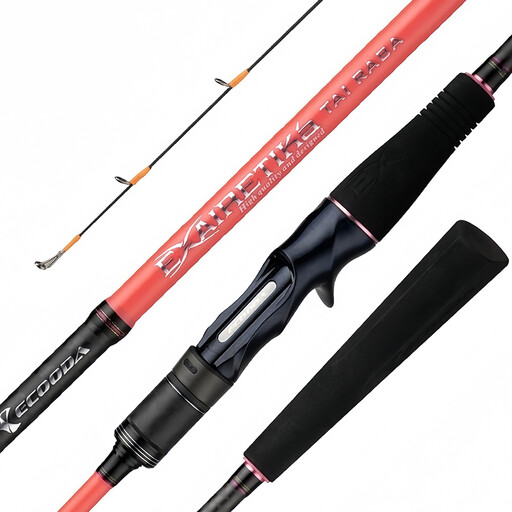
Why This Fits Their Persona: This angler specialises in vertical techniques from a charter or private boat, targeting cod, pollack and ling over reefs and wrecks. This is a specialised boat fishing rod, designed for modern jigging styles like 'Tai Raba' and 'Tenya', which are highly effective in UK waters.
This is the antithesis of a generic rod. It is a purpose-built jigging rod, ensuring the correct parabolic action to impart life into the lure and absorb powerful dives from fish hooked directly below the boat.
The specific design for jigging provides superior lure control and bite detection for vertical presentations. Its shorter length is practical for use on a boat with limited space.
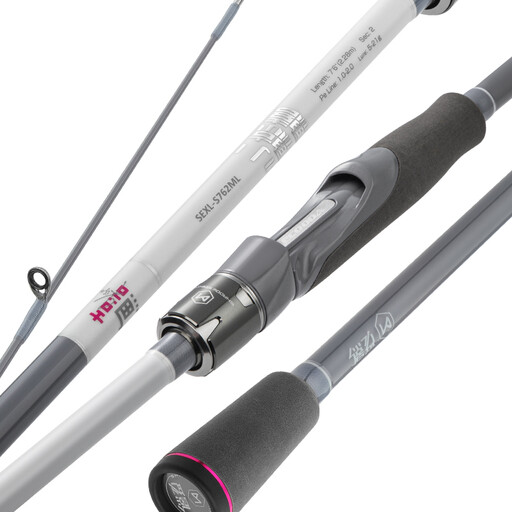
Why This Fits Their Persona: This angler values high-quality components and understands they contribute to better performance and longevity. They fish with fine-diameter braids and want to maximise casting distance and sensitivity. The inclusion of Fuji SIC guides is a key indicator of quality.
It sidesteps the "vague materials" trap. Fuji is a globally recognised brand for high-quality rod components. Specifying Fuji SIC guides is a verifiable feature, not just marketing jargon, assuring the user of a certain standard.
Silicon Carbide (SIC) guides are extremely hard and smooth, reducing friction for longer casts and minimising wear on expensive braided lines. This is a tangible performance upgrade.
We have compiled a complete, real-time list of products that fully satisfy these strict selection criteria and UK safety regulations.
The lifespan of a carbon fishing rod depends heavily on its care. For sea fishing tackle, it is crucial to rinse the entire rod, reel and line with fresh water after every single trip to remove salt deposits. Regularly check the guide inserts for any cracks, as a damaged guide can shred your line. When stored correctly in a rod tube or bag and not subjected to impacts, a quality carbon rod can provide reliable service for many years.
For certain situations, yes. If you are fishing in the clear waters of Cornwall or targeting wary fish in a chalk stream, the near-invisibility of a fluorocarbon fishing line leader can make a significant difference to your catch rate. Its high abrasion resistance is also a major asset when fishing over the sharp, rocky ground common along much of the UK coastline. In murky, coloured water or over clean ground, the benefit is less pronounced, and a standard monofilament leader may suffice.
A dedicated sea bass rod is engineered for the specific demands of UK shore-based bass fishing. This typically means a length of 9ft or more to maximise casting distance and a fast action with a powerful mid-section to work lures effectively at range and handle fish in tide and surf. A general-purpose spinning rod is often shorter (7-8ft) and may have a softer, more parabolic action, making it less efficient for long-range casting and lure work in a coastal environment.