
24/7 Customer Support

Free returns

Same-day & Next-day Delivery

Quality Guaranteed

Unlock Your Welcome Offers: FREE Delivery | Up to 80% OFF | Free 30-day JoyPlus trial
Download the APP
A luxury scented candle should contribute more than an attractive jar. It needs to suit the room, release fragrance consistently and burn safely over repeated uses. Whether you are choosing scented candles for home, planning a dinner setting or searching for candles for gifts, marketing language can make comparison difficult.
Several common buying traps are worth avoiding:
Soy wax candles are often selected for their association with a softer, slower-burning texture, while paraffin can support fragrance release and vessel stability. Many products use a blend rather than one wax type. For this reason, compare the stated wax composition instead of assuming that “natural” or “premium” wording explains performance.
Net wax weight is more useful than the overall parcel weight. For example, a 453g candle and a 200g candle are not directly comparable, even if both are described as luxury candles. A heavier candle may offer more sessions, but it can also require a larger heat-resistant surface.
A standard paper or cotton-style wick can suit compact jars. Wooden wicks provide a different experience, including the audible feature associated with crackling wood wick candles. WoodWick candles and similar wooden-wick designs usually need trimming before each lighting; the recommended length varies by product.
Do not assume a wooden wick is maintenance-free. The Hypnoflora and Gilded Sands candles specify trimming to approximately 3mm, while the Zooly jars recommend approximately 6mm. A wick that is too long may produce excessive flickering, smoke or soot.
A quoted burn time is an estimate, not a guarantee. Draughts, wick length, room temperature and burning habits can affect the result. Most of the products listed here advise burning for no more than four hours at a time.
During the first burn, allow the melted wax to reach the vessel edges where the instructions permit. This helps reduce tunnelling, in which a narrow channel forms around the wick while unused wax remains at the sides. Stop using a candle when the remaining wax reaches the specified safety level, generally around 1cm or the amount stated on its label.
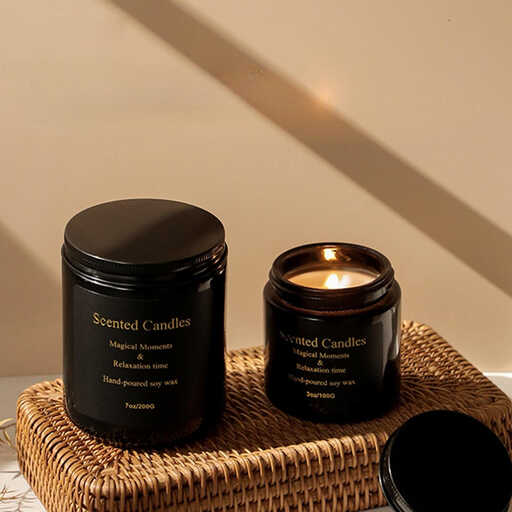
Why This Fits Their Persona: A compact 200g jar suits shoppers furnishing a flat, bedroom or bathroom without committing to a larger statement candle. Its dark container also works as a simple decorative accent.
The listing gives a stated weight, jar dimensions and estimated burn time of up to 30 hours, making it easier to compare than a product described only by appearance.
200g wax weight; reusable jar; HTP wick; stated maximum burn time of up to 30 hours.
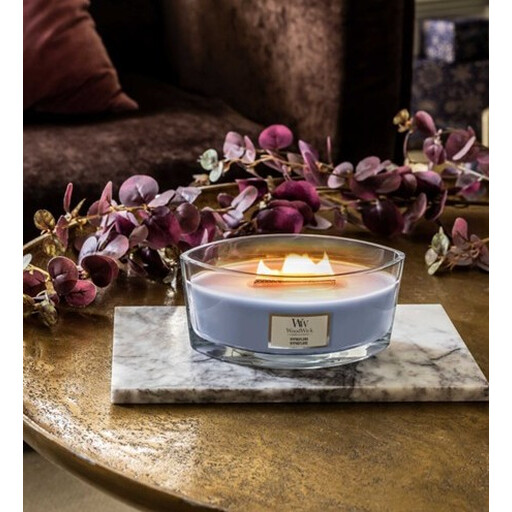
Why This Fits Their Persona: This is suited to shoppers seeking a larger centrepiece for a sitting room or refined bedroom setting, with a floral fragrance built around night-blooming jasmine, pear and tonka bean.
The product specifies its soy and paraffin blend, 453g net wax weight, wooden-wick care and an estimated 40–70-hour burn range.
453g wax; Ellipse vessel; wooden wick with crackling sound; estimated 40–70-hour burn time.
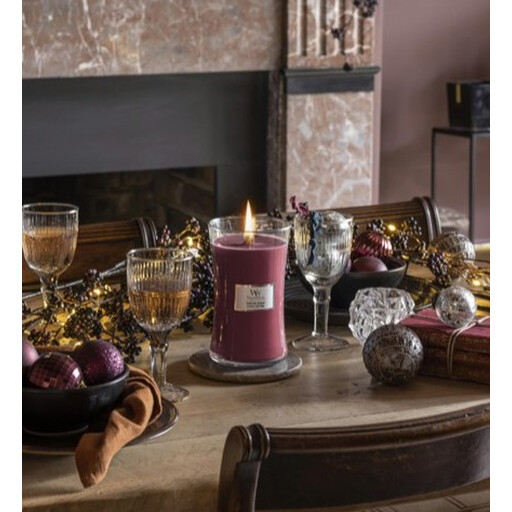
Why This Fits Their Persona: Its large format is appropriate for frequent evening use, spacious living rooms and buyers who want a bold cherry-led fragrance with smoky vanilla and amberwood notes.
The 609g weight and stated 136–176-hour estimate provide clearer longevity information than vague “long-lasting” wording. The instructions also specify wick trimming and a safe stopping point.
609g wax; hourglass glass vessel; wooden wick; stated 136–176-hour burn range.
We have compiled a complete, real-time list of products that fully satisfy these strict selection criteria and UK safety regulations.
They can be worthwhile when you value a particular fragrance, vessel design, longer stated burn range or wooden-wick sound. Compare cost per gram of wax and estimated burn time rather than judging price from packaging alone.
Many products recommend a maximum of four hours per session. The first burn should generally allow an even melt pool to form, subject to the product’s instructions. Shorter sessions may be preferable in small rooms or when the flame is close to surrounding objects.
Trim the wick before lighting, avoid draughts and do not exceed the recommended session length. Replace the lid when the candle is cool, where supplied, to help protect the fragrance between uses. Always stop burning at the safety level stated on the product label.