
24/7 Customer Support

Free returns

Same-day & Next-day Delivery

Quality Guaranteed

Unlock Your Welcome Offers: FREE Delivery | Up to 80% OFF | Free 30-day JoyPlus trial
Download the APP
Lychee drinks bring a floral tropical flavour to the soft drinks aisle, but the category includes very different products. A lychee juice drink, lychee soda, iced tea, jelly pouch and ready-to-drink cocktail may all use similar front-of-pack imagery while offering noticeably different ingredients, textures, sugar levels and serving sizes.
Before buying, UK shoppers should look beyond phrases such as “real fruit”, “light” or “refreshing”. The following checks can help you avoid paying for a product that does not suit your taste, diet or intended occasion.
A product described as a lychee-flavoured drink may contain flavourings with only a small amount of concentrated juice. This is not necessarily a problem, but it will usually offer a different taste from a lychee juice drink containing a stated percentage of juice.
For example, Tropical Sun Lychee Juice Drink lists 25% lychee juice, while Yeo’s Lychee Drink lists 10% lychee juice from concentrate. Some fruit sodas also combine small amounts of lychee and apple juice with flavourings. Check the ingredient list and quantitative declarations rather than relying only on the product name.
A lower-calorie drink may still contain sugar, sweeteners or both. Compare energy and sugars per 100ml, then consider the actual bottle or can size. A 600ml bottle can contain considerably more total liquid than a 200ml soda, even when the per-100ml figures look similar.
Also look for warnings such as “contains sweeteners”. Some shoppers prefer a conventional sugar-sweetened drink, while others are specifically looking for a low-sugar lychee drink. The right choice depends on the full label, not a single front-of-pack claim.
A lychee drink with nata de coco or jelly pieces is not the same as a smooth juice or carbonated drink. It may be more suitable as a snack-style refreshment than as a quick drink with a meal. Products containing pieces may also carry age or supervision guidance.
Similarly, a lychee cocktail contains alcohol and should not be treated like an ordinary soft drink. Check the alcohol-by-volume statement before serving. Once opened, many products require refrigeration and prompt consumption, so consider how quickly your household will finish the pack.
Ingredients are generally listed by weight, so the first few entries show what makes up most of the product. Look for:
A higher fruit percentage does not automatically mean you will prefer the taste, but it gives a clearer basis for comparison. Tropical Sun and FOCO both list 25% lychee juice, while Mogu Mogu focuses on a chewy drink format with 25% nata de coco.
Use the per-100ml panel to compare different formats, then calculate the approximate amount in one serving. Current examples include:
These figures are product-specific and may change with packaging, so check the label supplied with your order.
Choose the format around how you plan to use it:

Why This Fits Their Persona: A compact single serving for shoppers who want to try an Asian lychee beverage without committing to a large multipack.
The product information states 10% lychee juice from concentrate, making the fruit content easier to assess than a flavour-only description.
300ml ready-to-drink format; no listed allergens; suitable chilled or as a mixer.
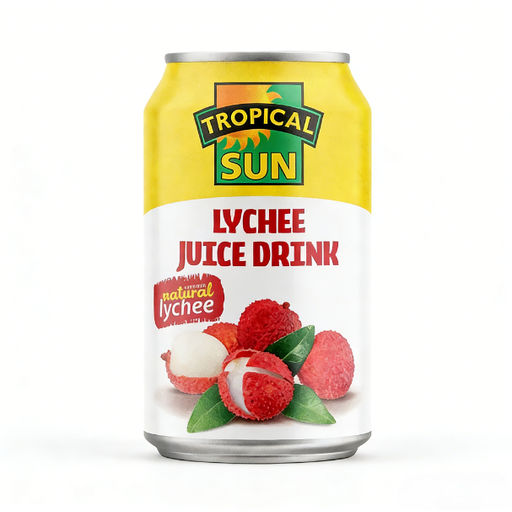
Why This Fits Their Persona: A suitable option for shoppers prioritising a clearly stated juice percentage and a versatile drink for sipping, ice or mocktails.
It lists 25% lychee juice, while the ingredient panel also identifies sodium metabisulphite, which shoppers with relevant sensitivities can check before purchase.
25% lychee juice; 310ml can; designed for chilled serving, ice, cocktails or mocktails.
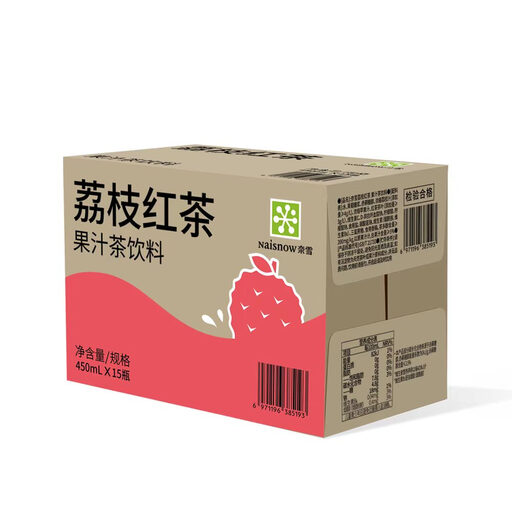
Why This Fits Their Persona: The 15-bottle format suits households, lunch planning, office fridges and hosts who need multiple ready-to-drink servings.
The listing provides both tea and nutrition information, including 20 kcal and 4.8g sugars per 100ml, rather than relying only on “0 sugar” promotional wording.
450ml bottles; black tea leaves and concentrated lychee juice listed; multipack format for regular use.
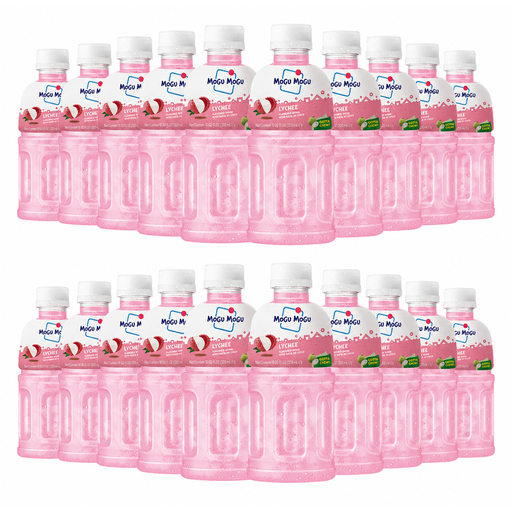
Why This Fits Their Persona: Designed for shoppers who want a chewable drink experience for parties, packed lunches or a snack-style refreshment.
The format clearly identifies nata de coco, coconut and artificial colour, while the listing includes a choking warning for young children.
24 x 320ml multipack; 25% nata de coco; chilled, shake-before-opening serving instructions.
We have compiled a complete, real-time list of products that fully satisfy these strict selection criteria and UK safety regulations.
Yes, depending on the format. Multipacks provide individual servings, while larger glass-bottle sodas can work alongside meals. For adult gatherings, a 3% ABV lychee cocktail may be used as a ready-to-drink option, but check the label and serve responsibly. Non-alcoholic juice drinks are more flexible for mixed-age events.
Unopened shelf-stable products can generally be stored in a cool, dry place according to the packaging. After opening, many products should be refrigerated and consumed within 24 hours or a few days, depending on the label. Jelly drinks and drinks containing nata de coco should be chilled when preferred for texture and consumed promptly after opening.
There is no single answer across every product or pack. The provided listings include lower-sugar soda and tea options, as well as a zero-sugar, sweetener-containing electrolyte drink. Compare sugars per 100ml, serving size and sweetener warnings, then select the taste and format that fit your household’s preferences.