
24/7 Customer Support

Free returns

Same-day & Next-day Delivery

Quality Guaranteed

Unlock Your Welcome Offers: FREE Delivery | Up to 80% OFF | Free 30-day JoyPlus trial
Download the APP
For creative professionals, developers and digital nomads across the UK, a MacBook Pro is the centre of your mobile workflow. But even with Apple's impressive battery life, demanding tasks can drain power at the most inconvenient moments. A low battery notification during a client presentation or while rendering a project on the go is a scenario we all want to avoid.
This guide is designed to help you navigate the options for a MacBook Pro power bank. We will outline the key features to look for and provide some recommendations to keep your devices powered, ensuring your productivity never misses a beat.
Selecting the right power bank involves more than just picking the largest capacity. Here are a few practical points to consider to ensure you get a reliable and efficient charging solution.
The capacity of a power bank, measured in milliamp-hours (mAh), tells you how much charge it can hold. For a power-hungry device like a MacBook Pro, you should look for a high capacity power bank for laptop use, typically 20,000 mAh or more.
However, the crucial figure for air travel is watt-hours (Wh). UK and international aviation authorities generally restrict power banks in carry-on luggage to 100Wh. A 25,000 mAh power bank usually falls just under this limit, making it a suitable capacity for frequent flyers. Always verify with your airline before travelling.
A standard phone charger will not be sufficient for a MacBook Pro. To charge your laptop effectively, you need a power bank that supports high-wattage output via USB-C Power Delivery (PD). Look for a model that offers at least 60W from a single USB-C port. This ensures it can charge your MacBook Pro at a reasonable speed, even while you are using it. A fast charging power bank for Apple devices with outputs closer to 100W will deliver performance comparable to a wall adapter.
Your ideal setup likely involves charging more than just your laptop. A good power bank for MacBook Pro and iPhone should feature multiple ports, such as two USB-C ports and a USB-A port, allowing you to power several devices simultaneously.
Equally important is the cable. To ensure safety and optimal charging speed for your Apple devices, always use a high-quality cable. For connecting an iPhone, a USB C to Lightning cable for MacBook that is MFi certified (Made for iPhone/iPad) is essential. This certification guarantees the cable meets Apple's performance and safety standards.
Here are our recommendations for building a reliable mobile charging setup for your Apple ecosystem.
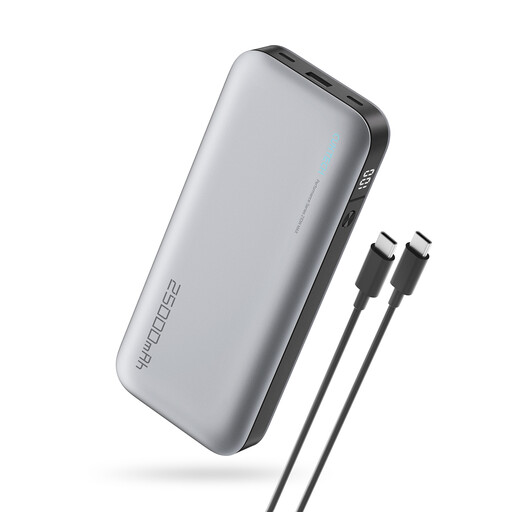
Why It Stands Out: This CUKTECH power bank is built for demanding users. With a substantial 25000 mAh capacity, it holds enough power to fully charge a MacBook Pro 14-inch at least once. Its key feature is the impressive 120W total output, with a single USB-C port capable of delivering up to 100W, which is more than enough to fast-charge a MacBook Pro. The inclusion of two USB-C ports and one USB-A port provides the versatility needed to power a complete mobile office.
Pros:
Who is it for: The professional on the move who needs a single, powerful solution to charge their MacBook Pro, iPhone and other accessories without compromising on speed.
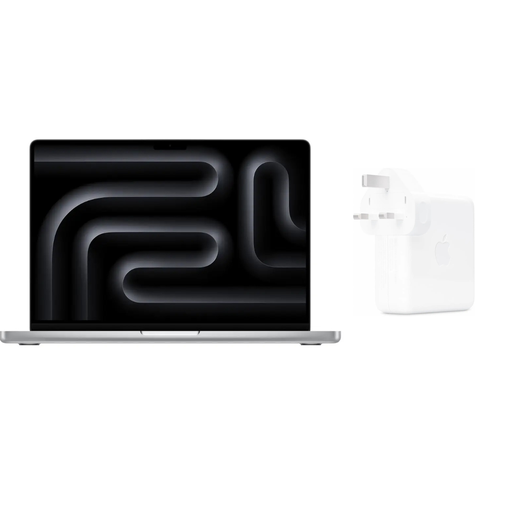
Why It Stands Out: While not a power bank, the latest MacBook Pro is the reason a powerful charging solution is necessary. The 2025 model with the Apple M5 chip delivers exceptional performance for pro-level workflows. Its efficiency provides impressive battery life, but for those marathon work sessions or when travelling between outlets, even this powerhouse needs a reliable external power source. Understanding the demands of this machine is key to choosing the right accessories.
Pros:
Who is it for: Creative professionals, developers and power users who rely on top-tier performance and need their machine ready for any task, anywhere.
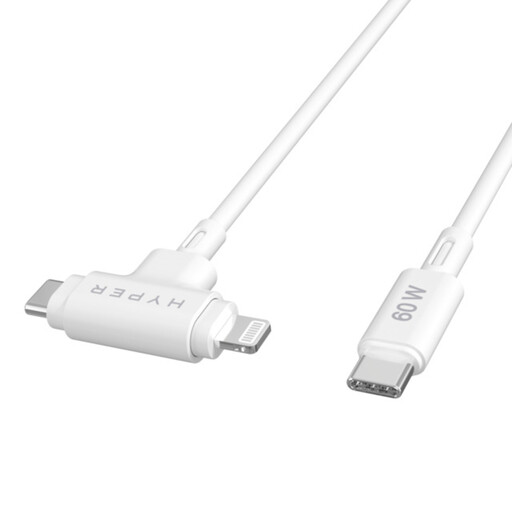
Why It Stands Out: This cable is an outstanding piece of MacBook Pro travel accessories. It solves the problem of carrying multiple cables with its innovative 2-in-1 hybrid connector, featuring both USB-C and Lightning tips on a single head. It is MFi certified, ensuring safe and efficient charging for your iPhone or iPad. With support for up to 60W Power Delivery, it is perfectly capable of charging a MacBook Pro or Air, making it a versatile companion to a high-output power bank.
Pros:
Who is it for: The Apple user who wants to streamline their travel kit with a single, reliable cable for charging both their MacBook and their iPhone or iPad.
If these specific items don't quite fit your needs, or if you're exploring different capacities and features, there is a wide range of charging solutions available.
Discover more in our full collection of chargers. Explore our range of USB and USB C chargers.
Generally, yes. The limit for most airlines is 100Wh. A 25000 mAh power bank with a standard voltage of 3.7V calculates to 92.5Wh, which is under the limit. However, regulations can vary, so it is always best practice to confirm with your specific airline before you travel. Power banks must be carried in your hand luggage, not in checked baggage.
For a MacBook Pro, you should look for a power bank that can deliver at least 60W from a single USB-C port. This will allow it to charge the laptop at a decent rate. For faster charging, especially on larger 16-inch models or while performing intensive tasks, a power bank offering 90W-100W is recommended.
Yes, it is safe, provided you choose a product from a reputable brand that has built-in safety features. Look for protections against overcharging, overheating and short-circuiting. Using a high-quality, certified cable, such as an MFi-certified cable for Apple devices, also contributes to a safe charging experience.