
24/7 Customer Support

Free returns

Same-day & Next-day Delivery

Quality Guaranteed

Unlock Your Welcome Offers: FREE Delivery | Up to 80% OFF | Free 30-day JoyPlus trial
Download the APP
Magnetic building blocks for kids can offer open-ended play, from simple towers to elaborate ball runs and three-dimensional structures. However, attractive packaging and impressive piece counts do not always tell you whether a set will suit your child, classroom or available play space.
Before buying magnetic building tiles or magnetic construction toys, look beyond the number of pieces. The strength of the connections, the size of individual parts and the clarity of the safety information can make a noticeable difference to everyday use.
A large set may contain many small decorative parts but fewer practical tiles, connectors or track sections. Check what is actually included: squares, triangles, ramps, curves, balls and joining pieces all affect the structures a child can create.
For example, a magnetic ball run toy needs compatible track components, not just flat tiles. If the set is intended for group play, also consider whether there are enough building pieces for more than one child to participate.
Magnet strength can help structures stay together, but it does not remove the risks associated with loose or swallowed magnets. Inspect the product information for the recommended age, magnet warnings and instructions for checking damaged pieces.
A suitable set should have a clearly stated age grade, smooth edges and accessible manufacturer or seller information. Children under the stated age should not use magnetic toys, even when the individual pieces look relatively large.
Transparent tiles, balls and small connectors are easy to scatter around a living room or nursery. A set without a storage solution can quickly become inconvenient. Check the packaging, box size and whether the pieces can be wiped clean.
Avoid immersing magnetic building blocks in water unless the manufacturer specifically permits it. A soft, dry cloth is generally more appropriate for plastic components, while damaged or cracked pieces should be removed from play.
Many educational building blocks use ABS plastic, which can provide a rigid structure and a smooth surface. Look for information such as BPA-free material declarations, rounded edges and resistance to ordinary drops. These details describe construction and finish; they should not be treated as a guarantee that a toy is indestructible.
Some magnetic building sets also use PP, PE or PS components. The important point is that the listing should identify the main materials and provide usable care instructions.
The EN71 toy safety standard covers areas including mechanical and physical properties, flammability and migration of certain elements. A listing referring to EN71 should still be read alongside the complete safety information, age grading and warnings.
For UK shoppers, check that the product page provides appropriate conformity information for the UK market, seller details and instructions in a format you can understand. A label alone is not a substitute for supervising children during play.
The size of each tile affects both handling and storage. The Tokky transparent set listed below has single pieces measuring approximately 5.5 × 5.5 × 0.8 cm, while the pixel-style set uses approximately 2.5 cm blocks. Smaller components may support detailed designs but require closer supervision.
Also measure the surface where the child will build. A ball track can extend across a table or floor, so allow space around the construction for placing balls safely and retrieving fallen pieces.
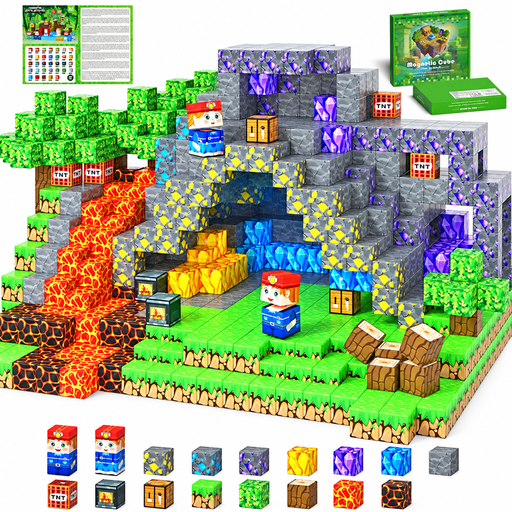
Why This Fits Their Persona: A 150-piece format gives families and gift buyers a broad starting selection for creative construction without immediately moving to a specialist track-based set. It is specified for children from 3 years.
The listing identifies the piece count, ABS material, rounded edges and age guidance, giving buyers more useful information than a headline based only on appearance.
150 pieces; ABS plastic; natural design; rounded edges; expandable format.
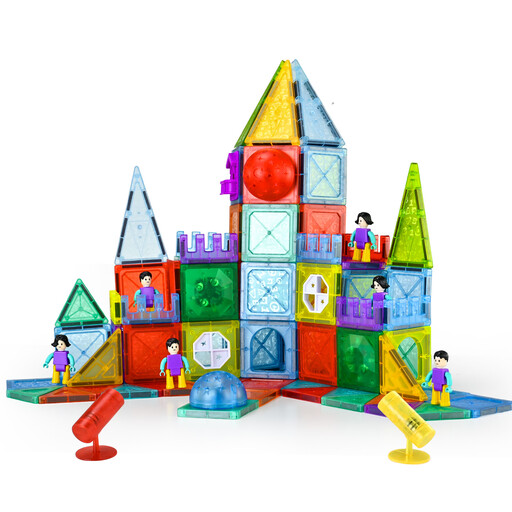
Why This Fits Their Persona: This suits households wanting a more varied construction experience, combining transparent tiles, light-up track sections and rolling-ball play. The 1.85 kg set arrives in a colour box and requires no batteries.
The specification lists the approximate tile dimensions, materials, piece count, power source and warnings, helping buyers assess practical suitability before ordering.
126 pieces; transparent 3D components; light-up tracks; manual operation; ABS, PP, PE and PS materials.
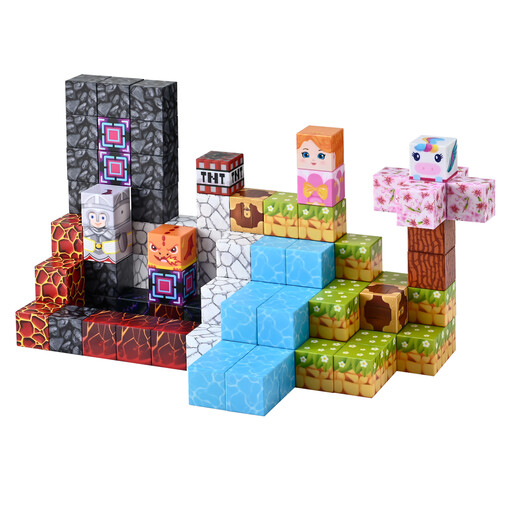
Why This Fits Their Persona: The pixel-art format is suited to children who enjoy themed worlds, character-style builds and repeat construction. It can work for home play or supervised activity sessions where a focused design theme is useful.
The listing states the small-part and magnet warnings, the recommended age and the approximate 2.5 cm block size, so supervision and storage needs are clear.
ABS plastic; strong magnetic adsorption; 108-piece description; no batteries; pixel-themed construction.
We have compiled a complete, real-time list of products that fully satisfy these strict selection criteria and UK safety regulations.
They can be, when the product is specifically age-graded for 3+ and used under direct adult supervision. Magnetic sets contain small parts and magnets, so they must be kept away from children under three and anyone who may put pieces in their mouth. Always follow the individual product warning.
Not necessarily. The Tokky transparent magnetic tile set described here uses manual play and lists no battery requirement. Some light-up features may operate through the movement of the rolling ball or another built-in mechanism, so read the product specification before purchasing replacement batteries.
Their usable life depends on handling, storage and the condition of the plastic around the magnets. Storing pieces dry, avoiding harsh cleaners and removing cracked or loose components can help maintain the set. For a nursery or busy family home, choose a clearly specified ABS set and include regular safety checks in the play routine.