
24/7 Customer Support

Free returns

Same-day & Next-day Delivery

Quality Guaranteed

Unlock Your Welcome Offers: FREE Delivery | Up to 80% OFF | Free 30-day JoyPlus trial
Download the APP
Magnetic building blocks for children can offer open-ended play, but product pages often make similar sets look interchangeable. A low price may hide a small piece count, weak connections or unclear safety information, while a large set may be too complicated for a younger child. Before choosing magnetic tiles, magnetic construction toys or a themed building set, check what the child will actually be able to build and use safely.
A set with 150 pieces is not automatically more useful than a 36-piece starter kit. Some packs contain many small connectors or decorative parts, while others include larger squares and triangles that quickly form recognisable structures. Look at the type, size and mix of pieces, not just the number printed on the box.
For younger builders, larger components with simple connections may be easier to handle. Older children and hobby builders may prefer smaller ABS building blocks for detailed vehicles, buildings or character models.
Magnets need particular care. If a tile cracks and a magnet becomes loose, the product should be removed from play immediately. Swallowing multiple small magnets can cause serious internal injury, so magnetic toys should not be treated like ordinary plastic blocks.
Choose products with clear warnings, inspect pieces regularly and store them away from babies and toddlers. Sets labelled for children aged 3+ are still not suitable for children below the stated age. Adult supervision is sensible, particularly during a child’s first few play sessions.
STEM toys for children can introduce geometry, balance, sequencing and simple engineering ideas, but no building set can guarantee a particular developmental result. Claims about fine motor skills, spatial reasoning or concentration should be viewed as potential benefits of hands-on play rather than medical or educational guarantees.
The most useful set is usually one that matches the child’s interests and is easy to reach, rebuild and combine with other toys.
Always compare the manufacturer’s recommended age with the child’s ability to follow instructions and handle small parts. Many magnetic building blocks are designed for children aged 3+, while small-granule construction sets may be intended for age 6 or above.
For UK purchases, look for appropriate product safety information, warnings and traceability details. Where applicable, packaging should show relevant conformity marking, such as UKCA or CE, but a marking alone does not replace supervision or regular inspections.
ABS plastic is widely used in educational building blocks because it can be lightweight and rigid. Practical details matter more than broad descriptions: check for smooth edges, securely enclosed magnets, consistent connections and a finish without visible burrs or cracks.
Ultrasonic welding or another enclosed-magnet construction method can help reduce the risk of magnets becoming exposed, but every piece should still be checked after drops, bending or rough play. Avoid sets with unclear material information or incomplete safety instructions.
A magnetic set should connect firmly enough for a child to lift a simple structure without it immediately collapsing. At the same time, connections should not be so stiff that small hands struggle to separate the pieces.
Check individual tile dimensions where provided. Larger tiles are often more manageable for younger children, while 2.5 cm or smaller blocks can support more detailed designs but may be unsuitable for under-threes. Also consider storage: a box or pouch helps prevent pieces disappearing under furniture and makes tidy-up easier.
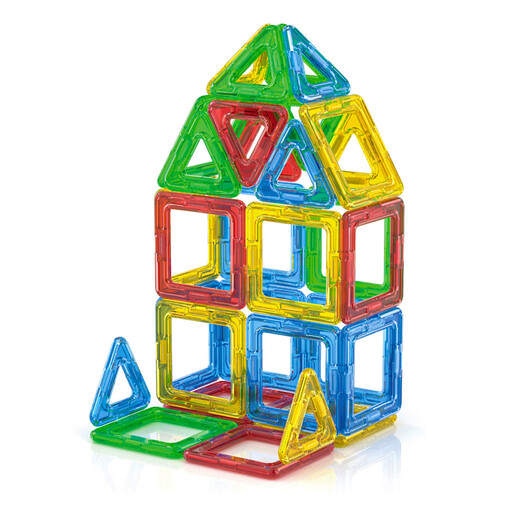
Why This Fits Their Persona: A compact entry point for families testing whether magnetic construction toys suit a child’s play style, with a colour box for storage and gifting.
The listing specifies 36 pieces, an approximate 3.5 cm block size and a 3+ age range, making the purchase easier to assess than an unspecified mixed pack.
ABS plastic, no batteries required, smooth rounded edges and a stated storage box.
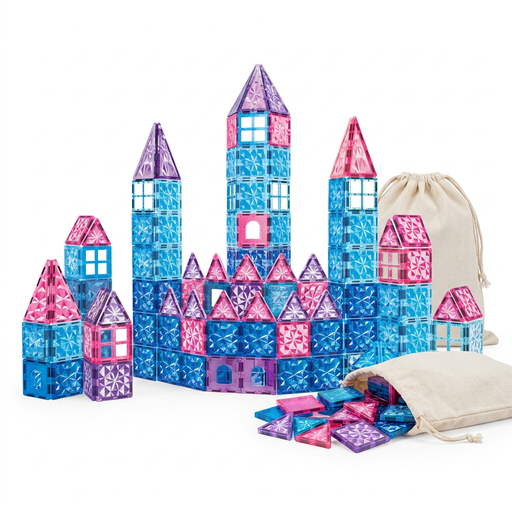
Why This Fits Their Persona: Suitable for shoppers looking for a more structured starter collection with a storage pouch and larger 7.5 cm diamond-surface pieces.
The listing identifies a 58-piece collection, ABS material, enclosed magnets and a pouch, giving useful information beyond a general “educational” label.
No installation is required, and the pouch supports travel and organised storage.
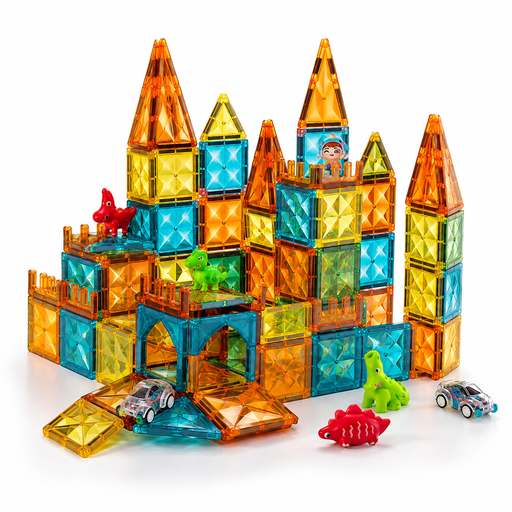
Why This Fits Their Persona: A themed option for children who lose interest in plain geometric tiles and enjoy building around a visible fairground feature.
Its listing identifies ultrasonic-welded magnetic building blocks and a clear 3–10 age range, rather than relying only on a vague promise of creativity.
A themed Ferris wheel creates a specific play focus and may encourage storytelling alongside construction.
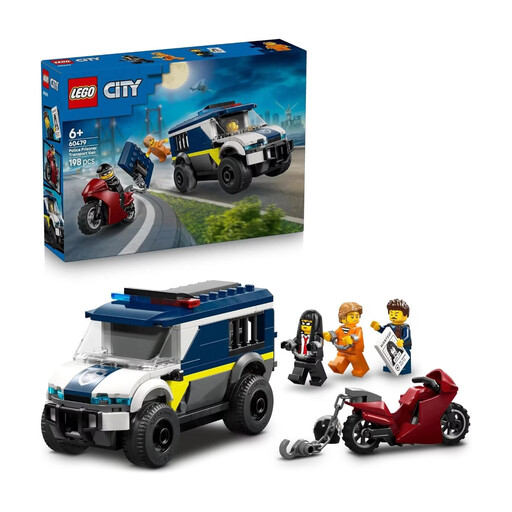
Why This Fits Their Persona: A suitable birthday gift for a child aged 6+ who prefers guided construction, vehicles and role-play over open-ended magnetic tiles.
The product page states the age guidance, 198-piece count, dimensions and small-parts warning, so buyers can assess suitability before ordering.
Includes a police van, getaway motorbike, three minifigures and digital 3D building instructions; no batteries are required.
We have compiled a complete, real-time list of products that fully satisfy these strict selection criteria and UK safety regulations.
They can be suitable when the product is specifically labelled 3+, but age guidance is not a substitute for supervision. Check the size of the pieces, the magnet warning and the child’s ability to play without putting parts in their mouth.
Most standard magnetic tiles and magnetic building sets connect manually and do not need batteries. Sets with illuminated or moving features may include battery-powered components, so check the product details before buying and confirm whether batteries are supplied.
Lifespan depends on handling, storage and construction quality. Enclosed magnets, sturdy ABS plastic and regular inspections can help a set remain usable, but no magnetic toy should continue in use after a tile cracks or a magnet becomes exposed.